Some links on this page are affiliate links. If you buy through them, Dubspot may earn a commission at no extra cost to you. It never affects our scores or what we recommend — read our policy.
Riffer 4 Adds Five Generation Engines to the Riff Sequencer
Audiomodern Riffer 4 rebuilds the smart MIDI sequencer around five generation engines for hooks, basslines and arpeggios. Intro €49 / $55. Specs, pricing and FAQ.
T
Theo Nakamura
October 4, 2026 · 8 min read
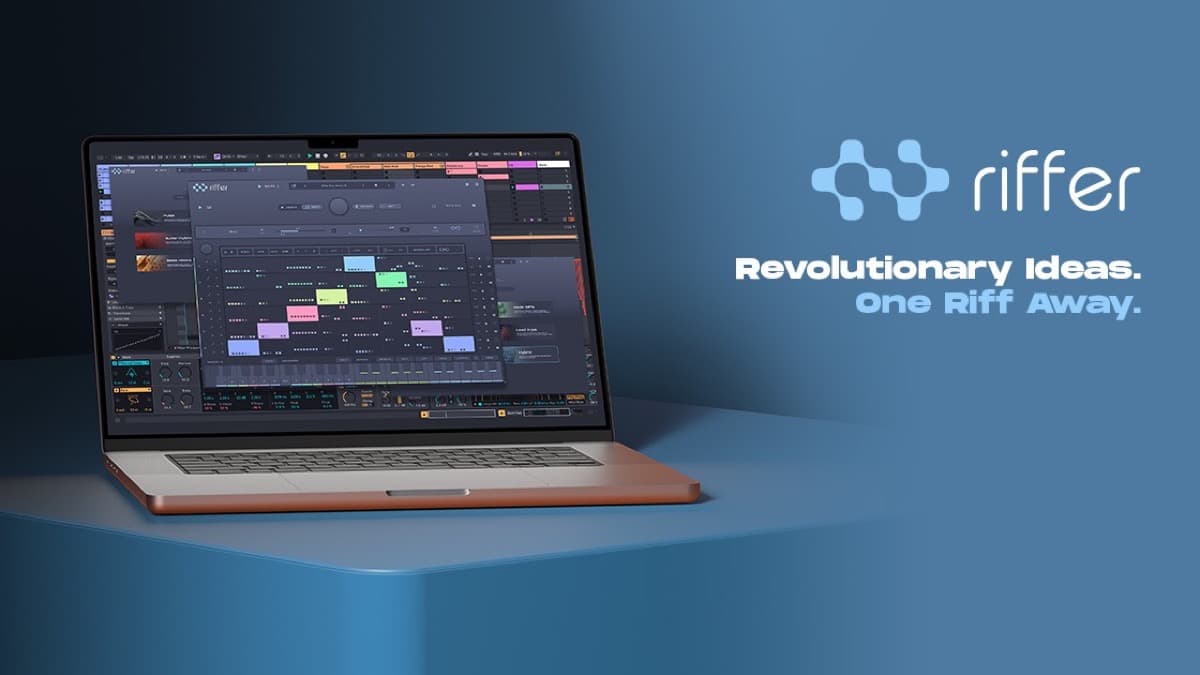
Audiomodern has released Riffer 4, a major rebuild of its smart MIDI sequencer that now generates riffs from five separate engines instead of one. The plugin has spent a decade as a go-to idea machine for producers stuck on a blank piano roll, and version 4 widens what it can throw at you, from hooks and basslines to guitar-style patterns and arpeggios. The intro price is €49 / $55, down from a €69 / $79 list. This is a first look drawn from the official product page and Audiomodern's walkthroughs, not a hands-on review.
At a glance: Riffer 4 generates MIDI riffs in any key and scale, then lets you shape note range, density, timing and feel before editing individual notes by hand. The headline change is five generation engines, each a different musical starting point. It exports MIDI to any DAW and runs as VST3, AU, AAX and standalone on Windows 10 or later and macOS 10.14 or later, with native Apple Silicon support, plus an AUv3 and standalone build for iPad.
What Riffer is
Riffer is a generative MIDI sequencer. You load it on a track, point it at an instrument, and it writes short musical phrases you can keep, tweak or regenerate. It does not make sound on its own. It makes notes, and those notes drive whatever synth, sampler or hardware you send them to. Across three previous versions, Riffer earned a reputation as a fast way out of a creative block, the kind of tool producers reach for when the arrangement stalls and they need a spark.
The core idea has always been controlled randomness. You set the rules, such as the key, the scale, the number of steps, the pitch range and how busy the part should be, and Riffer fills in the detail. Earlier versions added polyphony, so it could sequence several simultaneous riffs, along with density controls for stuttering notes and a performance mode for triggering patterns live. Version 4 keeps that foundation and rethinks how the ideas get generated in the first place.
What is new in Riffer 4
The big change is the move from a single generation algorithm to five. Audiomodern frames them as five different ways into a riff, each tuned toward a distinct musical result. Between them, the engines are built to create hypnotic sequences, memorable hooks, guitar-inspired patterns, animated arpeggios, and basslines with weight. Instead of nudging one generator toward the sound you want, you pick the engine that already thinks in that shape, then refine from there. That matters in practice because a bassline and a lead arpeggio want very different note behavior, and a single all-purpose generator tends to average them out.
Around the engines, the familiar creative controls remain. You work in any key and scale, and you shape the note range, the density, the timing and the overall feel of a part. Nothing is locked once it is generated. You can edit individual notes directly in the plugin, so a riff that is almost right becomes exactly right without regenerating and losing it. From a single idea you can then spin variations, which is how Riffer turns one happy accident into a verse, a chorus and a fill.
When a part is done, you export the MIDI and drop it into your project or hand it to another DAW entirely. That keeps Riffer useful as a sketchpad even if you prefer to arrange elsewhere. The interface has been rebuilt for this version, and Audiomodern describes the plugin as built for what comes next, with a workflow that runs from the first generated riff through sequencing, remixing, editing and performance to a finished export.
Riffer 4 also travels. It ships an iPad build alongside the desktop plugin, as an AUv3 and a standalone app, so the same riff-generation workflow follows you to a tablet rig or a sofa session. For producers who sketch on the move and finish at the desk, that is real convenience, not a line on a spec sheet.
Riffer 4 specifications
| Spec | Detail |
|---|---|
| Type | Generative MIDI sequencer / riff generator |
| Developer | Audiomodern |
| Version | 4.0.0 |
| Generation engines | Five, for sequences, hooks, guitar-style patterns, arpeggios and basslines |
| Scales and keys | Any key and scale |
| Editing | Direct note editing, variations, density, range, timing and feel controls |
| Output | MIDI export to any DAW |
| Desktop formats | VST3, AU, AAX, standalone |
| iPad formats | AUv3, standalone |
| macOS | 10.14 or later, native Apple Silicon (M1/M2) |
| Windows | 10 or later |
| DAWs | Ableton Live, Logic Pro, FL Studio, Cubase, Studio One, Pro Tools, Bitwig, Reaper, Reason and more |
| Licensing | Serial number, trial available |
| Price | €49 / $55 intro, €69 / $79 regular, €29 upgrade for owners |
Riffer 4 vs Scaler 3
The other big name in MIDI idea generation is Scaler 3, and the two tools solve the problem from opposite ends. Scaler is a theory engine. It suggests chords, builds progressions, and keeps your melodies inside a chosen key, so it suits writers who think in harmony and want structure. Riffer is a riff engine. It generates rhythmic, melodic phrases from controlled randomness, so it suits producers who want a part to react against, not a progression to follow.
| Audiomodern Riffer 4 | Scaler 3 | |
|---|---|---|
| Core approach | Generative riff and sequence creation | Chord and progression theory assistant |
| Best at | Basslines, hooks, arpeggios, sequences | Progressions, scale-aware melody writing |
| Generation | Five engines, controlled randomness | Suggested chords and detected keys |
| Note editing | Direct, with variations | Edit and reharmonize within theory |
| Price | €49 / $55 intro, €69 / $79 | $99 |
| iPad build | Yes, AUv3 and standalone | No |
Pick Scaler 3 if you want the plugin to teach you harmony and hand you progressions that are already correct. Pick Riffer 4 if you want a faster, looser idea machine that surprises you and leaves the theory to you. Many producers end up running both, using Scaler to anchor the harmony and Riffer to animate it. If your needs lean toward arpeggios and chord stabs for electronic music specifically, Xfer Cthulhu is a cheaper, narrower alternative worth knowing about. For more on the harmony side, see our write-up of Scaler's move to version 3 and this guide to writing better chord progressions.
Who Riffer 4 is for
It suits producers who freeze at an empty piano roll and want a running start, electronic and beat-driven writers who build from basslines and arpeggios, and anyone who likes to generate, keep the good bits and throw the rest away. The direct note editing means it is not only for people who want the machine to decide. You can treat a generated riff as a first draft and finish it by hand. The iPad build adds sketching away from the studio.
Skip it if you want a tool that writes correct chord progressions and explains the theory as it goes. That is Scaler's job, not Riffer's. Riffer gives you raw musical material and trusts you to arrange it.
How much Riffer 4 costs
Riffer 4 is €49 / $55 at its intro price, down from a €69 / $79 regular price, with the launch discount running through the end of November 2026. Owners of a previous Riffer version can upgrade for €29. A trial version is available, unlocked with a license key, so you can test it before buying. The iPad edition is sold separately on the App Store. It installs as VST3, AU, AAX and standalone on Windows 10 or later and macOS 10.14 or later, with native Apple Silicon support. Specs also live on the Riffer 4 plugin page. If you are still building a free toolkit, our best free VST plugins of 2026 is a good companion.
FAQ
What is new in Riffer 4 compared with Riffer 3?
The main change is five generation engines in place of a single algorithm, each aimed at a different musical result, from hooks and basslines to arpeggios and guitar-style patterns. The interface is also rebuilt, and there is now an iPad edition.
Does Riffer 4 make sound on its own?
No. It generates MIDI, not audio. You route its notes to a synth, sampler or hardware instrument, and you can export the MIDI to use anywhere.
Is there an upgrade price for existing Riffer owners?
Yes. Owners of a previous version can upgrade to Riffer 4 for €29, against the €49 / $55 intro price for new buyers.
What are the system requirements?
Windows 10 or later, or macOS 10.14 or later with native Apple Silicon support. It runs as VST3, AU, AAX and standalone on the desktop, and as an AUv3 or standalone app on iPad.