VOCALOID7 Price and First Look: Second-Gen AI Vocals, $129
VOCALOID7 adds second-gen VOCALOID:AI, ATTACK and VOICE TYPE controls, Cubase Key Editor input and the asa voice. $129, or a $39 upgrade until 20 December.
Dubspot's best Black Friday dealsDubspot Tracker Pro: $15, was $24.99 ↗Drum Programming and Groove Production Course: $19, was $99 ↗
Yamaha released VOCALOID7 on 11 November 2026, the first major update to its singing synthesizer in four years and the successor to VOCALOID6. The headline is a second-generation VOCALOID:AI engine with two new ways to shape a performance, ATTACK and VOICE TYPE, plus note and lyric entry straight from the Cubase Key Editor. The full editor costs $129 with a new voice bank, asa, and Cubase AI included, and owners of VOCALOID3 to VOCALOID6 can upgrade for $39 at the official VOCALOID SHOP until 20 December.
At a glance: singing synthesizer for Windows and macOS; Standalone, VST3 and AU, with ARA2 sync in other DAWs and native integration in Cubase; second-gen VOCALOID:AI, ATTACK and VOICE TYPE, over 100 Style Presets, pitch curve preservation; bundled asa voice bank (Japanese, English, Chinese) and Cubase AI. $129 full, $69 upgrade ($39 until 20 December at the VOCALOID SHOP), free 31-day trial. The biggest VOCALOID upgrade in four years, with the deepest DAW integration in Cubase.
What is VOCALOID7?
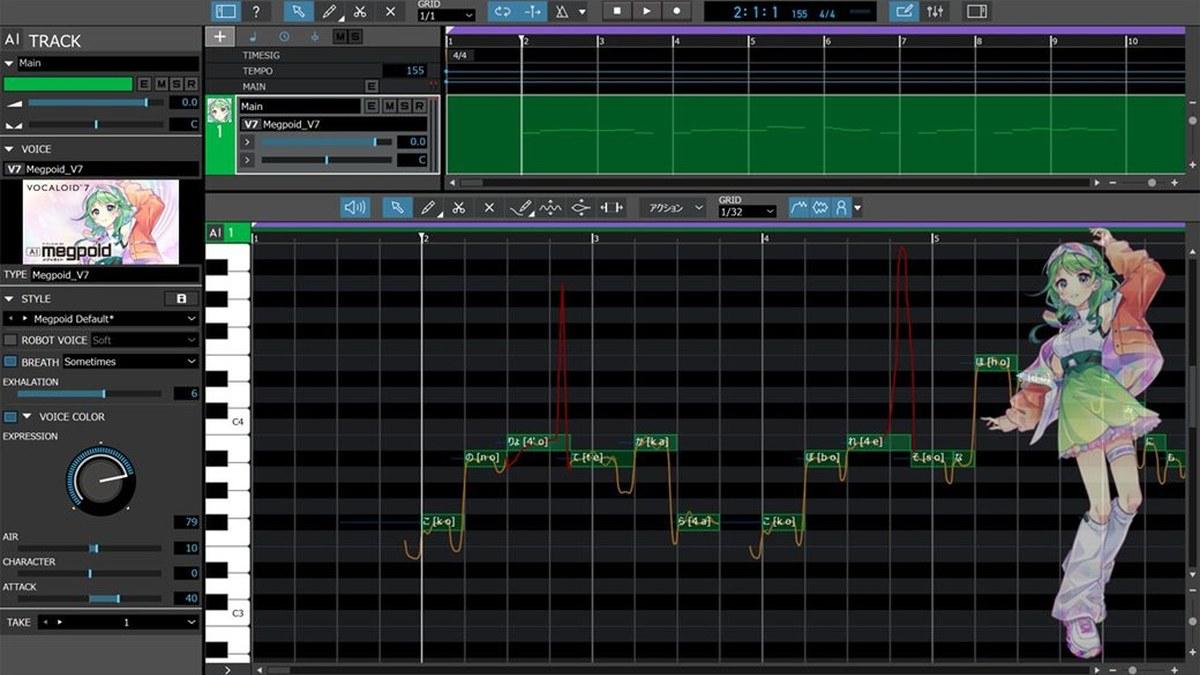
VOCALOID turns typed notes and lyrics into a sung vocal line. You draw a melody in a piano roll, type the words under each note, pick a voice bank and the engine sings it back. Yamaha has been developing it since 2003, and the voice banks built on it have become characters in their own right, from HATSUNE MIKU to Megpoid.
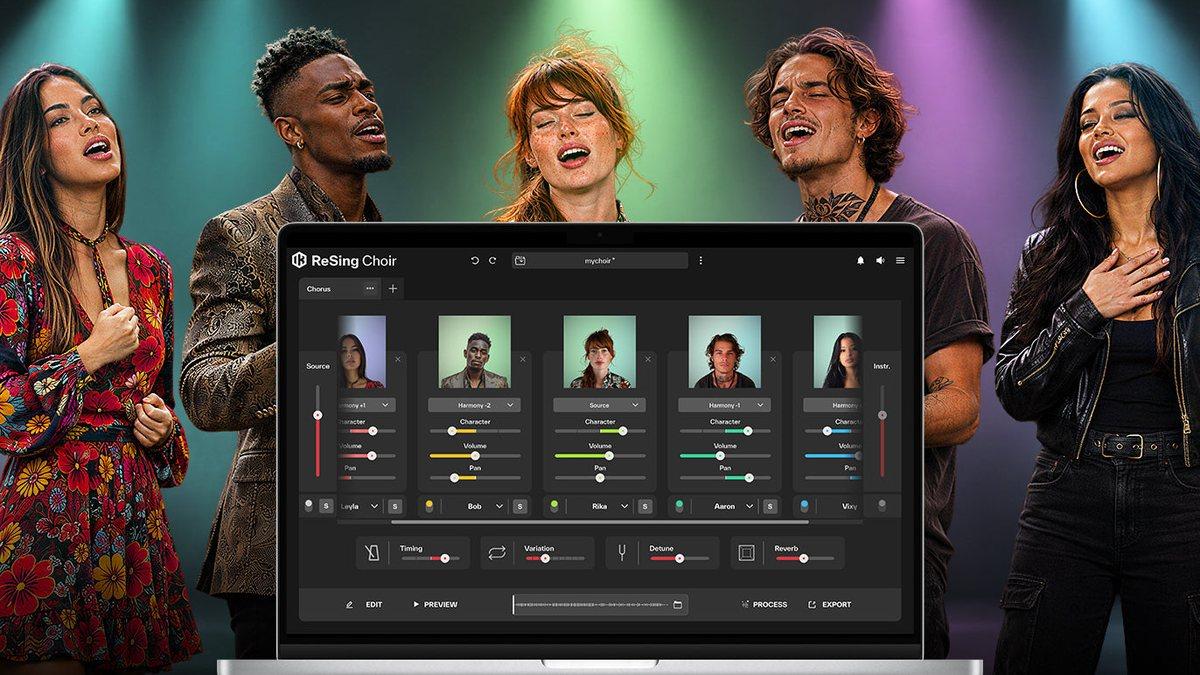
VOCALOID6 was the previous version. VOCALOID7 builds on it with a more expressive engine, more direct control over articulation and vocal character, and much closer integration with Steinberg's DAW. It competes most directly with Dreamtonics' Synthesizer V Studio 2 Pro, the other big name in note-and-lyric vocal synthesis (Dreamtonics also makes the neural orchestra in our Instrument X first look). If you would rather start from a vocal you sing yourself, IK Multimedia's new ReSing Choir turns one take into a five-singer AI choir.
What's new in VOCALOID7
Second-generation VOCALOID:AI
The new engine aims for more natural, expressive vocals with less editing. VOCALOID:AI-compatible voice banks can sing lyrics that mix Japanese, English and Chinese, so a bilingual hook doesn't need two separate voices or a second track.
ATTACK: articulation without micro-editing
ATTACK controls how defined the pronunciation and articulation sound. It sets how defined the pronunciation sounds from a single control, so crisp pop consonants or a softer ballad delivery no longer take a stack of per-note edits.
VOICE TYPE: several singers in one bank
VOICE TYPE switches between different vocal characteristics inside the same voice bank. The bundled asa has Normal, Power and Soft types, so a verse can sit back in Soft and the chorus can open up in Power without loading another bank. AI Megpoid goes further with eight types: Native, Whisper, Cute, Downer, Power, Soft, Vivid and Ballade. The catch is that VOICE TYPE works only with VOCALOID7 voice banks, so your older libraries don't gain it.
Cubase integration
This is the biggest workflow change. In Cubase, VOCALOID7 runs as a VST with native integration: you enter notes and lyrics directly in the Cubase Key Editor, and EXPRESSION and ATTACK get dedicated controls there too. Track, transport, song position and tempo all stay in sync, muting and soloing a vocal track follows the DAW, and you can start playback of the whole project from a position set in the VOCALOID Editor. Cubase 16 already added lyrics to its Key Editor, as our Cubase 16 release coverage explains, so writing a melody and having it sung now happens in one window.
Other DAWs get VST3, AU and ARA2 with transport, song position and tempo sync. That works, but it's a step behind the Cubase experience.
Pitch curve preservation and freehand pitch
Once a synthesized pitch curve sounds right, you can preserve and lock it, then reproduce the same contour with a different voice bank. That makes auditioning singers fast: keep the phrasing you've tuned and swap the voice. The Pencil tool now draws pitch freehand over notes in the piano roll, for scoops, falls and vibrato shapes the automatic curve doesn't give you.
Style Presets, illustrations and help
More than 100 Style Presets recall complex parameter and effect combinations, from lead and chorus voices to robotic sounds. Character fans get an illustration display for a voice bank image, and you can import your own PNG up to 1024 x 1024. A context menu offers guide-style help on each function, useful given how many parameters a vocal synth has.
Compatibility
VOCALOID7 imports many other sequence formats, including UST, SVP, CCS, TSSLN and MusicXML, and opens project files from earlier versions. All voice banks from VOCALOID3 to VOCALOID6 work as they are; VOCALOID2 serials are not supported.
The voice banks
The full editor includes asa, a clear, distinctive voice with a wide expressive range that sings in Japanese, English and Chinese. Yamaha launched five more VOCALOID7 voice banks on the same day:
| Voice bank | Character | Price (official, before tax) |
|---|---|---|
| asa | Clear, wide range; Normal, Power, Soft | Included with VOCALOID7 Editor |
| AI Megpoid | Based on singer and voice actress Megumi Nakajima; eight voice types | $92 |
| GekiyakuV | Strong, artless girl's voice | $90 |
| KazehikiV | Neutral, husky voice | $90 |
| GekiyakuV/KazehikiV Set | Both voices | $135 |
| NurseRobot_TypeT | New VOCALOID7 voice bank | $90 |
| LUCI | New VOCALOID7 voice bank | $90 |
Every new VOCALOID7 voice bank includes VOCALOID7 Editor Lite, a free editor with no time limit that runs without activation. It is standalone only and limited to two tracks (one VOCALOID:AI or VOCALOID track plus one audio track). The classic HATSUNE MIKU V6 VOICEBANK is $78 at Plugin Boutique.
VOCALOID7 specifications
| Spec | Detail |
|---|---|
| Type | Singing synthesizer (notes and lyrics to vocals) |
| Developer | Yamaha |
| Modes | Standalone, VST3, AU (Lite: standalone only) |
| Cubase | VST with native integration: Key Editor, Track, Transport, Song Position, Tempo Sync |
| Other DAWs | VST3, AU, ARA2: Transport, Song Position, Tempo Sync |
| Bundled | asa voice bank, Cubase AI (Cubase AI not included with the upgrade) |
| Languages (VOCALOID:AI banks) | Japanese, English, Chinese, mixable in one part |
| Control parameters | 6 or more; VOICE TYPE requires VOCALOID7 voice banks |
| Style presets | Over 100 |
| Audio effects | 11 |
| Other features | Robot voice, auto-breath insertion, attack-release effect (VOCALOID5-compatible banks), real-time external MIDI input |
| Automation | Volume, panning |
| Reads | VPRX, VPR, VSQX, MIDI (SMF), PPSF, SVP, UST, CCS, TSSLN, MusicXML, MXL; WAV and MP3 audio |
| Writes | VPRX, MIDI (SMF), WAV, MP3 |
| Limits | 999 measures, 32 tracks (VOCALOID and audio combined), 1/480 quarter-note resolution |
| Windows | Windows 11 22H2 or later; 8th-gen or later Intel Core, Windows 11-compatible Xeon, or Arm64 |
| macOS | macOS 15 Sequoia, macOS 26 Tahoe, macOS 27; Apple Silicon or Intel |
| Memory and storage | 8 GB RAM minimum, 2 GB storage, 1366 x 768 display |
| Licensing | Internet connection required for authentication |
VOCALOID7 vs Synthesizer V Studio 2 Pro vs ReSing
| Yamaha VOCALOID7 | Dreamtonics Synthesizer V Studio 2 Pro | IK Multimedia ReSing | |
|---|---|---|---|
| Price | $129 (upgrade $69, $39 to 20 Dec) | $99 at Plugin Boutique | $49.99 at Plugin Boutique (from $129.99, to 30 Nov) |
| How it works | Sings typed notes and lyrics | Sings typed notes and lyrics | Re-sings a recorded vocal with a modelled voice |
| Voice selection | Bundled asa | One complimentary voice: Liam, Mo Xu or Mai 2 | Re-sings your recording with a modelled voice |
| Languages | Japanese, English, Chinese | English, Japanese, Cantonese, Korean, Spanish, Mandarin, with cross-lingual synthesis | ReSing library models cover English, Spanish, Japanese and Portuguese |
| Standout tools | ATTACK, VOICE TYPE, pitch curve lock, native Cubase integration | 300% faster rendering, AI retake, phoneme timing panel, smart pitch controls | Keeps your own phrasing |
| Pick it if | You work in Cubase or love the VOCALOID characters | You want more languages for less money | You can sing the part yourself |
Which to pick: Synthesizer V Studio 2 Pro is the obvious alternative and the better deal on paper: $30 cheaper, six languages against three, and cross-lingual synthesis that lets any voice sing outside its native language. VOCALOID7 wins on its native Cubase integration and on its catalogue of voices with real fan followings. ReSing is a different tool. It starts from a vocal you've recorded and swaps the singer, so it suits producers who can carry a tune but want a different voice. If what you want is robot voices, vocoders and talkbox effects on a real vocal, iZotope VocalSynth 2 is the processor for that job rather than a singer.
Who VOCALOID7 is for
Buy it if you write in Cubase and want a vocal line without booking a singer; if you produce J-pop, anime-style or character-led music where VOCALOID voices are part of the sound; or if you own VOCALOID3 to VOCALOID6 and the $39 upgrade gets you the new engine plus asa.
Skip it if you work in Logic, Ableton Live or FL Studio and want the deepest integration, since the Key Editor workflow is Cubase-only. Skip it too if you need Korean, Spanish or Cantonese vocals, where Synthesizer V covers more ground, or if your Mac can't run macOS 15. And budget for voices: asa is the only one included, and the new character banks cost $90 to $92 each.
How much does VOCALOID7 cost?
- VOCALOID7 Editor: $129 before tax at the official store, including asa and Cubase AI. Also $129 at Plugin Boutique.
- PLUS Voicebank Campaign: buy the editor together with a voice bank and get $20 off the editor, bringing it to $109.
- Upgrade: $69 regular, also $69 at Plugin Boutique. The $39 special price (43% off) runs at the official VOCALOID SHOP from 11 November to 20 December 2026. It is open to owners of VOCALOID3 to VOCALOID6 and VOCALOID Editor for Cubase, excluding Tiny VOCALOID3 Editor, VOCALOID6 Editor Lite and VOCALO CHANGER PLUGIN. A serial is required, and Cubase AI is not part of the upgrade.
- VOCALOID6 Editor buyers between 9 October and 11 November 2026 received a $39 coupon, which makes their upgrade effectively free.
- VOCALOID7 Editor Lite: free with any voice bank, no time limit.
- Trial: free for 31 days.
- Voice banks: 10% off in the Black Friday sale, except the new VOCALOID7 banks and HATSUNE MIKU V6.
Our VOCALOID7 plugin page tracks the price.
Price-timing note: upgraders should act before 20 December, when the $39 VOCALOID SHOP price returns to $69. New buyers face no deadline on the $129 editor, but if you plan to add a voice bank anyway, the PLUS Voicebank Campaign takes the editor to $109. Start with the 31-day trial to check your system and DAW before paying.
FAQ
Is VOCALOID7 worth upgrading from VOCALOID6?
At $39 until 20 December, yes for most users. You get the second-gen AI engine, ATTACK, pitch curve preservation, the Cubase Key Editor workflow and the asa voice bank, and your VOCALOID3 to VOCALOID6 voice banks keep working. VOICE TYPE needs VOCALOID7 voice banks, and Cubase AI isn't included with the upgrade.
Does VOCALOID7 work in DAWs other than Cubase?
Yes. It runs as VST3 and AU with ARA2 in other DAWs, synced to transport, song position and tempo. Note and lyric entry in the Key Editor and the dedicated EXPRESSION and ATTACK controls are Cubase-only.
VOCALOID7 vs Synthesizer V Studio 2 Pro: which is better?
Synthesizer V Studio 2 Pro is $99 at Plugin Boutique against $129 and covers six languages to VOCALOID7's three. VOCALOID7 is the better choice in Cubase and for its character voice banks. Pick on workflow and the voices you want.
What are the VOCALOID7 system requirements?
Windows 11 22H2 or later on an 8th-gen or later Intel Core, Windows 11-compatible Xeon or Arm64 machine, or macOS 15 Sequoia, macOS 26 Tahoe or macOS 27 on Apple Silicon or Intel. You need 8 GB RAM, 2 GB of storage, a 1366 x 768 display and an internet connection for authentication.
Do my old VOCALOID voice banks work in VOCALOID7?
Voice banks from VOCALOID3 to VOCALOID6 work as they are, and older project files open. VOCALOID2 serials are not supported, and VOICE TYPE switching is available only with VOCALOID7 voice banks.
Verdict
VOCALOID7 is a confident step forward rather than a reinvention. ATTACK and VOICE TYPE solve real editing chores, pitch curve preservation makes swapping singers painless, and the Cubase integration turns vocal synthesis into something you do inside your arrangement instead of beside it. The limits are clear: the best features lean on Cubase and on new VOCALOID7 voice banks, language coverage trails Synthesizer V, and extra voices add up quickly. For existing owners, the $39 upgrade before 20 December is an easy yes. For newcomers in Cubase, $129 with asa and Cubase AI included is a strong buy.