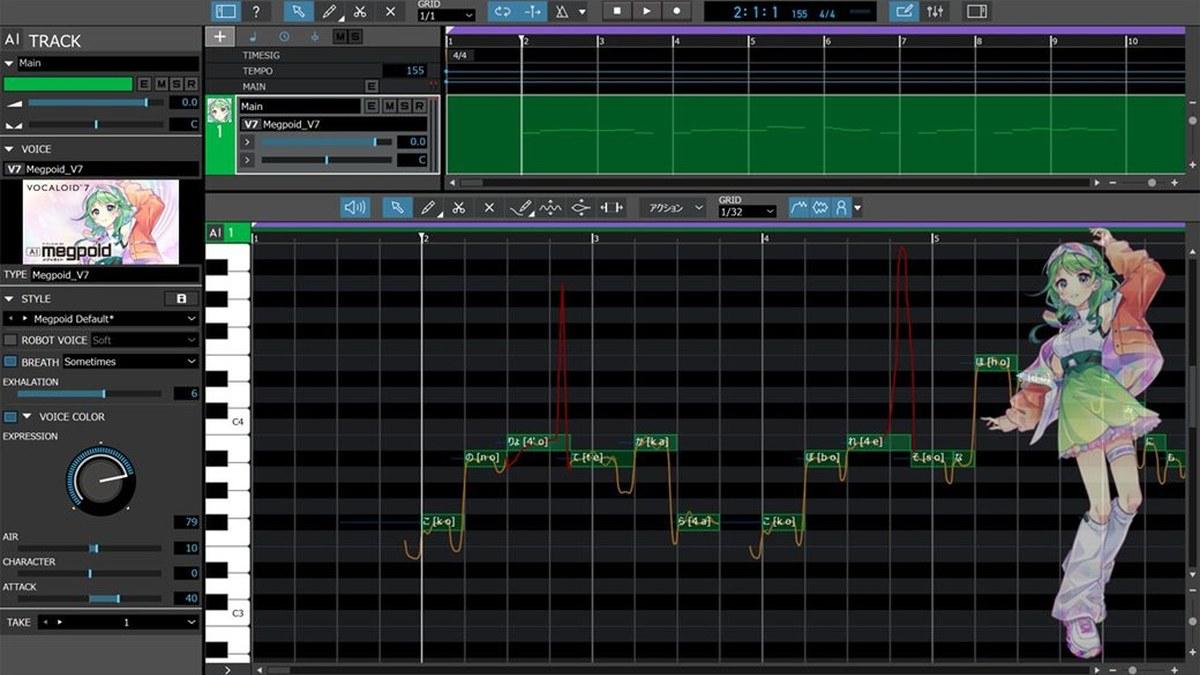
Yamaha VOCALOID7 is the latest version of the singing synthesizer Yamaha has developed since 2003, released on 11 November 2026 as the first major update in four years. You enter a melody and lyrics, choose a voice bank and the engine sings the line. The full editor is $129 and includes the asa voice bank and Cubase AI; owners of VOCALOID3 to VOCALOID6 can upgrade for $39 at the official VOCALOID SHOP until 20 December 2026 ($69 regular).
The second-generation VOCALOID:AI engine targets more natural, expressive vocals, and compatible voice banks can mix Japanese, English and Chinese in one part. Two new controls do much of the work: ATTACK sets how defined the pronunciation sounds, and VOICE TYPE switches between vocal characteristics inside a VOCALOID7 voice bank, such as asa's Normal, Power and Soft. Synthesized pitch curves can be locked and reproduced with a different voice bank, the Pencil tool draws pitch freehand, and more than 100 Style Presets recall lead, chorus and robotic setups.
In Cubase, VOCALOID7 runs with native integration: notes and lyrics go straight into the Key Editor, EXPRESSION and ATTACK have dedicated controls, and transport, tempo, mute and solo stay linked. Other DAWs get VST3, AU and ARA2 with transport, song position and tempo sync. It runs on Windows 11 22H2 or later and macOS 15 or later, opens VOCALOID3 to VOCALOID6 voice banks and projects, and imports formats including UST, SVP and MusicXML.
Its closest rival is Dreamtonics Synthesizer V Studio 2 Pro, $30 cheaper and with six languages to VOCALOID7's three. For processing a real vocal into robot and vocoder textures, iZotope VocalSynth 2 is the different tool. Our VOCALOID7 first look covers every feature, the specs, the new voice banks and pricing.