Some links on this page are affiliate links. If you buy through them, Dubspot may earn a commission at no extra cost to you. It never affects our scores or what we recommend — read our policy.
Inside Westwood Trinity Strings: Bleed and Pitch Drift
Westwood Trinity Strings records three players in octaves as one section, keeping the bleed and pitch drift. Launch price is £47, regular £79. Specs and FAQ.
T
Theo Nakamura
October 3, 2026 · 8 min read
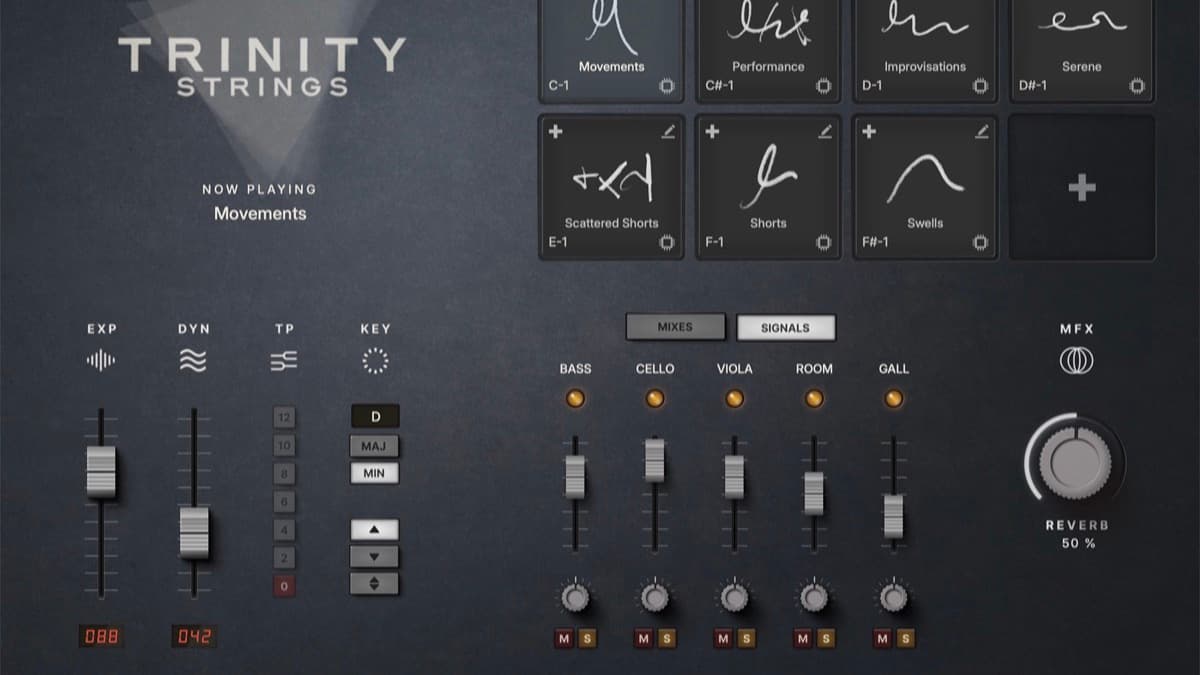
Westwood Instruments has released Trinity Strings, a string instrument built from three players performing in octaves as one small section. Instead of layering single notes into a fake ensemble, it keeps the bleed between the players and the natural drift in their tuning. The goal is the sound of a real group sitting between a soloist and a full orchestra. The launch price is £47, down from a £79 list. This is a first look drawn from the official product page and the Westwood walkthrough, not a hands-on review.
At a glance: Three string players recorded together in octaves. Core content spans Movements, Performance, Improvisations, Shorts, Scattered Shorts, and Swells. You get Modern, Studio, and Vintage mic mixes alongside spot and room captures. There are over 100 presets across 7 categories and a 14-effect Foundry rack. It runs as a self-contained plugin with no Kontakt needed, in VST, VST3, AU, and AAX, on macOS 12 or later and Windows 10 or later.
What Trinity Strings is
Most string libraries sell size. They record large sections, then hand you ways to thin them down. Trinity Strings goes the other direction. It captures three players performing together in octaves, and treats that tight, slightly imperfect group as the instrument itself. At the other extreme, IK Sinphonica Maestosa Strings records a full 60-piece section in Milan.
Why does that matter? Because of what a real group does that samples usually strip away. When players sit in a room together, their instruments bleed into each other's microphones, and their tuning drifts by tiny amounts around the written pitch. That bleed and that drift are what make an ensemble sound human. Stacking one clean note three times cannot recreate the effect, which is why so many layered mockups sound stiff. Westwood leans into the imperfection rather than cleaning it out.
That places the instrument in a specific gap. It is bigger and warmer than a single solo instrument, yet smaller and more intimate than a full cinematic section. Think of it as a few friends playing together. The sound suits songwriting, folk, indie, and scoring that wants a human string part rather than a wall of them.
What is inside
The core content is organised around how string parts actually get written. Movements cover evolving, sustained material. Performance holds the main playable longs. Improvisations arrive in standard, Vivid, and Serene versions, so you can move between a more active, expressive take and a calmer, softer one. Shorts and Scattered Shorts handle rhythmic and staccato figures, and the scattered set gives a looser, less locked feel. Swells round it out for dynamic entries and transitions.
Microphones set much of the character here. Trinity Strings ships three full mic mixes, called Modern, Studio, and Vintage, so you can jump to a finished tone without building one from raw positions. It also provides the individual spot microphones plus room and gallery captures, so if you want to mix your own balance from close and distant perspectives, the parts are there. Modern leans clean and present. Vintage leans darker and more coloured. Studio sits between them, which covers most song contexts.
On top of the sampled core sits a Foundry effects rack with 14 custom effects, including delay, reverb, compression, distortion, EQ, pitch shifting, and modulation. You can take the strings from a natural acoustic sound to something processed and textural inside the plugin, without routing out to a chain of separate tools. More than 100 presets across 7 categories show the range, from clean sustains to heavily designed textures.
One practical detail stands out. Trinity Strings is a self-contained plugin. It does not require Kontakt or any other host sampler, and it loads as VST, VST3, AU, and AAX directly in your DAW. The download is around 3.5 GB, modest for a sampled string instrument, and the licence allows installation on two machines for personal use.
Trinity Strings specifications
| Spec | Detail |
|---|---|
| Type | Sampled small string section, three players in octaves |
| Developer | Westwood Instruments |
| Core sounds | Movements, Performance, Improvisations, Shorts, Scattered Shorts, Swells |
| Improvisations | Standard, Vivid, and Serene versions |
| Mic mixes | Modern, Studio, Vintage, plus spot, room, and gallery |
| Presets | Over 100 across 7 categories |
| Effects | Foundry rack, 14 effects (delay, reverb, EQ, pitch, modulation, more) |
| Host | Self-contained plugin, no Kontakt required |
| Formats | VST, VST3, AU, AAX |
| macOS | Monterey 12 or later, 64-bit |
| Windows | 10 or later, 64-bit |
| Computer | 8 GB RAM, 4-core CPU or Apple silicon |
| Download | About 3.5 GB, internet for activation |
| Licence | Two machines for personal use |
| Price | £47 launch, £79 regular |
Trinity Strings vs Spitfire LABS Strings
The free benchmark most producers already have is Spitfire LABS, whose string instruments are a common first stop. LABS is free, runs in Spitfire's own player, and gives you a single, simple sound per instrument. Trinity Strings asks for money, but it is a deeper, deliberately recorded small section with full mic control and a built-in effects rack.
| Westwood Trinity Strings | Spitfire LABS Strings | |
|---|---|---|
| Price | £47 launch, £79 regular | Free |
| Source | Three players in octaves, one section | Varied free string instruments |
| Mic control | Modern, Studio, Vintage, plus spot and room | Fixed, minimal |
| Articulations | Movements, longs, improvisations, shorts, swells | Usually one patch per instrument |
| Effects | 14-effect Foundry rack | Basic controls |
| Host | Self-contained, no Kontakt | Spitfire LABS player |
| Download | About 3.5 GB | Smaller per instrument |
If you only need an occasional string pad and would rather not spend anything, LABS is the sensible place to start. If you write string parts often and want them to sound like a small human group with the bleed and drift intact, Trinity Strings is the more capable tool, and the one with real mixing control. A large Kontakt orchestral library is a different purchase again, built for full sections and deep articulation sets rather than this intimate octave group. For a recent look at another boutique string instrument, see our coverage of Spitfire Phoenix BT.
Who Trinity Strings is for
It suits songwriters, folk and indie producers, and composers who want a believable small string section without the weight and cost of a full orchestral library. The three mic mixes let you drop in a finished tone fast, and the Foundry rack lets the same instrument serve both acoustic parts and designed textures. The self-contained format is a bonus if you would rather not run Kontakt.
Skip it if your work needs large cinematic sections, divisi, or a deep articulation set with legato transitions and runs. That is the job of a bigger orchestral library. Trinity Strings is proudly a small, human section, not a symphony.
How much Trinity Strings costs
Trinity Strings is £47 at its launch price, down from a £79 regular price, sold direct by Westwood Instruments. It installs as VST, VST3, AU, and AAX on macOS 12 or later and Windows 10 or later, needs 8 GB of RAM and a 4-core or Apple silicon machine, and the download runs about 3.5 GB. The personal licence covers two machines. Specs also live on the Trinity Strings plugin page. If you are building out free instruments first, our best free VST plugins of 2026 makes a good companion.
FAQ
Does Trinity Strings need Kontakt?
No. It is a self-contained plugin that loads directly in your DAW as VST, VST3, AU, or AAX. There is no Kontakt or host sampler requirement.
What makes it sound like a real ensemble?
It records three players performing in octaves together, then keeps the microphone bleed between them and the small natural drift in their tuning. That bleed and drift are exactly what layered single notes usually lose.
What microphone options are included?
Three ready mixes, Modern, Studio, and Vintage, plus the individual spot microphones and room and gallery captures so you can build your own balance.
What are the system requirements?
macOS Monterey 12 or later, or Windows 10 or later, both 64-bit, with 8 GB of RAM and a 4-core CPU or Apple silicon. The download is about 3.5 GB, and activation needs an internet connection.