Some links on this page are affiliate links. If you buy through them, Dubspot may earn a commission at no extra cost to you. It never affects our scores or what we recommend — read our policy.
Best Hardware Synthesizers 2026: Top Synths for Every Budget
Best hardware synthesizers 2026: 10 verified picks from €249 to €2,555, with live Thomann prices, honest trade-offs, and the right synth for every budget.
T
Theo Nakamura
July 11, 2026 · 12 min read
Black Friday 2026Arturia Black Friday 2026: dates and deals →
Short answer: for most producers, the Korg Minilogue XD (€555) is still the best first hardware synth in 2026. On a tight budget, the Arturia MicroFreak (€289) gives you the widest range of sounds per euro. Ready to spend more? The Sequential Take 5 (€1,499) buys genuine analog polyphony and studio-grade build.
The hardware synth market in 2026 is deeper than ever. A real 8-voice analog polysynth costs €249. A brand-new Moog costs €611. One keyboard even senses how each finger moves in three dimensions. The hard part is knowing what each price tier gains you, and what it costs you. This guide covers ten synths across three budgets. The current first look is Osmose Firmware 2.3.
How We Picked and Priced These Synths
Every price here was verified live on Thomann's product pages on July 11, 2026, VAT included. No launch-era numbers, no guesses. Where a synth ships with a delay instead of from stock, we say so.
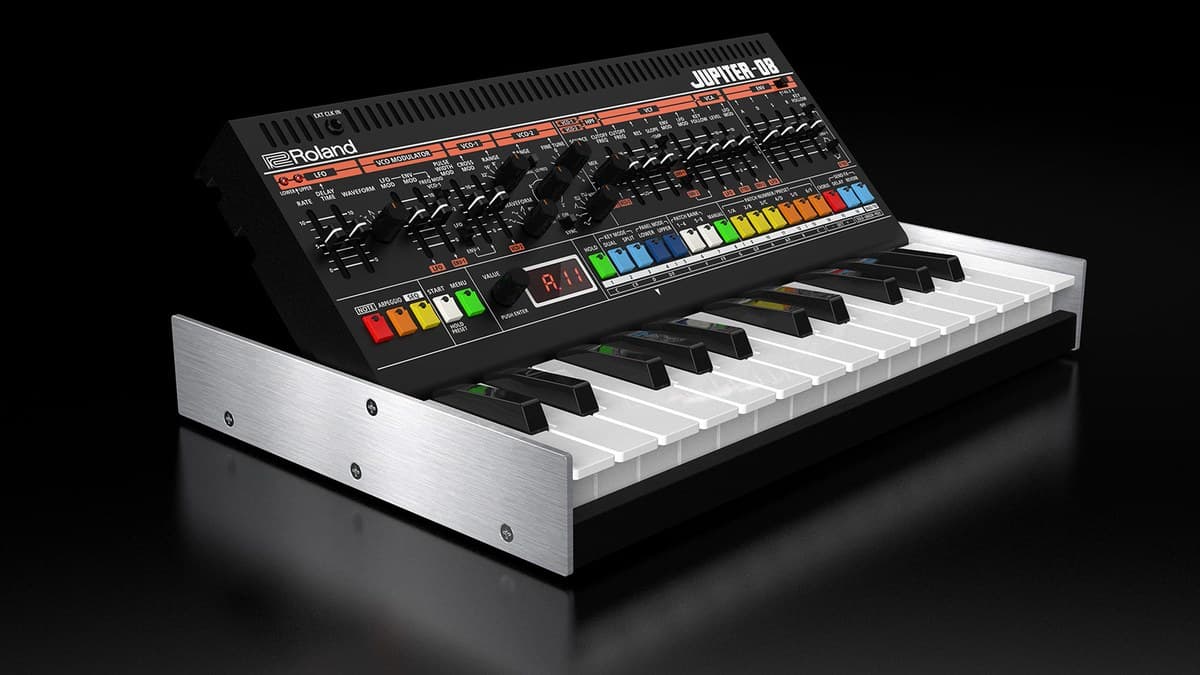
The tier logic is simple. Around €250–290 buys one strong idea done well: a characterful mono, a paraphonic sketchpad, or a bare-bones poly module. Around €500–850 buys real polyphony, a proper keyboard, and onboard effects. Above €1,200, you stop paying for features and start paying for build quality, voice character, and expression. The 2026 note on this category is AstroLab 2.0 hardware synth. Roland's newest entries, the JUPITER-08 and n/vision Boutique synths, land in that middle tier with a mini keyboard dock in the box.
Best Hardware Synthesizers 2026: Comparison Table
| Synth | Price | Type | Voices | Best For |
|---|---|---|---|---|
| Arturia MicroFreak | €289 | Hybrid (digital osc, analog filter) | 4 (paraphonic) | Experimental sound design on a budget |
| Korg Monologue | €282 | Analog mono | 1 | First analog keyboard, basses and leads |
| Behringer Pro-800 | €249 | Analog poly (desktop) | 8 | Cheapest true analog polyphony |
| Arturia MiniFreak | €509 | Hybrid poly | 6 | MicroFreak sound with real polyphony |
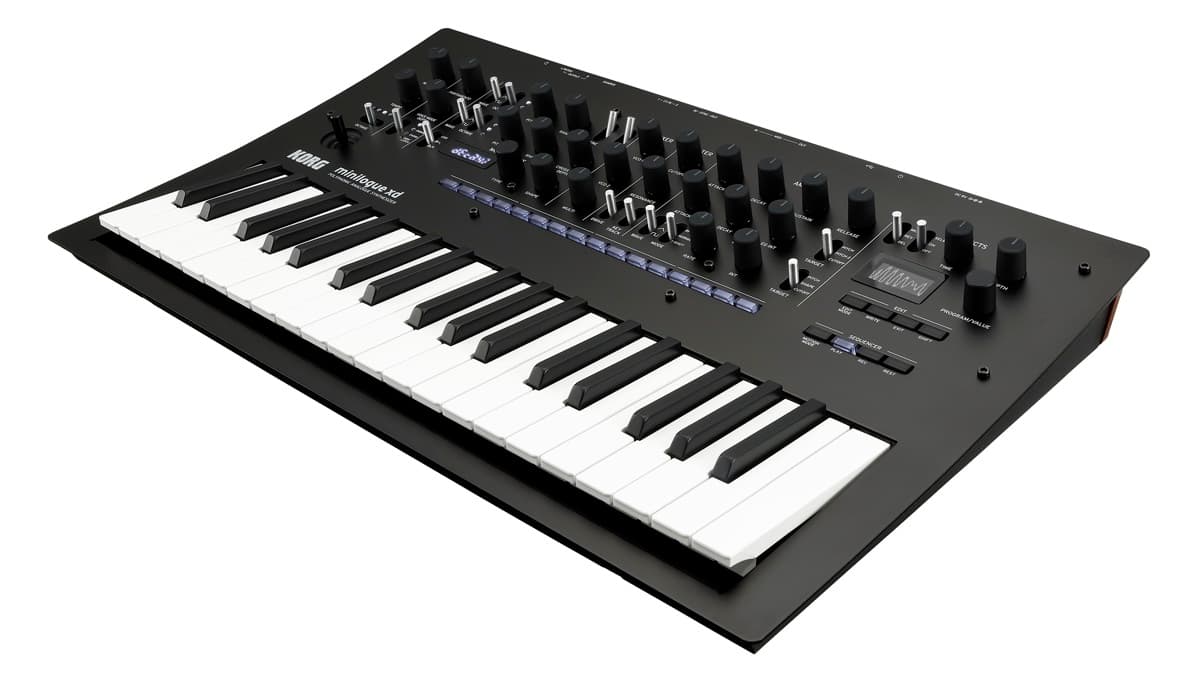
| Korg Minilogue XD | €555 | Analog + digital multi-engine | 4 | Best first polysynth |
| Moog Messenger | €611 | Analog mono | 1 | The Moog ladder-filter sound |
| Korg multi/poly | €825 | Analog modeling | 60 | Polyphony and layering per euro |
| Sequential Take 5 | €1,499 | Analog poly | 5 | Studio-grade analog voice |
| Expressive E Osmose | €1,579 | Digital (EaganMatrix) | — | Per-note expression, MPE control |
| UDO Audio Super 6 | €2,555 | Hybrid (FPGA + analog) | 12 (6 binaural) | True stereo binaural voices |
Best Synths Under €500
First, a reality check for 2026. The classic "under €500" picks have quietly drifted past that line at Thomann. The Minilogue XD now sits at €555, the ASM Hydrasynth Explorer at €533, and Arturia's MiniFreak at €509. The genuine sub-€500 field has narrowed. These three are the ones worth your money.
Arturia MicroFreak — Best Synth Under €500
The MicroFreak is the most interesting synth you can buy under €300. Its digital oscillator offers more than 17 engine modes, spanning wavetable, FM, Karplus-Strong string modeling, and granular. All of that feeds a genuinely analog SEM-style state-variable filter. Digital experimentation still lands in analog warmth. The current first look is Osmose Firmware 2.3.
The 25-note capacitive touch keyboard divides opinion. It has no moving keys. It does, however, transmit polyphonic aftertouch, which is rare at any price and remarkable here. Round that out with four paraphonic voices, a modulation matrix, a four-track sequencer with random and mutate functions, and CV/Gate alongside MIDI. A newer hardware synth in this lane is UDO DMNO ON.
The trade-offs are honest. Paraphony is not true polyphony, and the flat touch keys frustrate trained pianists. As a sound-design sketchpad, though, nothing near €289 comes close.
Check Arturia MicroFreak price at ThomannKorg Monologue — Best Analog Keyboard Under €300
The Monologue is the only full analog keyboard under €300 in this roundup. It is monophonic, so you get basses, leads, and acid lines rather than chords. You also get a 16-step sequencer with motion recording, microtuning support, and battery power for playing anywhere.
Its limitation is right there in the name. One voice, always. If you already know you want chords, skip a tier. But for a first taste of true analog with zero menu diving, €282 is a fair entry ticket. The link points to the black finish; other colors are separate Thomann listings.
Behringer Pro-800 — Cheapest True Analog Polysynth
The Pro-800 packs eight analog voices for €249, a price that bought a single analog voice not long ago. It borrows the voice architecture of the Sequential Prophet-600, and it is the cheapest real analog poly Thomann sells.
The compromises are real, and there are three. There is no keyboard, so this desktop module needs a controller. Some parameters hide behind menu diving rather than dedicated knobs. And at the time of writing, Thomann lists it as shipping within two to three weeks rather than from stock. Live with all three, and the value is unmatched. A newer hardware synth in this lane is AstroLab 2.0.
Best Synths from €500 to €1,200
This is where hardware gets serious. Real polyphony, proper keybeds, onboard effects, and, for the first time in years, a genuine Moog.
Korg Minilogue XD — Best First Polysynth
The Minilogue XD has been the default first-polysynth pick for years, and 2026 has not changed that. Four analog voices, each with two VCOs, deliver classic poly warmth. A third digital oscillator accepts user-loadable multi-engine plugins, so the instrument keeps growing long after purchase.
You also get 37 slim keys, onboard effects, a polyphonic step sequencer, and CV inputs for modular gear. The honest caveat for 2026: at €555, it is no longer the sub-€500 bargain it once was. It is still the most complete package in its class.
Check Korg Minilogue XD price at ThomannArturia MiniFreak — The MicroFreak, Grown Up
The MiniFreak is the MicroFreak's polyphonic big brother. Six voices, each running two digital sound engines into analog filters. Add 37 slim keys, three effects slots, a sequencer and arpeggiator, and the bundled MiniFreak V software. Your hardware patches follow you straight into the DAW.
At €509 it just crossed out of the budget tier, and Thomann currently lists it as shipping within about a week. If the MicroFreak's engines appeal but you need real chords and effects, this is the natural upgrade.
Moog Messenger — The Cheapest Way Into a New Moog
The Messenger is the headline of Moog's 2025–2026 lineup. At €611, it is the cheapest route into a brand-new Moog keyboard. It also puts the classic ladder filter within mid-tier reach for the first time in years.
It is monophonic, with 32 full-size keys, oscillator wavefolding for modern harmonic textures, and preset memory that older vintage-style Moogs made you live without. One voice at €611 buys character, not a spec sheet. For basses and leads that sit instantly in a mix, that trade is easy to make.
Korg multi/poly — Most Polyphony Per Euro
Korg's multi/poly (the lowercase styling is Korg's own) is the digital counterargument to everything above it. It descends from the classic Mono/Poly, yet delivers 60 stereo voices, four layerable programs, Kaoss Physics gesture control, and motion sequencing for €825.
Yes, it is analog modeling rather than analog circuitry. In practice, the 37-key instrument is built for the hands-on playing analog fans want, and nothing analog on this list matches its polyphony per euro. Stack four layered programs and the sound turns enormous. For more of Korg's current direction, see our Korg phase8 review.
Best Synths Over €1,200
Above €1,200, extra money stops buying features. It starts buying refinement: voice character, build quality, and new kinds of expression.
Sequential Take 5 — Best Analog Polysynth for the Money
The Take 5 is the most affordable way into a genuine Sequential-built analog polysynth. Five voices, each with two VCOs, run through a resonant low-pass filter into onboard digital effects. Its 44 full-size keys make it the first synth here that feels like a full instrument under the hands.
Five voices is the honest limit. Sustain-heavy pad players will occasionally steal notes. Everything else, from voice circuitry to build, explains the weight Sequential's name carries. At €1,499, it is the sensible pick in this tier.
Check Sequential Take 5 price at ThomannExpressive E Osmose — The 2026 Expression Frontier
The Osmose is the most forward-looking instrument here. Its 49-key Augmented Keyboard Action reads several dimensions of touch on every key: pressure, aftertouch, and lateral movement. Each note responds like an acoustic instrument. The sound engine is Haken Audio's EaganMatrix, and the whole keyboard doubles as an MPE controller for software instruments.
The price has come down, too. Thomann now lists it at €1,579, below launch-era pricing. The learning curve is real, since playing in three dimensions takes practice. For the controller-focused variant, read our Expressive E Osmose CE review.
UDO Audio Super 6 — Boutique Binaural Character
The Super 6 is a 12-voice binaural hybrid, built in the UK. FPGA-based digital oscillators feed analog filters and VCAs. In binaural mode, voices pair up so each note becomes true stereo. The result is a width and movement no plugin chorus quite replicates.
At €2,555 for the blue 49-key version, this is a boutique purchase. You pay boutique money for character, not a long feature list. If budget genuinely is no object, Moog's flagship Muse (€3,111, in stock) anchors the very top of the market. At the experimental extreme sits Buchla, which Thomann does not stock at all and which we covered in our Buchla Ziggy review.
Analog, Digital, or Hybrid?
Here is the honest answer for 2026. Signal path matters less than interface and voice count at your price point.
Pure analog, the Monologue, Pro-800, Messenger, and Take 5, gives you the classic sound and the satisfaction of voltage doing the work. Digital, like the multi/poly, buys enormous polyphony and flexibility per euro. Hybrids take both. The MicroFreak and MiniFreak run digital engines into analog filters, the Minilogue XD adds a digital oscillator to an analog core, and the Super 6 pushes FPGA oscillators through analog circuitry.
Blind, you would struggle to sort these by signal path. What you notice every session is different. Does the synth have a knob for the thing you want to change? Does it have enough voices for the part you want to play? Buy for those. For the opposite philosophy, the simplest all-analog path with no presets and no menus, see our Arturia MiniBrute RED review.
FAQ
What is the best synth for beginners?
The Arturia MicroFreak at €289 if budget is tight, or the Korg Minilogue XD at €555 if you can stretch. Both put controls under your fingers, so you learn synthesis by turning knobs rather than reading menus. The Minilogue XD adds true four-voice polyphony and a conventional keyboard, which makes it the stronger long-term instrument. Avoid starting with a module like the Pro-800. You will want keys.
Should I buy an analog or digital synth first?
Buy for interface and polyphony, not signal path. A beginner gets far more from a digital or hybrid synth with a knob per function than from an analog synth buried in menus. Analog mystique is real but overrated at the learning stage. The practical question is simpler: do you want to play chords? If yes, buy a polysynth first and add a characterful mono later.
Are Behringer synths good?
The Pro-800 makes the honest case. Eight real analog voices, built on the Prophet-600 architecture, for €249. The sound is legitimate. What you give up is convenience: no keyboard, some menu diving, and shipping times measured in weeks rather than days. You are paying less and getting less polish, not less synthesizer. For a first analog poly on a strict budget, it is easy to recommend. We covered the current release in UDO DMNO ON.
Do I need a hardware synth if I have plugins?
Need? No. Plugins cover almost every sound in this article, and our roundup of the best free synth VSTs proves you can start at zero cost. What hardware buys is focus and commitment: one instrument, physical controls, and no browser tab full of alternatives. Many producers finish more music on one hardware synth than on fifty plugins. That is a workflow argument, not a sound-quality one. The latest pass here is AstroLab 2.0.
Final Thoughts
The tier ladder in 2026 is unusually clear, so match the synth to your budget and move on.
- Under €500 — buy one strong idea. The MicroFreak for its engines, the Monologue for its analog voice, or the Pro-800 for eight-voice polyphony at a bargain price.
- €500 to €1,200 — buy your first real polysynth. The Minilogue XD by default, the Messenger if the Moog sound is the point, or the multi/poly if voice count is.
- Over €1,200 — buy the instrument that will still excite you in ten years. The Take 5 is the safe bet; the Osmose and Super 6 reward players chasing expression and character.
If your setup also needs a controller, our guide to the best MIDI keyboards of 2026 covers that side. Prices were verified at Thomann on July 11, 2026. Stock and pricing change, so check the live listings before you order.