Best Free Synth VSTs in 2026: Plugins That Compete With Paid
Best free synth VSTs in 2026: Vital, Surge XT, Dexed, OB-Xd, Odin 2, and Tunefish, with synthesis type, CPU load, sound, and limits.
| Pick | Score | Price |
|---|---|---|
Vital | 9.0 | Free (paid tiers add content) → |
Surge XT | 9.0 | Free (open source) → |
OB-Xd | 8.0 | Free trial; paid for commercial use → |
Odin 2 | 8.0 | Free (open source) → |
Dexed | 7.0 | Free (open source) → |
Tunefish | 7.0 | Free (open source) → |
Free synth plugins used to mean cutting corners. That changed years ago. In 2026, several free synths sound as good as paid flagships, and a few are genuinely better at specific jobs.
This guide covers six free synths worth your hard drive space. Every one runs on Windows, macOS, and Linux. None are crippled trials with the good parts locked away. We will be honest about where each one shines and where a paid synth like Serum 2 or Omnisphere 3 still wins.
Quick Picks
- Best overall and best for modern bass and lead design: Vital. Wavetable synthesis, a clean interface, and modulation you can watch move.
- Best for sheer depth and do-anything power: Surge XT. Multiple synthesis types, dozens of filters, fully open source.
- Best for vintage FM and DX7 sounds: Dexed. A faithful Yamaha DX7 emulation that loads original patches.
- Best for analog warmth and classic pads: OB-Xd. An Oberheim OB-X emulation with creamy filters.
- Best for semi-modular experimentation: Odin 2. Many oscillator models and a deep filter section in a flexible layout.
- Best lightweight CPU saver: Tunefish. A tiny additive synth that punches far above its file size.
What "Free" Actually Means in 2026
A quick note on jargon. A VST is a plugin format your DAW loads to add instruments and effects. Synthesis type describes how a synth generates sound. Subtractive shapes raw waveforms with filters. Wavetable scans through stored waveforms. FM uses one oscillator to modulate another, and additive builds tones from stacked sine waves. The current first look is KaitoSato IMFMSynth.
Most of these synths are open source. That means active development and little risk of the plugin vanishing. One of them, OB-Xd, splits free and paid features, and we will be clear about where that line sits.
Vital — The Modern Wavetable Standout
Vital is the synth most producers reach for first. It is a spectral warping wavetable synthesizer, which means you can twist the harmonic content of a waveform into entirely new timbres. The free Basic tier includes the full synth with all features, 75 factory presets, and 25 wavetables, per the developer at vital.audio. Paid tiers add larger content libraries and more text-to-wavetable requests per day. A newer synth in this lane is Wavea Flite 2.
The interface is the real draw. Modulation routing animates in real time, so you watch an LFO sweep a filter as it happens. That visual feedback makes Vital one of the best synths for learning sound design.
CPU use is moderate. Heavy unison patches with many voices will tax older machines. On a modern laptop, it is a non-issue.
Surge XT — The Open-Source Powerhouse
If Vital is the most polished free synth, Surge XT is the most powerful. Originally a commercial product from Vember Audio, it is now free and open source under the GPL-3.0 license. An active community maintains it at surge-synthesizer.github.io. The 2026 note on this category is 88emu synth.
Surge XT is a hybrid synth. It combines several oscillator algorithms, a large selection of filters, a deep modulation engine, and a generous bank of built-in effects. It also supports MPE, microtuning, and Open Sound Control. There is no feature limit, no account, and no registration. We covered the current release in Sprite Spores.
The trade-off is the learning curve. The interface packs a lot on screen and can overwhelm beginners. Once you get oriented, almost nothing is off the table.
Dexed — DX7 FM, Faithfully
Dexed is a software synth closely modeled on the Yamaha DX7, the best-selling synth of the 1980s. It is free software, licensed under GPL v3.
FM synthesis is famously tricky to program by ear. Dexed eases that by loading and saving original DX7 and TX7 sysex patches. It can even act as a librarian and editor for real DX7 hardware. That makes it the go-to for authentic vintage electric pianos, bells, and brass stabs. A newer FM synth in this lane is Tupos MPE FM.
CPU demand is light. The catch is honest. Programming FM from scratch is unintuitive, and the interface mirrors the hardware's complexity rather than simplifying it.
OB-Xd — Analog Warmth, With a Catch
OB-Xd, maintained by discoDSP, emulates the Oberheim OB-X with the limits of the 1979 hardware removed. It preserves the voice architecture and filter character of the original. It also adds things the hardware could not do, like stacking up to 16 voices per note for huge chords without voice stealing.
Here is the honest part. The free version is fully featured for personal use, but it disables 2x and 4x oversampling and is not licensed for commercial work. To use it in released, paid music, you need the inexpensive paid version from discodsp.com/obxd. You can also buy it at Best Service. For lush pads, fat basses, and classic strings while you learn, the free version delivers warmth that belies its price.
Odin 2 — Free Semi-Modular Flexibility
Odin 2 from TheWaveWarden is a 24-voice open-source synth with a semi-modular layout. It offers analog-style oscillators and drawable custom waveforms across three oscillators per voice.
The filter section is the highlight. Odin 2 includes high-quality emulations of legendary analog filters, among them the Moog Ladder and Korg 35. A comprehensive mod matrix feeds five built-in effects. It runs as VST3 and CLAP on Windows, adds AU on macOS, and adds LV2 on Linux. The current first look is Idle Foundry CA-72.
It is a strong choice when you want to route signal in unusual ways and combine synthesis methods in one patch.
Tunefish — Tiny But Mighty
Tunefish by Brain Control is the curveball. This additive-synthesis wavetable generator was built to fit into roughly 10kb of compressed code for the demoscene, yet it competes sonically with far larger synths. It is open source.
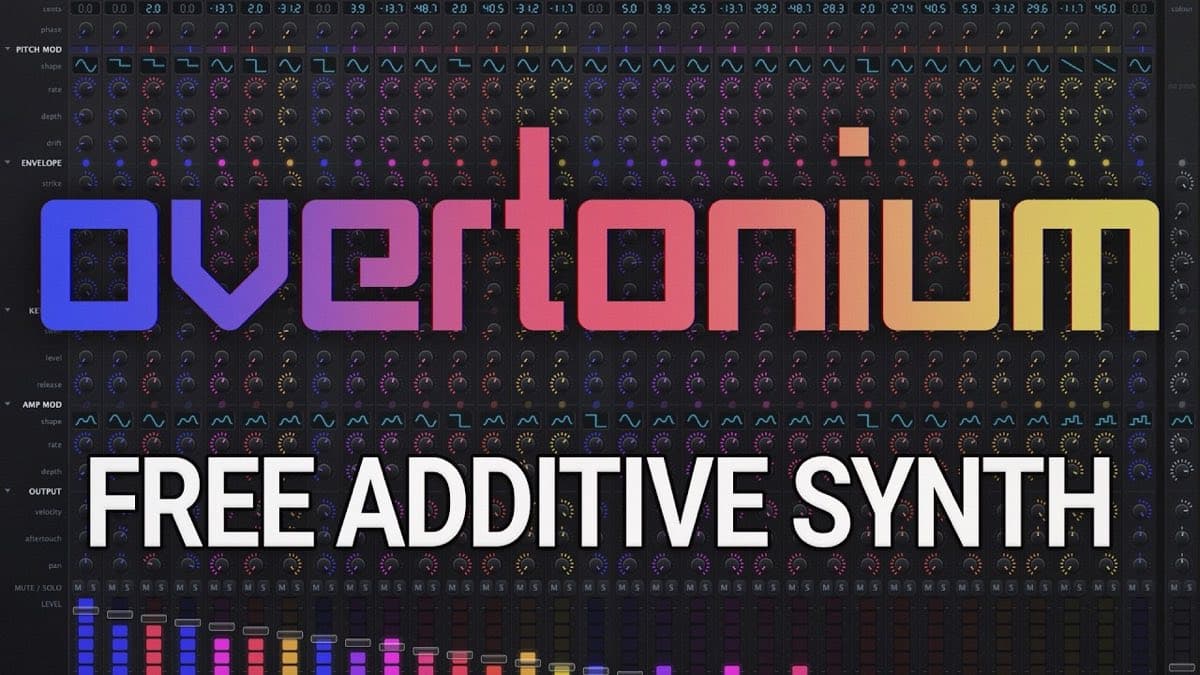
You get lowpass, highpass, bandpass, and notch filters, two ADSRs, two LFOs, a mod matrix, and effects including chorus, distortion, delay, reverb, EQ, and formant. The CPU and memory footprints are tiny. If your session is already heavy, Tunefish is the synth that will not push you over the edge. The latest pass here is Overtonium.
The Honest Limits: Where Paid Synths Still Win
Free synths have closed most of the gap. They have not closed all of it.
Paid flagships win on content and polish. Serum 2 launched in March 2025 with granular and spectral oscillators alongside its wavetable engine, plus deeper effect routing and a clip sequencer. Omnisphere 3 ships with an enormous sample-based library that no free synth can match. That breadth matters when you want a finished sound in seconds rather than building one from scratch. If you do decide to invest, you can explore paid synths and effects at Plugin Boutique.
Paid synths also tend to offer better factory presets, official support, and faster updates. Free open-source projects move at the pace of their volunteers. For most producers, that is a fair trade.
How to Choose
Start with Vital and Surge XT. Between them, you can cover modern electronic production and deep sound design without spending a cent. Add Dexed for vintage FM and keep Tunefish around for CPU-tight sessions. Reach for OB-Xd when you want analog character, and buy the paid version once your tracks go commercial. We covered the current release in KaitoSato IMFMSynth.
Need fresh sounds to play these synths against? Browse sample packs at Loopmasters, or try a subscription library like Loopcloud.
Frequently Asked Questions
Are free synth VSTs good enough for professional tracks?
Yes. Vital, Surge XT, Dexed, Odin 2, and Tunefish carry no licensing restrictions that block commercial use. OB-Xd is the exception. Its free version is personal-use only, so you need the paid version for released music. Sound quality is no longer the dividing line between free and paid.
What is the difference between Vital and Serum 2?
Both are wavetable synths with similar core workflows. Serum 2 adds granular and spectral oscillators, a larger preset and wavetable library, and official support, which is why it is paid. Vital's free tier covers most wavetable production needs without spending anything.
Which free synth is easiest for beginners?
Vital. Its animated modulation and clean layout make cause and effect obvious. Surge XT is more powerful but steeper. Dexed and FM synthesis in general are the hardest places to start.
Do these synths work in all DAWs?
All six support common plugin formats like VST3 or VST, and most add AU, CLAP, or LV2. That covers Ableton Live, FL Studio, Logic Pro, Bitwig, Reaper, and Studio One on Windows, macOS, and Linux.
Are open-source synths safe to download?
Yes, when you download from the official sites linked above. Open-source code is publicly auditable, and active projects like Surge XT and Odin 2 receive regular community updates. Avoid third-party "free download" mirrors.