Baby Audio SubCulture: A Bass Enhancer That Tracks Pitch
Baby Audio SubCulture is a pitch-tracking bass enhancer that generates in-tune subharmonics. Three engines, 177 presets, and $129. Full review inside.
Black Friday 2026Baby Audio Black Friday 2026: dates and deals →
See full specs, price, and alternatives in the plugin database →
Baby Audio released SubCulture on July 14, 2026. It is a pitch-tracking bass enhancer, and its whole reason to exist is one problem: most tools that add low end also add mud. SubCulture tracks the pitch of your bass in real time and generates subharmonics that stay in tune with each note.
That distinction matters. A static sub-boost or a rough octave-down effect can clash with the fundamental and smear the bottom of a mix. SubCulture aligns its processing to the incoming pitch, so the weight it adds sits under the note instead of fighting it.
What is SubCulture?
SubCulture is an effect plugin for adding maximal, in-tune low end to a bass. You place it on a bass track, and it uses pitch detection to build deep, tuned subharmonics that translate across any speaker system. The goal is a bottom end that still reads on a phone speaker or a laptop, not just in a treated room.
Baby Audio built the plugin on an adaptive architecture. The entire processing chain aligns to incoming pitch information, which is what separates it from bass enhancers that offer static boosting or basic pitch shifting. It fits the Baby Audio pattern: one focused job, a clean interface, and a professional preset library.
What's inside SubCulture?
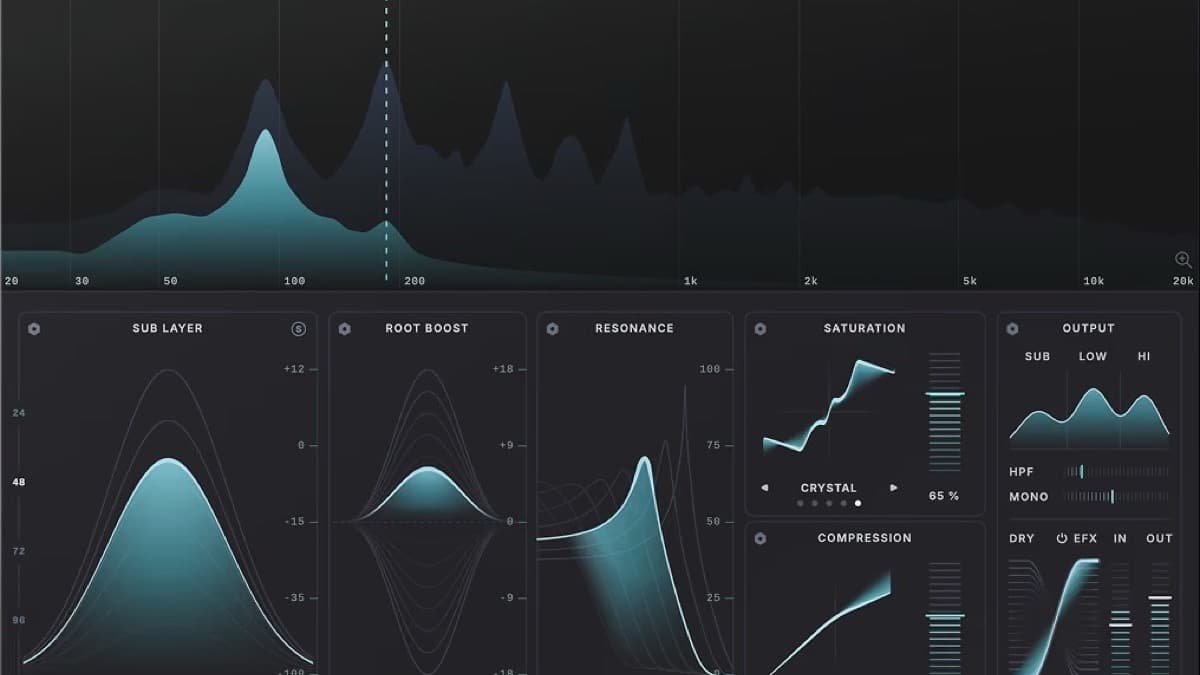
SubCulture combines three pitch-adaptive engines you can dial in independently, plus a set of finishing tools. Here is what each part does for your low end.
Sub Layer. This blends in a pitch-perfect subharmonic layer of the input, tunable up to two octaves below or above the original signal. It is the core weight-adder, and because it tracks pitch, the sub follows your basslines note for note.
Root Boost. A pitch-tracking EQ that follows the fundamental frequency of each note. Instead of boosting one fixed frequency, it emphasizes the key frequency area of whatever note is playing. That keeps every note in a bassline even in level, which is hard to achieve with a static EQ.
Resonance. A tuned parallel filter network modeled after a classic analog design. It adds warmth and harmonics while accentuating the tracked pitch, so the low end has character and cuts through, not just weight.
Analog-modeled saturation and compression. Beyond the three engines, SubCulture adds analog-style saturation and compression to glue and thicken the result. This is where a clean sub turns into a present, produced bass.
Mix and translation tools. A mix section balances how the low-end frequencies are distributed, a global high-pass filter cleans subsonic rumble, and a bass mono conversion keeps the bottom centered and phase-stable. Those are the moves engineers make by hand to get bass to translate, gathered in one place.
Deeper control and MIDI. Gear icons open deeper tweaking options for each engine. SubCulture can also take MIDI control, which helps it track polyphonic sources more reliably than audio detection alone.
SubCulture specifications
| Spec | Detail |
|---|---|
| Type | Pitch-tracking bass enhancer |
| Engines | Sub Layer, Root Boost, Resonance |
| Sub range | Up to two octaves below or above the input |
| Extra processing | Analog-modeled saturation and compression |
| Translation tools | Mix section, global high-pass, bass mono conversion |
| Control | MIDI input for polyphonic sources; deep per-engine tweaks |
| Presets | 177 (bass, kick, drums, synths, vocals) |
| Formats | VST, VST3, AU, AAX (64-bit), standalone |
| System | macOS 10.13+ (Apple Silicon native); Windows 10+ |
| Price | $129 regular (42% off through August 31, 2026) |
SubCulture vs Waves MaxxBass
The classic reference for this job is Waves MaxxBass, a long-standing subharmonic bass enhancer. Both add low end that small speakers can reproduce. The difference is how they decide what to add.
| SubCulture | Waves MaxxBass | |
|---|---|---|
| Method | Pitch-tracked subharmonics per note | Psychoacoustic harmonics from a set range |
| Tuning | Follows the fundamental of each note | Frequency-range based, not pitch-tracked |
| Engines | Three (Sub, Root Boost, Resonance) | Single subharmonic process |
| Extras | Saturation, compression, mono maker, HPF | Bass level and harmonics controls |
| Interface | Modern, preset-driven | Utilitarian |
| Price | $129 regular, currently 42% off | Around $99 |
The honest take: MaxxBass is a proven, efficient tool, and its harmonic approach helps bass read on tiny speakers without much added sub. SubCulture goes further by tracking pitch, so the sub it generates stays musically in tune across a moving bassline. If you want simple, reliable enhancement, MaxxBass still works. If you want tuned, controllable low end with saturation and translation tools built in, SubCulture is the more complete modern option. For surgical low-end EQ rather than generated weight, a tool like BassRoom covers a different need.
Who SubCulture is for
SubCulture suits producers whose tracks live and die by the low end. Trap, hip-hop, drum and bass, dubstep, and bass-forward pop are the obvious fits. If your mixes sound full on monitors but thin on phones and laptops, the pitch-tracked sub is exactly the fix.
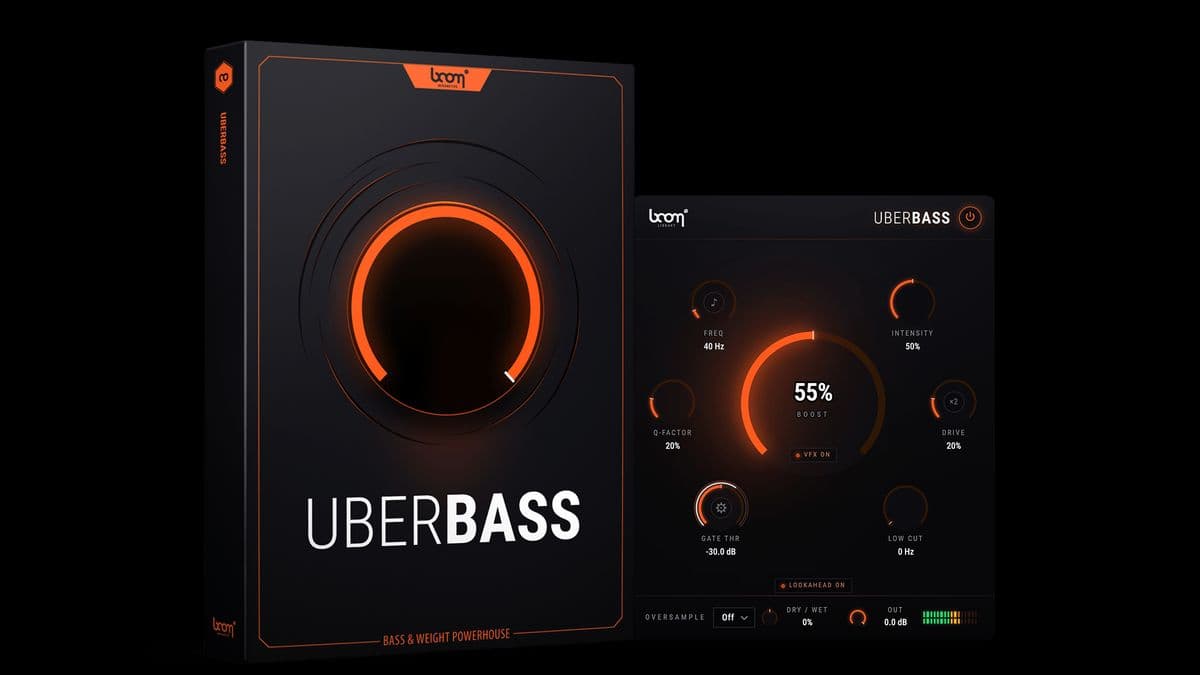
Who should skip it? If you already own a subharmonic generator you trust, the overlap is high. And if your low-end work is mostly cutting and shaping with EQ, a dedicated EQ serves you better than a generator. If the low end is already in the recording and you only want harmonics around it, BOOM Library UBERBASS is the other category. SubCulture adds weight; it is not a corrective tool.
How much does SubCulture cost?
SubCulture has a regular price of $129. Plugin Boutique lists it at $129. Baby Audio also offers a subscribe-to-own plan that bundles access to its catalog and lets you keep a plugin every six months. It runs as a VST, VST3, AU, or AAX plugin, plus a standalone version, on macOS 10.13 and up with native Apple Silicon support, and Windows 10 and newer. A free trial is available.
You can check current SubCulture pricing on Plugin Boutique.
For more on low-end production, see our 808 Day feature, the best free VST plugins in 2026, and the Low End Theory interview.
FAQ
What makes SubCulture different from other bass enhancers?
Pitch tracking. SubCulture detects the pitch of your bass in real time and generates subharmonics tuned to each note, so the low end it adds stays in tune instead of clashing with the fundamental.
Does SubCulture work on more than bass?
Yes. It ships with 177 presets covering kick, drums, synths, and vocals as well as bass. Its pitch tracking is most reliable on monophonic sources, and MIDI input helps with polyphonic material.
What are SubCulture's system requirements?
It runs on macOS 10.13 and up with native Apple Silicon support, and on Windows 10 and newer. Formats are VST, VST3, AU, AAX, and standalone.
SubCulture vs Waves MaxxBass, which should I buy?
MaxxBass is a proven, efficient subharmonic enhancer. SubCulture tracks pitch per note and adds saturation, compression, and translation tools. Choose MaxxBass for simple enhancement, SubCulture for tuned, controllable low end.
SubCulture is a focused plugin that does one thing at a high level. The pitch tracking is the real advance, and it turns a common mix headache into a fast, musical fix. For bass-heavy production, it is an easy tool to recommend.