Some links on this page are affiliate links. If you buy through them, Dubspot may earn a commission at no extra cost to you. It never affects our scores or what we recommend — read our policy.
Teenage Engineering EP-35 K.O. AMP: 35W, Battery, Interface
Teenage Engineering's first amp, the EP-35 K.O. AMP, packs 35W, a mic preamp, a guitar input, a USB audio interface and Bluetooth 5.3 into a battery-powered box.
E
Elena Marsh
October 30, 2026 · 9 min read
Black Friday 2026Teenage Engineering Black Friday 2026: dates and deals →
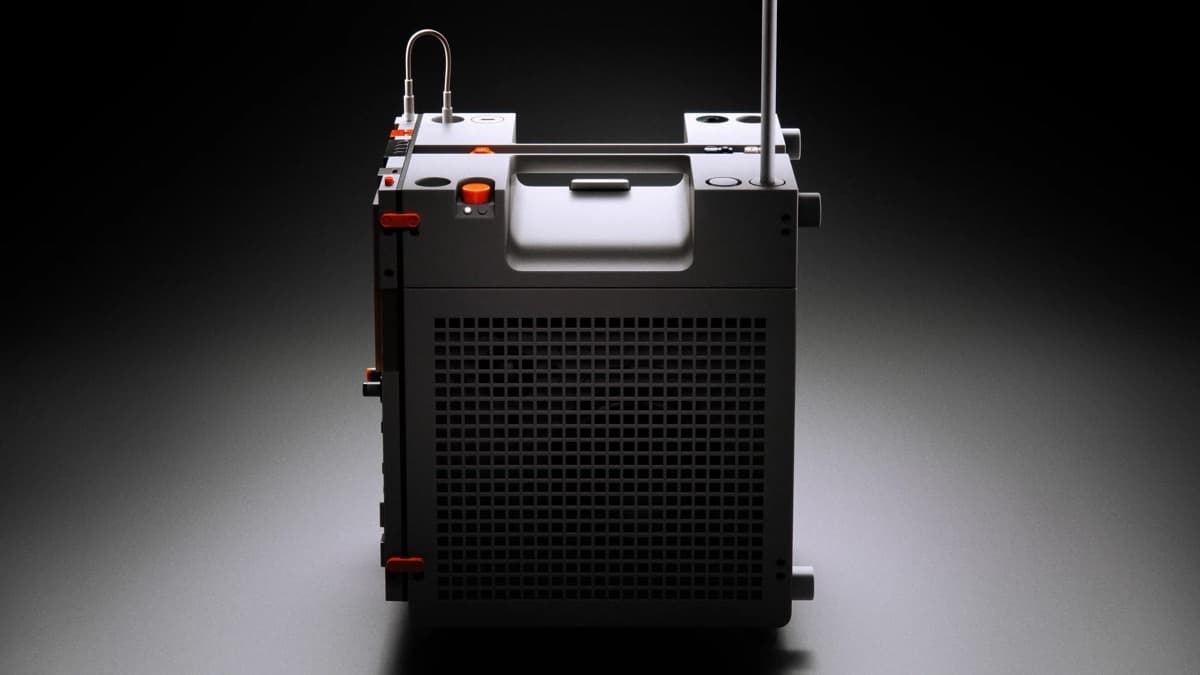
Teenage Engineering has built its first amplifier. The EP-35 K.O. AMP is a battery-powered, cube-shaped box that works as an instrument amp, a Bluetooth speaker, a mic preamp and a USB audio interface at once. It launched alongside the company's new New York store. The EP-35 is a 35-watt design with a four-inch woofer and a tweeter, and it slots into the same K.O. family as the EP-133 sampler.
At a glance: 35 watts, a 4-inch woofer plus a 1-inch tweeter, and up to 12 hours on its battery. An XLR mic input with phantom power, a 6.35 mm guitar input, a 3.5 mm line in, and a USB-C port that doubles as a 2-in, 8-out audio interface. Sixteen onboard effects, Bluetooth 5.3 and a broadcast mode for pairing units. Listed at $399 in the US and £349 in the UK; Thomann's US store has it in stock at $375.
Check EP-35 price at ThomannWhat is the EP-35 K.O. AMP?
Teenage Engineering made its name on synths and samplers, not amplifiers. The EP-35 changes that. It is a portable combo built on a simple premise: whatever you plug in, a guitar, a synth, a mic or a phone, should do more than make noise. The K.O. AMP is an amplifier, a stereo-capable speaker, a mic channel and a computer audio interface in one battery-powered unit, styled like the rest of the K.O. line.
The name follows the K.O. range, which already includes the EP-133 K.O. II sampler and the EP-136 K.O. Sidekick. The EP-35 is the amp and speaker that sits under all of them, designed as the hub you carry to a jam, a busking spot or a desk. If you know the EP-133 K.O. II or the EP-40 riddim, the look and the pocket-sized ambition will feel familiar.
What the EP-35 does
35 watts, two drivers. Power comes from a 35-watt amplifier feeding a four-inch woofer and a one-inch tweeter in a mono one-plus-one layout. The frequency response runs from 50 Hz to 20 kHz at minus 6 dB, with a maximum of 94 dB SPL at one metre, so it is loud enough for a room or a small outdoor jam rather than a stage.
All the inputs, not just a guitar jack. This is the part that sets the EP-35 apart from a normal practice amp. There is an XLR microphone input with 0 to 54 dB of analog gain and switchable 48-volt phantom power, which means a condenser mic works straight in. A 6.35 mm guitar input offers 0 to 18 dB of gain with a Hi mode for hotter pickups, and a 3.5 mm stereo line in takes a synth or a phone. A 3.5 mm stereo line out feeds a bigger system when you need it.
A real audio interface. Plug the USB-C port into a computer or phone and the EP-35 appears as an audio device with two input channels and eight output channels. Channels one and two carry a stereo mixdown, three and four the guitar, five and six the mic, and seven and eight the line input, so each source can land on its own stereo pair in the DAW. The unit also receives stereo back, and MIDI CC 7 controls the level of each input. The same port charges the unit at up to 27 watts, and a second charge-only USB-C port inside the storage compartment takes up to 45 watts.
Sixteen onboard effects. The amp has eight guitar effects, from clean and twang to blues, overdrive and an indie voice, and eight mic effects including radio, megaphone, a robot choir and a bass synth. Each effect has an amount dial, so you shape it from the panel rather than an app.
Bluetooth and multi-unit pairing. Bluetooth 5.3 with LE Audio and Auracast handles wireless playback, and a broadcast mode lets several EP-35 units pair as a single Bluetooth device for stereo or wider sound. The battery is a 20.1 Wh lithium-ion cell that charges in two hours and plays for up to 12 hours at volume five, then drops to standby after 10 minutes of silence and wakes when it hears audio again.
EP-35 K.O. AMP specifications
| Spec | Detail |
|---|---|
| Power | 35 watts |
| Speakers | 4-inch woofer and 1-inch tweeter, mono 1+1 |
| Frequency response | 50 Hz to 20 kHz (-6 dB) |
| Max SPL | 94 dB at 1 m |
| Battery | 20.1 Wh lithium-ion, 2-hour charge, up to 12 hours play at volume 5 |
| Mic input | XLR, 0 to 54 dB gain, switchable 48 V phantom |
| Guitar input | 6.35 mm, 0 to 18 dB gain, Hi mode |
| Line in / out | 3.5 mm stereo in and out |
| USB audio | USB-C interface, 2 in and 8 out, charges to 27 W; second charge-only USB-C to 45 W |
| Effects | 8 guitar and 8 mic effects, each with an amount dial |
| Bluetooth | 5.3 with LE Audio and Auracast, broadcast mode to pair units |
| Price | $399 US, £349 UK |
EP-35 vs Positive Grid Spark GO
The closest reference point most producers have for a small, smart, battery amp with a speaker and effects is Positive Grid's Spark line. The ultra-portable Spark GO is the obvious comparison, so here is how the two differ.
| Teenage Engineering EP-35 | Positive Grid Spark GO | |
|---|---|---|
| Power | 35 W | 5 W |
| Speakers | 4-inch woofer and 1-inch tweeter | Single 2-inch driver |
| Mic input | XLR with 48 V phantom | None |
| Audio interface | 2-in, 8-out over USB-C | 2-channel over USB-C |
| Effects | 16 onboard, panel-controlled | Amp and effect models via the Positive Grid app |
| Battery | Up to 12 hours | Battery powered |
| Price | $399 list ($375 at Thomann US) | $95 at Thomann US |
Which to pick? The Spark GO is a tiny, cheap practice amp whose strength is app-based amp modelling, so it is the better buy if you want a large library of guitar tones for the price of a pedal. The EP-35 is a different machine. It is louder, with real two-driver stereo-capable sound, a proper XLR mic channel with phantom power, and a multi-channel interface that records every input on its own track. It costs far more, and its effects are fixed on the panel rather than swappable in an app. For busking, mixed-input jams or a desk that needs one box for monitoring, mic and guitar, the EP-35 earns its price. For bedroom guitar practice on a budget, the Spark GO does not.
Who the EP-35 is for
It is for the Teenage Engineering crowd that already owns a K.O. sampler or an OP synth and wants a portable box to hear it on, mic into and record from. It suits buskers and small acoustic sets, thanks to the mic preamp and the 12-hour battery. It also fits a compact desk setup, where one unit covering monitor, interface and mic saves space. The broadcast pairing makes it a neat choice for anyone who wants easy stereo from two matching units.
Who should skip it: gigging players who need stage volume and are better served by a larger powered speaker, and anyone after deep amp modelling, which the EP-35 does not do. At $399 it is also a premium price for the power on offer, so budget players who only need practice volume will get more watts per dollar elsewhere.
How much does the EP-35 cost?
The EP-35 K.O. AMP lists at $399 in the US and £349 in the UK, with European listings around €399. Thomann's US store has it at $375 and in stock on 30 October: check the EP-35 at Thomann. Teenage Engineering also sells a range of add-ons, including the EP-127 K.O. pedal, the amptenna FM receiver, a pocket bag and a dock kit, so the final price depends on how far down the accessory list you go.
If you want to see where it fits next to the rest of the range, our EP-136 K.O. Sidekick coverage and the wider plugin and gear database are good next stops.
FAQ
Is the EP-35 K.O. AMP a guitar amp or a speaker?
Both, and more. It is a 35-watt amplifier with a four-inch woofer and a tweeter that also works as a Bluetooth speaker, a mic preamp with phantom power and a USB audio interface, so it covers guitar, synth, mic and playback from one box.
Can the EP-35 record into a DAW?
Yes. Over USB-C it appears as an audio interface with two inputs and eight outputs, mapping the guitar, mic and line inputs to their own channels, and it receives stereo back from the computer. MIDI CC 7 sets the level of each input.
How long does the EP-35 battery last?
The 20.1 Wh lithium-ion battery charges in about two hours and plays for up to 12 hours at volume five. The amp drops to standby after 10 minutes without audio and wakes when it detects sound.
Does the EP-35 have a microphone input?
Yes. It has an XLR input with 0 to 54 dB of gain and switchable 48-volt phantom power, so a condenser microphone works directly, along with eight mic effects such as radio and megaphone.
How much does the EP-35 K.O. AMP cost?
It lists at $399 in the US and £349 in the UK, with European prices around €399. Thomann's US store has it in stock at $375.