Some links on this page are affiliate links. If you buy through them, Dubspot may earn a commission at no extra cost to you. It never affects our scores or what we recommend — read our policy.
The Attic 3: 24 Rare Synths, Sampled Every Key
Soniccouture The Attic 3 samples 24 rare synths on every key, with 600 presets for Kontakt Player. The intro is $175 through 6 October 2026, then $250.
E
Elena Marsh
October 2, 2026 · 9 min read
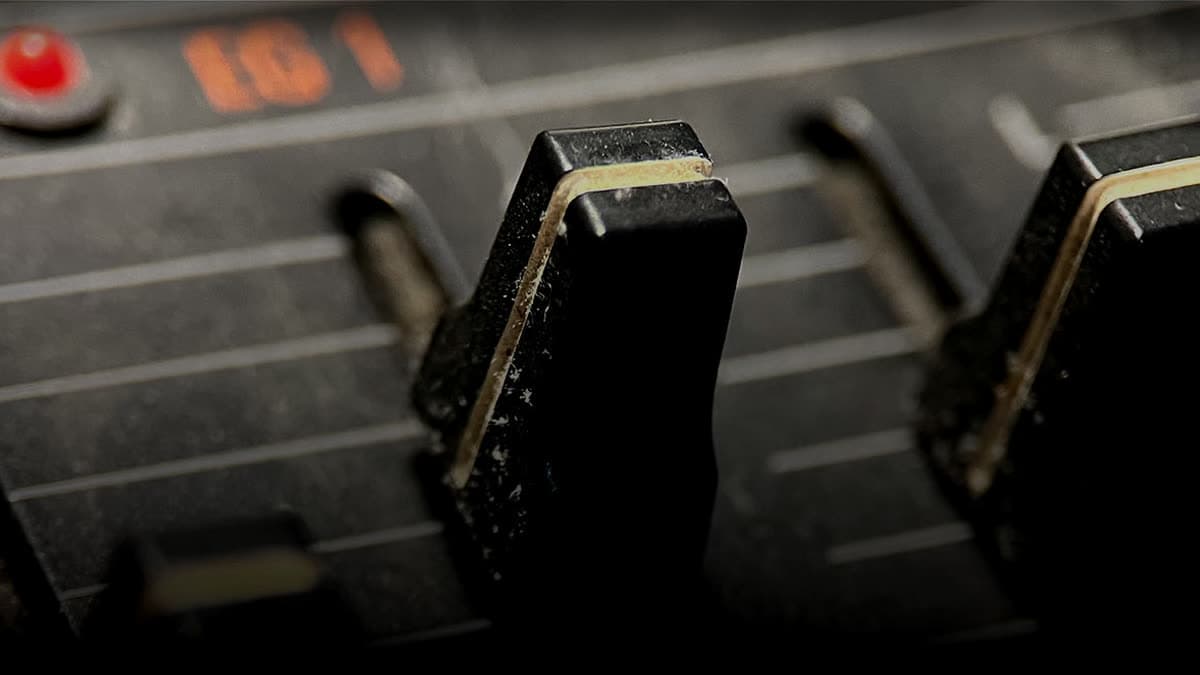
Soniccouture has released The Attic 3, a Kontakt library of 24 rare and half-forgotten synths, sampled on every key. The intro price is $175 through 6 October 2026. The regular price is $250. An upgrade from The Attic 2 is $79 or €79. This is a first look from the official product page and Soniccouture's own videos, not a hands-on review.
At a glance: 24 instruments, about 600 presets, roughly 24 GB, 24-bit / 48 kHz. Every key sampled, with modelled filters and envelopes. Kontakt Player and full Kontakt 7.10 or later, or Kontakt 8, with NKS. Windows 10 or higher. macOS 12 or higher. Intro pricing is also on Best Service at $175 and €175.
What The Attic 3 is
The Attic series looks past the synths that already have a faithful plugin. Soniccouture's line is that a knock-off now exists for every classic, so this library digs into the margins: analogue pianos, odd organs, glassy digital boxes, a vocal synth, and string machines. The machines are sampled note by note. Filters and envelopes are then modelled, so the vintage behaviour is not only a static sample.
Version 3 is 24 instruments and 600 presets in about 24 GB. Six of those instruments are new. The rest carry forward the earlier Attic set, still sampled across the full range.
What is new in The Attic 3
The six additions are the reason to look at version 3 if you already own Attic 2.
Yamaha CS-15. A mono and duophonic analogue from 1978 to 1982. Two complete synth voices and dual multimode filters. Soniccouture describes the build as rugged, almost military.
Octave-Plateau Voyetra 8. An eight-voice poly from 1982, dual architecture, a heavy unison. Rare enough that most people know it from a video appearance rather than from a studio they have visited.
Elka Rhapsody 610. Fully polyphonic strings and keys: cello, strings, clav, and piano, in variable and split layouts. The unit Soniccouture sampled belonged to Peter Henderson.
Sequential Circuits Split-8. Not the Prophet. A split poly with the architecture for large layered patches, sampled because it sounds larger than its reputation.
Casio CZ-101. Phase distortion in a small plastic case. A lot of sounds in one box, with the aliasing and the plastic edge left in.
Joh Mustad Tubon. A 1966 neck-worn keyboard with a volume and envelope dial and five presets of raw tone. It is the oddest instrument in the new set, and it is here on purpose.
The instruments that stay
The carried library is the part that makes Attic a collection rather than six new demos. Soniccouture lists the EMS Synthi AKS, ARP Omni-2, Solina String Ensemble, Roland RS-202, Roland SH-2000, Moog MinitMoog, Siel Orchestra 2, Logan Vocalist, Cheetah MS-800, Crumar DP-80, Farfisa VIP 345, Korg LP-10, Korg Mini-700, Hammond Solovox, Godwin String Concert, Jennings Univox, Suzuki Omnichord, and Philips Philicorda.
A few of those are worth knowing before you buy for a single sound. The Synthi AKS is the portable VCS3 with the pin-matrix patchbay. The ARP Omni-2 is a string machine plus a simple monosynth you can crossfade. The Logan Vocalist is an analogue choir with tenor, soprano, and a solo section, each with a formant filter, at six-note polyphony. The Philicorda is a 1960s transistor organ with a spring, rebuilt here as convolution, plus a voxchord split that turns the lower keys into chords. The Cheetah MS-800 is a small sample-based 1980s brick, aliased and phasey. The Crumar DP-80 is a heavy analogue piano with a free filter that can flip between two low-pass slopes or high-pass plus low-pass.
None of these are presented as neutral recreations of a Minimoog or a Juno. The point is the quirk: tuning drift per key, a chorus that fizzes, a preset paddle, a touchplate.
Every key, then a model of the behaviour
The sampling rule Soniccouture rejects is the old shortcut of two notes per octave. On a 40-year-old synth, each key has its own level, its own tuning error, and its own noise. Attic 3 records the full range of each instrument. More notes, more of that discrepancy, more of the character when you play a line instead of a single sampled octave stretched across the keyboard.
Filters and envelopes are modelled on top of those samples, so you are not stuck with one recorded gesture. A custom impulse-response reverb uses Soniccouture's own IR library. The Philicorda spring lives in that convolution section. Presets, about 600, include sounds by Ian Boddy. The library is 24-bit, 48 kHz, about 24 GB.
The Attic 3 specifications
| Spec | Detail |
|---|---|
| Type | Sampled rare-synth collection with modelled filters and envelopes |
| Developer | Soniccouture |
| Instruments | 24, six of them new in Attic 3 |
| New machines | Yamaha CS-15, Voyetra 8, Elka Rhapsody 610, Split-8, CZ-101, Tubon |
| Sampling | Every key, 24-bit, 48 kHz |
| Size | About 24 GB |
| Presets | About 600, including sounds by Ian Boddy |
| Effects | Custom IR reverb and Soniccouture IR library |
| Player | Kontakt or Kontakt Player 7.10 or later, or Kontakt 8 |
| NKS | Yes |
| Windows | 10 or higher, Intel Core Duo or AMD Athlon 64 X2, 4 GB RAM (6 GB recommended) |
| macOS | 12 or higher, Intel Core 2 Duo, 4 GB RAM |
| Intro price | $175 through 6 October 2026 |
| Regular price | $250 |
| Attic 2 upgrade | $79 / €79 |
The Attic 3 vs UVI Synth Anthology 5
The closest library already on the site is UVI Synth Anthology 5, a sample instrument of 300 hardware synths and thousands of presets. Anthology is breadth: famous machines, a lot of them, in UVI Workstation or Falcon. Attic 3 is a short list of machines most collections skip, recorded on every key, and played in Kontakt.
| The Attic 3 | UVI Synth Anthology 5 | |
|---|---|---|
| Price | $175 intro, $250 regular | $149 full (intro was $89) |
| Instruments | 24 rare or obscure synths | 300 hardware synths |
| Sampling | Every key on each machine | Large multi-sample set, 55 GB WAV |
| Presets | About 600 | 6,000+ sound layers |
| Host | Kontakt Player 7.10+ or Kontakt 8 | Free UVI Workstation or Falcon |
| Best at | Odd analogue, strings, organs, vocal synths | Wide vintage-to-modern synth palette |
Pick Attic 3 when the sound you want is a Solina, a Synthi, a Philicorda, or a CZ-101 with the key-to-key mess left in. Pick Anthology when you want hundreds of familiar synths in one browser and you already live in UVI. The Synth Anthology 5 review covers that library, and the Attic 3 plugin page holds the spec sheet. Arturia Analog Lab V is a third path: modelled classics and a preset browser, not a recording of these particular boxes. Kontakt 8 is the host if you do not want to stay on the free Player.
Who The Attic 3 is for
It fits producers who are tired of the same five virtual analogues and want a string machine, a vocal synth, or a nasty little digital preset with the hardware's tuning still attached. Composers who write with Kontakt already have the player.
Skip it if you need deep oscillator editing. These are samples plus models of filter and envelope, not a blank FM or wavetable synth. Skip it if 24 GB and a Kontakt install are a problem, or if you wanted a Minimoog, a Jupiter, and a DX7 and nothing else. The Attic 2 upgrade at $79 is the sane path if you already own the previous library and mainly want the six new machines.
How much The Attic 3 costs
On Soniccouture the intro is $175 through 6 October 2026, then $250. The Attic 2 upgrade is $79 or €79. Best Service lists the same intro at $175 and €175, against a struck price of $249 and €249. You do not need full Kontakt. Kontakt Player 7.10 or later, or Kontakt 8, is enough, and the instrument is NKS.
FAQ
Is The Attic 3 a synth plugin or a sample library?
It is a Kontakt instrument. The oscillators are samples of real hardware, recorded on every key. Filters, envelopes, and a convolution reverb are modelled around those samples.
Do I need the full version of Kontakt?
No. It runs in Kontakt Player or Kontakt 7.10 or later, and in Kontakt 8. NKS is supported, so it loads in a DAW as a plugin instrument.
What is new compared with The Attic 2?
Six instruments: Yamaha CS-15, Octave-Plateau Voyetra 8, Elka Rhapsody 610, Sequential Circuits Split-8, Casio CZ-101, and Joh Mustad Tubon. Owners of Attic 2 can upgrade for $79 or €79.
How large is the download, and what are the system requirements?
About 24 GB, 24-bit, 48 kHz. Windows 10 or higher with 4 GB RAM, 6 GB recommended. macOS 12 or higher with 4 GB RAM.
Is the $175 price the regular price?
No. $175 is the intro through 6 October 2026. Soniccouture's regular price is $250. Best Service shows the intro at $175 and €175.