Some links on this page are affiliate links. If you buy through them, Dubspot may earn a commission at no extra cost to you. It never affects our scores or what we recommend — read our policy.
Rupert Neve Designs' First Plugins: Portico II, 551, 542
Rupert Neve Designs released its first in-house plugins: the Portico II Master Buss Processor, 551 Inductor EQ, and 542 Tape Emulator, built with McDSP. Specs, price, and verdict.
M
Marcus Feld
October 6, 2026 · 7 min read
See full specs, price, and alternatives in the plugin database →
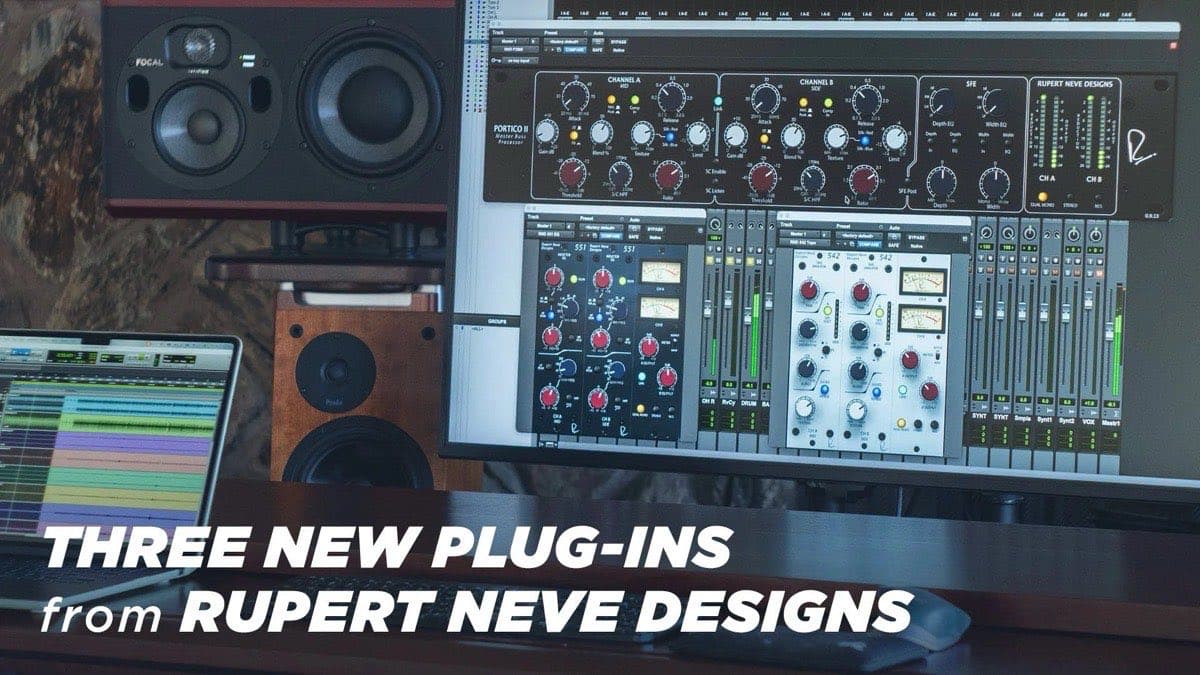
Rupert Neve Designs has released its first ever plugins. On September 15, 2026 the company announced software versions of three of its hardware units: the Portico II Master Buss Processor, the 551 Inductor EQ, and the 542 Tape Emulator. All three were developed with McDSP. They are now on sale at the official RND webstore and through resellers including Plugin Boutique.
At a glance: three plugins, sold individually at $199 (Portico II MBP), $129 (551 Inductor EQ), and $129 (542 Tape Emulator). Formats are AAX, AU, and VST3, running native on Intel and Apple silicon, with a 14-day free trial. These are the first plugins released under the Rupert Neve Designs name, modeled by McDSP, and they cover a mastering-grade bus processor, a Neve-designed inductor EQ, and a tape and harmonic saturation tool.
What is Rupert Neve Designs doing in plugins?
Rupert Neve is the most storied name in analog console and outboard design, and his company's hardware powers studios and live rigs worldwide. Until now, if you wanted the RND sound in software, you relied on units other brands licensed and modeled. These three releases are different: they are the first plugins the company has put out under its own name, so the people who make the hardware signed off on how it sounds in the box.
The modeling partner is McDSP, one of the longest-running plugin developers in pro audio. In the announcement, McDSP founder Colin McDowell framed the project as a rare collaboration the company took on because of the quality of the source gear. The split plays to both strengths. RND supplies the circuits and the final say on tone, while McDSP brings two decades of modeling experience. The aim is a faithful recreation rather than a loose impression, with a few extra features that only software allows.
The three plugins, one by one
Portico II Master Buss Processor
The Portico II Master Buss Processor is the flagship of the launch. Released as hardware in 2011, it has long been a favorite of mixing, mastering, and live sound engineers for its precise dynamic control and its stereo field tools. In software it becomes a mix-bus and mastering anchor: a compressor and limiter paired with stereo width and tone shaping that can glue a full mix without squashing it. For most people, this is the plugin that justifies the launch. A flagship RND bus unit in the box is something a home or project studio cannot otherwise reach.
551 Inductor EQ
The 551 Inductor EQ carries a detail no other plugin in this space can claim. It is the only 500-series equalizer designed by Mr. Neve himself. Its circuit comes from the Shelford Channel, and it offers three bands voiced after his most prized vintage designs. Inductor EQs have a particular sound, a slightly resonant, musical push that producers associate with classic records. This is a direct line to that tone rather than a generic bell-and-shelf tool.
542 Tape Emulator
The 542 Tape Emulator brings the RND tape saturation circuit into software, along with a soft-clipper for taming harsh sources and the company's Silk Red and Blue harmonic saturation. That combination is what gives Neve gear its weight. Silk lets you dial in low or high harmonic content, so you can thicken a bass, add air to a vocal, or push a drum bus into pleasant grit. As a tape tool it leans less on wow and flutter and more on the harmonic glue and gentle limiting that tape gives a signal.
Rupert Neve Designs plugins specifications
| Spec | Detail |
|---|---|
| Plugins | Portico II Master Buss Processor, 551 Inductor EQ, 542 Tape Emulator |
| Developer | Rupert Neve Designs, modeled by McDSP |
| Formats | AAX, AU, VST3 |
| Platform | Native on Intel and Apple silicon (macOS and Windows) |
| DAW support | Pro Tools, Logic Pro, Cubase, Nuendo, FL Studio, Ableton Live, LUNA, Reaper, Sonar, Studio One, and other AAX/AU/VST3 hosts |
| Authorization | iLok (iLok2 or iLok3 USB, machine-based, or iLok Cloud), two activations per license |
| Trial | 14-day free trial per plugin |
| Price | Portico II MBP $199, 551 Inductor EQ $129, 542 Tape Emulator $129 |
| Released | September 15, 2026 |
How the RND plugins compare
The obvious reference point is Universal Audio, the other major name selling authentic, hardware-modeled processing as native plugins. The difference here is pedigree. UA models classic gear from many makers, while these three come from the company that still builds the originals, with McDSP handling the code. One recent example is the UA Empirical Labs FATSO native plugin, which no longer needs Apollo or UAD-2 hardware.
| Rupert Neve Designs plugins | Universal Audio native plugins | |
|---|---|---|
| Who models it | RND circuits, McDSP modeling | UA in-house modeling of licensed gear |
| What you get | Portico II bus, 551 inductor EQ, 542 tape | Large catalog across many brands |
| Entry price | From $129 per plugin | From around $99 to $299 per plugin |
| Formats | AAX, AU, VST3 | AAX, AU, VST3 |
| Copy protection | iLok | UA account, no iLok |
| Best for | The specific Neve bus, EQ, and tape voice | Breadth across many classic units |
If you want a general EQ you have plenty of excellent options already, from FabFilter Pro-Q 4 to Softube's reference equalizers. The reason to reach for the 551 is its specific inductor character, and the reason to reach for the Portico II MBP is a true flagship RND bus unit rather than a generic mix-bus compressor.
Who the RND plugins are for
These are for engineers and producers who already love the Rupert Neve sound and want it in their session without a hardware budget. Mix engineers get a mastering-grade bus processor and a harmonically rich tape tool. Anyone chasing that classic, slightly forward low-mid weight gets an inductor EQ with real provenance. Need one clean, surgical EQ or a transparent compressor instead? These are not aimed at you. Their appeal is character and heritage, not neutrality.
How much do the Rupert Neve Designs plugins cost?
The plugins are sold individually. The Portico II Master Buss Processor is $199, and the 551 Inductor EQ and 542 Tape Emulator are $129 each. Every plugin offers a 14-day free trial, so you can audition each one in your own sessions before buying. They are available from the official Rupert Neve Designs webstore and from resellers such as Plugin Boutique.
- Portico II Master Buss Processor on Plugin Boutique
- 551 Inductor EQ on Plugin Boutique
- 542 Tape Emulator on Plugin Boutique
FAQ
Are these really the first Rupert Neve Designs plugins?
Yes. Rupert Neve Designs has collaborated on software for other brands over the years, but the Portico II Master Buss Processor, 551 Inductor EQ, and 542 Tape Emulator are the first plugins released by the company itself. They were developed with McDSP.
Do the Rupert Neve Designs plugins need iLok?
Yes. Authorization uses iLok, either an iLok2 or iLok3 USB key, machine-based activation, or an iLok Cloud session. Each license includes two activations, so you can run the plugins on two systems.
Which one should I buy first?
For most people the Portico II Master Buss Processor is the standout, since it brings a flagship RND bus and mastering unit into the box. If you want vintage tone shaping, start with the 551 Inductor EQ. The 542 Tape Emulator is the pick if you want harmonic saturation and Silk coloring across your sources.
What DAWs do they work in?
They run in Pro Tools, Logic Pro, Cubase, Nuendo, FL Studio, Ableton Live, LUNA, Reaper, Sonar, Studio One, and any other host that supports AAX, AU, or VST3. They are native on both Intel and Apple silicon.