Softube Reference 1998 & 1956: Passive EQs Reviewed
Softube's Reference 1998 and 1956 Equalizers model classic passive tube EQs with parallel bands and tube saturation. Specs, pricing and how they compare.
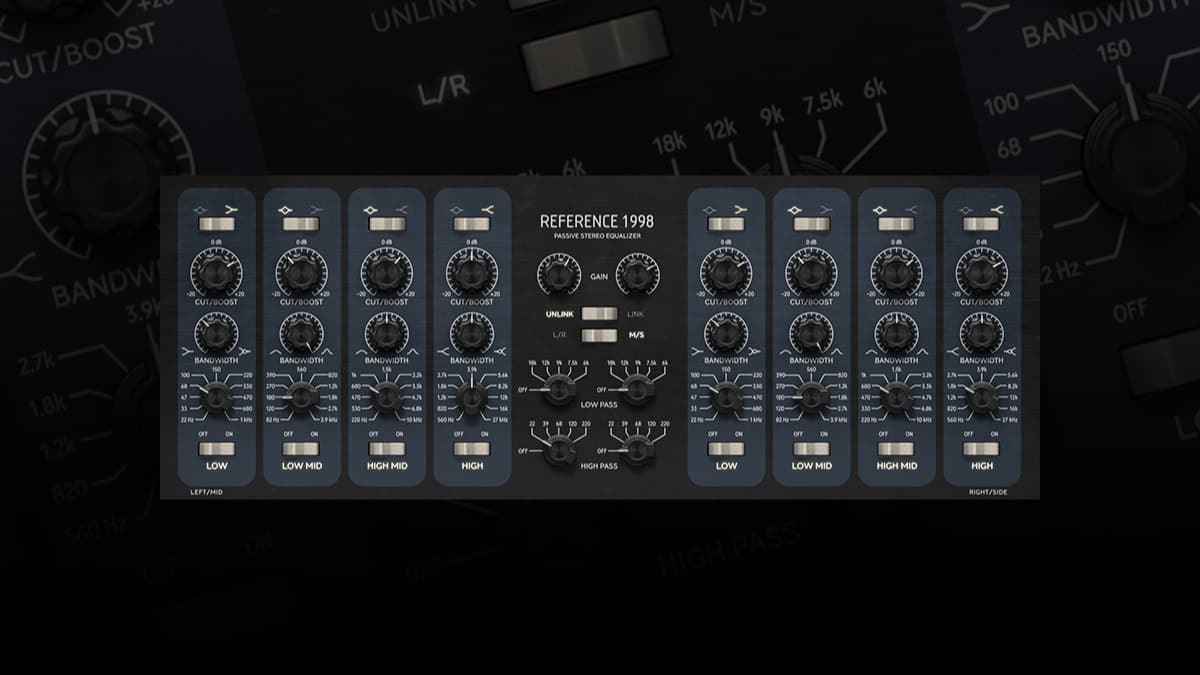
See full specs, price, and alternatives in the plugin database →
Softube went digging through studio history for its latest pair of plugins. On August 12, 2026, the company released the Reference 1998 Equalizer and its sibling, the Reference 1956 Equalizer. Both model classic passive tube EQ hardware, drawn from very different decades. They chase the same thing: the warm, saturated tone that passive equalizers add just by passing signal through them.
At a glance: Two modeled passive tube EQs. The Reference 1998 offers four parallel bands with a tube stage. The Reference 1956 is a minimum-phase passive design with Mid/Side and separate gain controls. Both are Console 1 ready and load into Softube's Equalizers plugin. Intro price is 79 USD/EUR each or 89 USD for the bundle, until September 12, 2026. They ship as AU, VST, VST3 and AAX for macOS and Windows.
What are the Softube Reference Equalizers?
A passive equalizer does not use active gain to boost a frequency. Instead, it attenuates and re-balances the signal through passive components, then an amplifier stage makes the level back up. That path adds a character of its own. Run it through a tube stage and you get the warmth, weight and gentle saturation that engineers have chased on mix buses and mastering chains for decades. Softube's Reference pair models two landmark examples of that design from opposite ends of studio history.
The Reference 1998 is the modern classic of the two. It's built around four passive, parallel EQ bands. The Reference 1956 is the vintage counterpart, a broad-stroke tone-shaper that trades precision for size and vibe. Both sit in the same territory as the UAD Pultec Collection and other passive-EQ models. They also slot naturally into a mastering chain next to tools like Dangerous BAX EQ and Maag EQ4.
What each Reference Equalizer brings
Reference 1998: four parallel bands with a tube stage
The Reference 1998 carries the tone-shaping of its hardware inspiration into software. Each of its four passive, parallel bands adds warmth and gentle saturation as you use it, and the modeled tube stage gives the plugin generous headroom. The shelving filters are the highlight. They range from wide, smooth curves to a colorful, unmistakable shape that gels with a mix the moment you engage it. You reach for this plugin to add weight and glue, not to cut a narrow problem frequency.
Reference 1956: broad strokes, big tone
The Reference 1956 models an older, minimum-phase passive design known for size rather than surgical accuracy. Softube did not stop at a straight recreation. It added Mid/Side functionality, separate gain controls and expanded frequency choices that the original hardware never offered. That blend of vintage character and modern routing makes it a strong mastering front end. You can lift the sides differently from the center, or shape the low end with a hardware voice inside a modern workflow.
Built to work together and inside Console 1
Both plugins are Console 1 ready, so they map straight onto Softube's hardware controller. They also load into the second slot of Softube's Equalizers plugin. That lets you stack a vintage Reference front end against modern curves, a frequency analyzer and dynamic EQ features, for up to 20 bands in one window. Corrective precision plus passive vintage tone is the pitch: analog color where you want vibe, clean digital control where you want accuracy.
Reference Equalizers specifications
| Spec | Detail |
|---|---|
| Type | Modeled passive tube equalizers |
| Reference 1998 | Four passive parallel bands, tube stage, colorful shelving filters |
| Reference 1956 | Minimum-phase passive design, Mid/Side, separate gains, extra frequencies |
| Integration | Console 1 ready, loads into Softube Equalizers for up to 20 bands |
| Formats | AU, VST, VST3, AAX |
| Systems | macOS 14, 15 or 26, Windows 10 or 11 64-bit |
| Authorization | Softube account and iLok account |
| Trial | 20-day full trial |
| Price | 79 USD/EUR each intro, 89 USD bundle |
Reference 1998 vs UAD Pultec Collection
The obvious comparison is the UAD Pultec Collection, long the reference point for passive-EQ color in a plugin. Both deliver tube warmth and the famous passive tone. Where they part ways is breadth and workflow.
| Softube Reference 1998 | UAD Pultec Collection | |
|---|---|---|
| Design | Late-90s passive tube EQ, four parallel bands | Classic Pultec EQP and MEQ program EQs |
| Character | Warm shelves, from smooth to bold and colorful | Iconic low-end boost-and-attenuate trick, midrange shaping |
| Modern extras | Console 1 ready, loads in Softube Equalizers | Runs native and on UAD hardware |
| Companion | Reference 1956 sibling for a second era | Multiple Pultec-style units in one collection |
| Price | 79 intro each, 89 bundle | Varies, frequently on sale |
The Pultec Collection is the definitive vintage boost-and-cut voice, and it's hard to beat for that specific low-end move. The Reference 1998 answers with a different flavor of passive warmth, four flexible parallel bands, and a route into Softube's wider EQ environment through Console 1 and the Equalizers plugin. Want the iconic Pultec sound? Buy the Pultec. If you're after a fresh passive tone and tight integration with a Softube setup, the Reference pair makes a strong case.
Who the Reference Equalizers are for
These are tone plugins for mixers and mastering engineers who want analog-style color, not corrective precision. If your mix bus or master needs warmth, weight and a little tube saturation, the Reference 1998 delivers it in a few moves. The Reference 1956 then adds a broader, characterful voice with modern Mid/Side control. The pair is an especially easy call for anyone already running Console 1 or Softube's Equalizers, where it drops in as a vintage front end.
Look elsewhere if you need surgical or dynamic EQ to solve problems. A clean parametric like FabFilter Pro-Q 4 or a resonance tool like soothe2 does that job better. The Reference Equalizers are about the sound you add on purpose, not the frequencies you fix.
How much do the Reference Equalizers cost?
Each plugin launched at an intro price of 79 USD/EUR, down from a regular price near 99 USD/EUR, with the promotion running until September 12, 2026. The bundle of both costs 79 EUR or 89 USD during the intro, and an Equalizers plus Reference bundle runs 99 USD in the same window. Both are also available inside the Flow Mastering Suite and Flow Complete Suite subscriptions. A 20-day full trial lets you test them on your own material first. Check current pricing on Plugin Boutique.
FAQ
What is the Reference 1998 Equalizer based on?
It models a modern-classic passive tube equalizer from the late 1990s, built around four passive, parallel EQ bands with a tube stage. Softube captured its warm, saturated tone and its shelving filters, which move from wide and smooth to a bold, colorful shape.
Reference 1998 vs 1956, what is the difference?
The Reference 1998 is the more refined, modern-classic voice with four parallel bands. The Reference 1956 is an older, broad-stroke passive design with bigger tone. Softube then updated it with Mid/Side, separate gain controls and extra frequency choices the original never had.
Do I need Console 1 or the Equalizers plugin to use them?
No. Both work as standard AU, VST, VST3 and AAX plugins in any compatible DAW. Console 1 support and the ability to load them inside Softube's Equalizers plugin are bonuses. They unlock deeper integration and up to 20 bands of combined EQ.
What are the system requirements and price?
They run on macOS 14, 15 or 26 and Windows 10 or 11 64-bit, and they need a Softube account and an iLok account. Each launched at 79 USD/EUR intro, with the bundle at 89 USD, through September 12, 2026. A 20-day trial is available.
Verdict
The Softube Reference Equalizers do one thing and do it well. They add the warm, saturated color of passive tube EQ hardware, then bolt a modern workflow on top. The Reference 1998 is the easy everyday pick for tube warmth on a bus or a master. The Reference 1956 brings a bigger, more vintage voice with Mid/Side control the hardware never had. These are tone tools, not problem-solvers, and the full value shows once you combine both or fold them into a Console 1 rig. For color on the mix bus and polish on the master, they belong on the shortlist. See how they stack up against the rest of our mixing and mastering coverage and the wider plugin database.