UA Empirical Labs FATSO: The Tape Box Goes Native
UA's Empirical Labs FATSO is now a native plugin for any DAW: tape-style saturation, transformer warmth and four compression modes. Intro $79, regular $149.
Black Friday 2026Universal Audio Black Friday 2026: dates and deals →
Universal Audio has released the Empirical Labs FATSO as a native plugin, which means the classic tape-and-glue box finally runs in any DAW without Apollo or UAD-2 hardware. It landed on October 13, 2026, built with original FATSO designer Dave Derr, and it carries over the Warmth, transformer saturation and compression that made the hardware a studio staple. This is a first look based on Universal Audio's official announcement and product page, not a hands-on review.
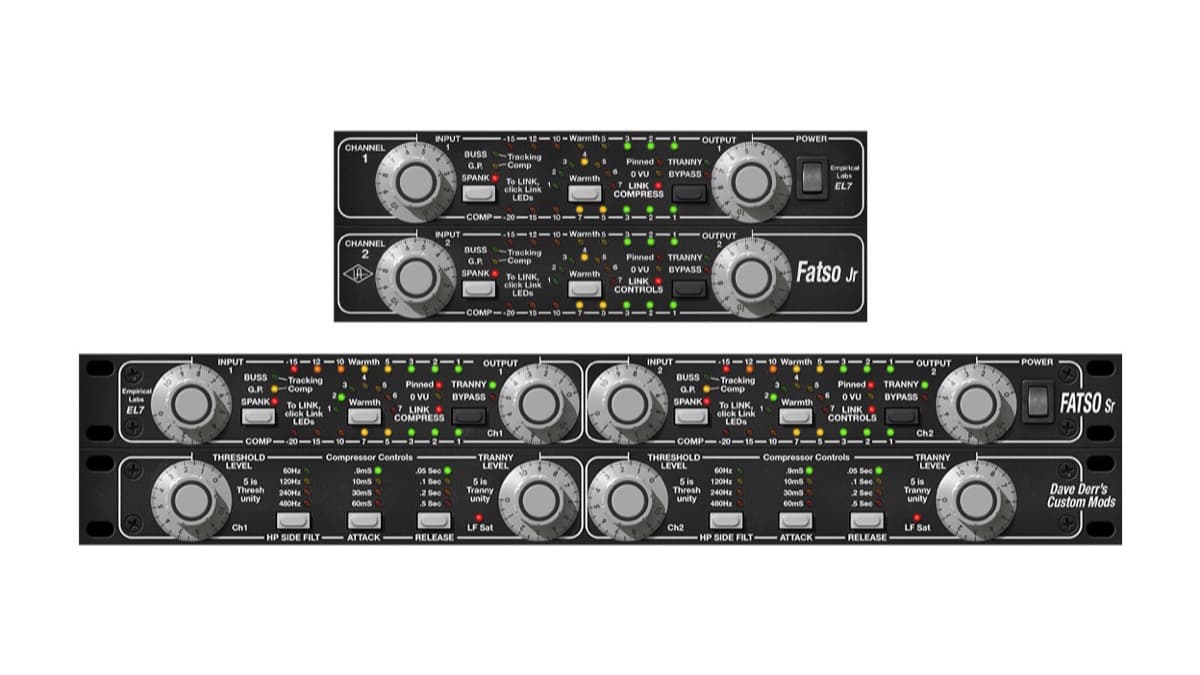
At a glance: FATSO native is one plugin with two versions inside, the FATSO Jr and the FATSO Sr. It models the Empirical Labs hardware that stands for Full Analog Tape Simulator and Optimizer, folding tape-style saturation, transformer warmth and four compression modes into a single unit. It runs natively on macOS and Windows as VST3, AU and AAX, with no UA hardware required. The introductory price is $79 through December 31, 2026, dropping from a regular $149, and owners of the Apollo DSP version upgrade to native for $2.99.
What is the Empirical Labs FATSO?
The FATSO is an analog character box: part saturator, part compressor, part transformer warmer. The hardware earned its reputation by making digital recordings sound thicker and more cohesive, which is why engineers kept one across the mix bus, the drum bus and individual tracks. Universal Audio has sold a modeled version for years, but until now it ran only on Apollo interfaces and UAD-2 accelerators as a Powered Plug-In.
The October 2026 release changes the delivery, not the DNA. FATSO now runs as a UAD native plugin, so it loads in Ableton Live, Logic Pro, Pro Tools, Cubase, FL Studio and any other host on your CPU, the same as a normal plugin. That brings a sound engineers already trust to setups that never had UA hardware, which is the whole point of the native catalog.
It helps to know what FATSO is not. It isn't a full tape-machine emulation in the mould of the UAD Ampex ATR-102 or Studer A800, which model reel-to-reel decks with tape speed, formulation and wow and flutter. FATSO is a faster, more opinionated character unit: you push it, it thickens, and you move on.
Jr and Sr: two versions, one plugin
FATSO ships as two linked versions, and you choose based on how much control you want.
FATSO Jr delivers the core tones: the modern tape and compression sound that most people picture when they think of the box. It's the quick option, with the signature Warmth and saturation on tap and sensible compression behaviour baked in.
FATSO Sr opens up the deeper controls. It adds a dedicated Tranny saturation control, sidechain filtering, and finer compression parameters including threshold, attack and release, where the simpler version keeps those fixed. If you want to dial the compression precisely rather than take the factory character, Sr is the one.
What FATSO does to a signal
Under the hood, FATSO stacks a few processes that add up to its thickening effect.
Warmth is high-frequency saturation and soft limiting that tames harshness. It's the control engineers lean on for drums, for bass that needs to read on small speakers, and for vocals that are too bright. Push it and the top end rounds off instead of spiking.
Tranny adds transformer and tape-head style saturation, generating harmonics that fatten the signal. This is where the "tape" in the name comes from, and it's the heart of the box's character.
Compression offers four modes, labelled Buss, G.P. (general purpose), Tracking and Spank. Buss is the gentle glue setting for mixes and submixes, Spank is the aggressive, pumping option that producers love on parallel drums, and the two in between cover everyday tracking duties. Running a drum bus into Spank and blending it back under the dry signal is a classic FATSO move, and our parallel drum compression guide covers the technique in full.
FATSO native specifications
| Spec | Detail |
|---|---|
| Type | Tape-style saturation, transformer warmth and compression |
| Versions | FATSO Jr (core tones) and FATSO Sr (deeper control) in one plugin |
| Saturation | Warmth (high-frequency saturation and soft limiting), Tranny (transformer and tape-head saturation) |
| Compression modes | Buss, G.P., Tracking, Spank |
| Sr extras | Tranny saturation control, sidechain filtering, threshold, attack and release |
| Platform | UAD native; no Apollo or UAD-2 hardware required |
| Formats | VST3, AU, AAX |
| OS | macOS and Windows |
| Subscription | Included in UAD Spark Studio |
| Developed with | Dave Derr, original FATSO designer at Empirical Labs |
How FATSO compares
FATSO's closest rival in most sessions is Soundtoys Decapitator, the go-to analog-modelled saturator. They solve overlapping problems from opposite directions: FATSO bundles saturation with compression and leans toward glue, while Decapitator is pure character distortion with no dynamics.
| UA Empirical Labs FATSO | Soundtoys Decapitator | |
|---|---|---|
| Price | $79 intro (regular $149) | $99 |
| Core job | Tape saturation plus compression | Analog-style saturation and distortion |
| Compression | Yes, four modes | No |
| Saturation styles | Warmth and Tranny | Five analog-modelled styles |
| Best at | Gluing and warming buses and tracks | Adding grit and drive to any source |
| Formats | VST3, AU, AAX | VST3, AU, AAX |
Pick FATSO when you want warmth and compression in one move, especially on a drum or mix bus. Pick Decapitator when you want grit and drive without touching dynamics. If you specifically want reel-to-reel behaviour, the Ampex ATR-102 is the dedicated tape machine, and the free Chow Tape Model is a capable starting point if budget is the deciding factor.
Who FATSO native is for
It's for mixers who already know the FATSO sound and want it without buying into Apollo or UAD-2 hardware, and for producers chasing analog weight on drums, bass and the mix bus. The four compression modes make it a quick bus processor, and the Warmth control is a reliable fix for harsh digital highs. Engineers who need surgical, transparent dynamics should look to a dedicated compressor instead, since FATSO is a character tool first. And if you own the Apollo DSP version, the native upgrade is close to free, so there's little reason to skip it.
How much does FATSO native cost?
Universal Audio lists FATSO native at an introductory $79 through December 31, 2026, down from a regular price of $149. Owners of the Apollo DSP version can move to the native build for $2.99, and the plugin is also included in the UAD Spark Studio subscription if you'd rather rent the full native catalog. You can check the current price on Plugin Boutique, or read the official details on the Universal Audio FATSO page.
FAQ
What does FATSO stand for?
FATSO stands for Full Analog Tape Simulator and Optimizer. It's an Empirical Labs design that combines tape-style saturation, transformer warmth and compression in one unit, and Universal Audio's plugin models that hardware.
Do I need Apollo or UAD-2 hardware to run FATSO native?
No. The native version runs on macOS or Windows without Universal Audio hardware, in any VST3, AU or AAX host. The older Powered Plug-In needed an Apollo interface or a UAD-2 accelerator.
What is the difference between FATSO Jr and Sr?
FATSO Jr gives you the core tape and compression tones with simpler controls. FATSO Sr adds a Tranny saturation control, sidechain filtering and adjustable compression threshold, attack and release. Both are included in the one plugin.
Is FATSO native worth it if I own the Apollo DSP version?
For most owners, yes. Universal Audio lists a $2.99 upgrade from the Apollo DSP version to native, which frees the plugin from UA hardware and lets it run on your CPU in any DAW.
The verdict
FATSO going native is the kind of release that matters more for who can now use it than for any new feature. The sound is the same trusted blend of tape saturation, transformer warmth and compression, and the four compression modes still make it a fast, musical bus processor. The win is that producers without Apollo or UAD-2 hardware can finally load it like any other plugin, and Apollo owners get the native build for pocket change. At $79 during the intro window it's an easy recommendation for anyone chasing analog glue. For more on adding weight to a mix, see our mixing and mastering guide and the rest of the plugin database, or read our UAD EMT 140 and 250 native first look for more of UA's native catalog.