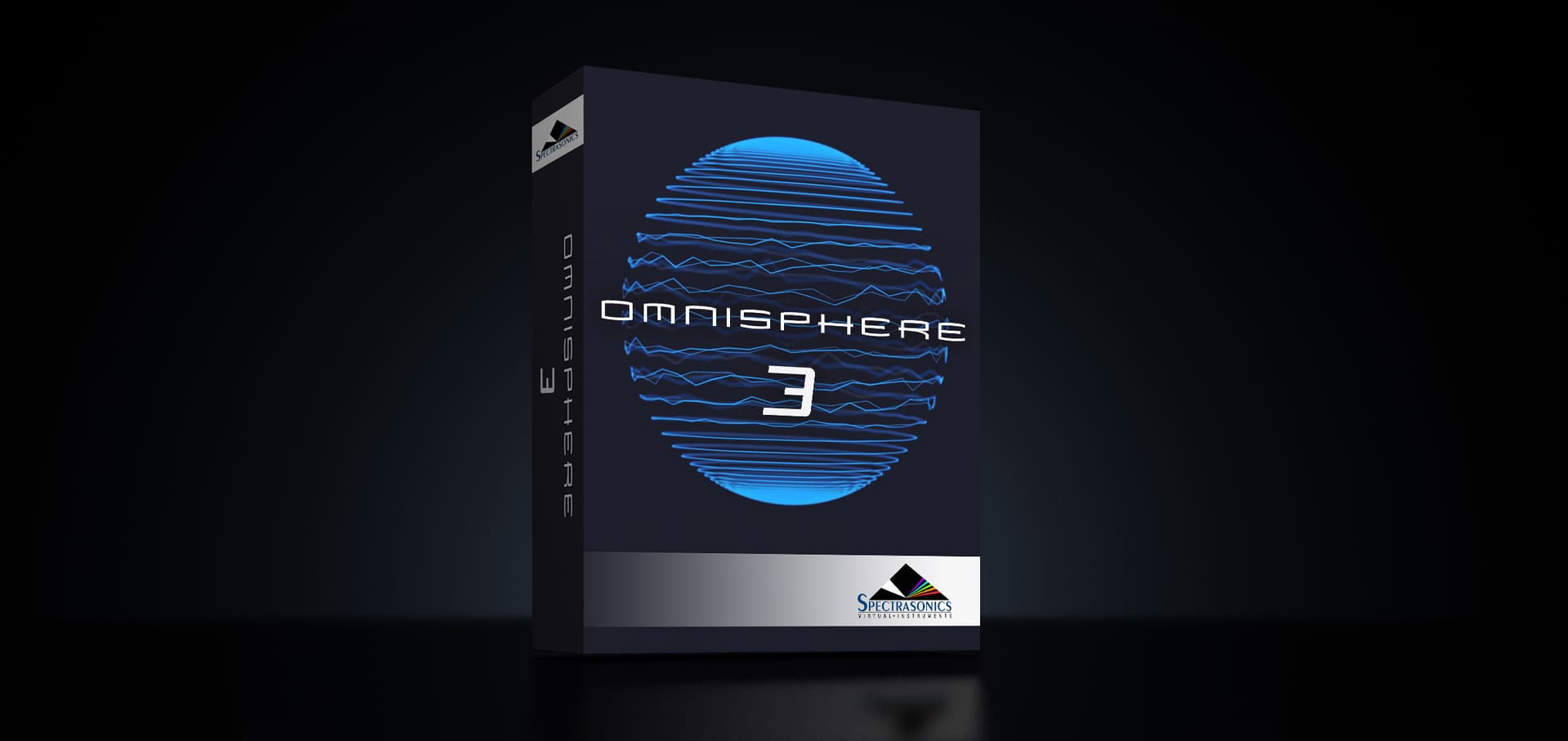
Omnisphere is Spectrasonics' flagship instrument — a hybrid synthesizer that behaves less like a single synth and more like an entire sound-design workstation. Version 3 does not reinvent the concept so much as widen an already commanding lead. The library now tops 26,000 patches, the engine gains new granular and modulation tools, and a standalone 93-processor FX Rack ships alongside it. That FX Rack is telling: it is substantial enough to stand as its own product, yet here it is folded into the package. The current first look is Sentient.
It excels at breadth and depth at the same time. Where many synths ask you to build a sound from scratch, Omnisphere hands you thousands of finished, production-ready patches — cinematic pads, evolving textures, basses, keys, arps — and lets you dig as deep as you like from there. The browser remains the best in the category, which matters enormously when you are working against a library this large. For film, game, and electronic composers who need atmosphere on demand, few tools deliver faster.
The trade-off is cost, in both dollars and system resources. At $479 it sits well above most soft synths, and the install is large. Layered patches are demanding on CPU and RAM, so older machines will feel it. And while the surface is inviting, reaching the engine's deepest granular and modulation features takes real time — this is not a synth you fully master in an afternoon.
Against its closest listed alternative, u-he's Zebra 3, the distinction is clear. Zebra 3 is the modular sound-designer's synth: cheaper, lighter, and built for crafting bespoke patches from spline wavetables and additive partials. Omnisphere is the workstation: an unrivaled ready-made library plus serious depth underneath. If you value a vast palette out of the box, Omnisphere wins; if you prefer building every sound yourself, Zebra 3 is the sharper, more affordable tool.
For existing Omnisphere 2 owners, the $199 upgrade is close to a no-brainer. For newcomers with the budget and the CPU headroom, it remains the reference. See our full Omnisphere 3 review for the complete breakdown.