Hügelton Nikolator Models a Tesla Coil to Make Sound
Hügelton Nikolator is a physical modeling synth that simulates a musical Tesla coil, with arc, discharge, and branching controls, for macOS and Windows from $1.
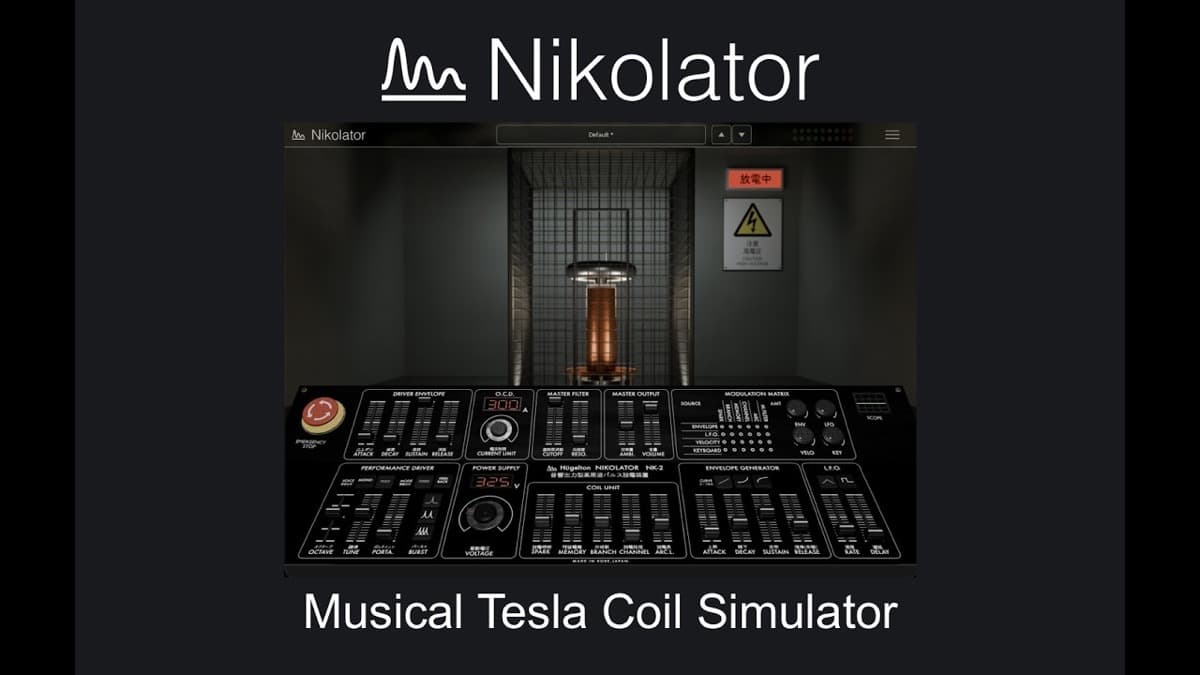
Hügelton Instruments has released Nikolator, a synthesizer that does not use a normal oscillator. Instead it models a musical Tesla coil, simulating the resonant circuit, the electrical discharge, and the sound that discharge makes in the air. It arrived on 27 September 2026 for macOS and Windows, and it costs as little as one dollar. This is a first look based on the official product page and manual, not a hands-on review.
At a glance: Nikolator is a physical modeling synth priced pay-what-you-want, from $1. It runs as standalone, AU, and VST3 on macOS, and as VST3 on Windows. There are 22 factory presets, monophonic and polyphonic modes, a 4 by 6 modulation matrix, and a paraphonic valve low-pass filter. The catch is CPU: it runs its physical simulation far above the audio sample rate, so it asks more of your machine than a typical synth.
What is Nikolator?
A musical Tesla coil is a real thing. Performers pulse the coil at audio frequencies so the electrical arc itself sings, which is how acts like ArcAttack play melodies out of lightning. Nikolator brings that idea into a plugin. Rather than sample a coil or fake its tone with an oscillator, the developer models the whole chain of events: the interrupter drives the resonant circuit, the discharge grows, energy transfers into the air, and that becomes the sound you hear.
The goal, in the developer's words, was to make the coil itself playable as an instrument rather than simply reproduce a recording of one. That places Nikolator in the small, strange corner of physical modeling synths, the same broad family as acoustic-object instruments, but pointed at a sound source almost nobody else models. It is an experimental tool first, and a practical one second.
What Nikolator gives you
A Tesla coil as the sound source. The core of the instrument is the physical model. You do not pick a waveform. You shape the electrical behavior of a simulated coil, and the tone follows from that. This is what makes the sound distinctive, since the timbre carries the buzz, snap, and instability of a real arc rather than the clean spectrum of a digital oscillator.
Voltage, current, and discharge controls. The main parameters are the electrical quantities that drive a coil. Voltage, current, and discharge behavior set the character and intensity of the sound, so pushing them harder yields a more aggressive, crackling tone, while easing off gives something more contained.
Adjustable arc length, branching, and channel behavior. These controls sculpt how the simulated arc forms and travels. Longer arcs, branching paths, and channel settings change the shape and movement of the discharge, and therefore the texture you hear. This is the part that turns a one-trick novelty into a design space worth exploring.
Monophonic and polyphonic modes. Nikolator plays as a mono lead or as a polyphonic instrument, so it covers everything from single screaming arcs to stacked chordal textures. A paraphonic valve low-pass filter tames or colors the result, adding a warmer stage after the raw physical model.
A drive envelope and a 4 by 6 modulation matrix. A drive envelope shapes how the coil energy evolves over a note, and the 4 by 6 modulation matrix routes sources to destinations for movement. MIDI velocity, pitch bend, modulation wheel, and sustain pedal are all supported, and their routing is assignable, so you can put expression where the sound needs it.
22 factory presets, and your own. The plugin ships with 22 factory presets and lets you create and save your own. That is a modest library, which fits a debut instrument in a niche this specific. The interface is bilingual, in English and Japanese.
Nikolator specifications
| Spec | Detail |
|---|---|
| Type | Physical modeling synthesizer (musical Tesla coil) |
| Developer | Hügelton Instruments |
| Sound source | Modeled resonant circuit, discharge, and air behavior |
| Voices | Monophonic and polyphonic modes |
| Filter | Paraphonic valve low-pass filter |
| Modulation | Drive envelope, 4 by 6 modulation matrix |
| MIDI | Velocity, pitch bend, mod wheel, sustain, assignable routing |
| Presets | 22 factory, plus user presets |
| macOS formats | Standalone, AU, VST3 (Intel and Apple Silicon) |
| Windows formats | VST3 (unsigned installer) |
| Price | Pay what you want, from $1 |
Nikolator vs AAS Chromaphone 3
The nearest reference point is AAS Chromaphone 3, the acoustic-object synth built on physically modeled resonators like strings, plates, and membranes. Both create sound from a model rather than a sample, but they aim at different worlds. Chromaphone 3 is polished, deep, and designed for usable percussion, mallets, and tuned tones across a full production. Nikolator is a focused experiment that does one unusual thing very well.
| Hügelton Nikolator | AAS Chromaphone 3 | |
|---|---|---|
| Model | Musical Tesla coil | Acoustic resonators (strings, plates, membranes) |
| Range | Aggressive, electric, experimental | Percussion, mallets, tuned textures |
| Presets | 22 | 1,000-plus |
| Formats | Standalone, AU, VST3 (Mac), VST3 (Win) | VST, VST3, AU, AAX, standalone |
| Price | From $1 | Full commercial price |
| Reach for it when | You want a sound nothing else makes | You want reliable, playable modeled instruments |
Which to pick. If you build conventional tracks and want dependable modeled percussion and tones, Chromaphone 3 is the safer, deeper tool. If you make sound design, ambient, industrial, or experimental music and want a source no oscillator can imitate, Nikolator earns its dollar many times over.
Who Nikolator is for
Grab it if you design sound for film, games, or experimental records and you collect distinctive, hard-to-replace textures. The Tesla coil model is a genuine one-of-a-kind, and at pay-what-you-want pricing there is little reason not to try it.
It suits you if you like building sounds from behavior rather than presets. The arc, branching, and discharge controls reward curiosity, and the modulation matrix lets you animate them.
Skip it, or at least test first, if you need a lean CPU footprint on a modest machine. The developer is upfront that Nikolator runs its simulation well above the audio sample rate, which pushes CPU use higher than a normal synth. Apple Silicon is recommended, and Windows users should expect an unsigned installer warning to clear.
How much does Nikolator cost?
Nikolator is pay-what-you-want with a minimum of $1, sold directly through the developer's itch.io page. You can download Nikolator for macOS or Windows there, and the full manual lives at the developer's documentation site. There is no subscription and no account requirement beyond the storefront.
If you want more modeled instruments to sit alongside it, our roundup of the best free VST plugins of 2026 and the best free synth VSTs of 2026 both point to strong no-cost options, and Vital covers wavetable ground if you need a more conventional workhorse.
FAQ
How does Nikolator actually make sound?
It models a musical Tesla coil. Instead of a waveform oscillator, it simulates the resonant circuit, the electrical discharge, and how that discharge behaves in the air. The controls are electrical quantities like voltage, current, and arc length, and the timbre follows from them.
What are the system requirements for Nikolator?
It runs on macOS as standalone, AU, and VST3, native on Intel and Apple Silicon, and on Windows as VST3. Because it runs a physical simulation above the audio sample rate, it uses more CPU than a typical synth. Apple Silicon is recommended, and the Windows installer is currently unsigned.
Is Nikolator really only one dollar?
The minimum price is $1, and it uses a pay-what-you-want model, so you can pay more to support the developer. There is a single tier that includes both the macOS and Windows downloads.
Can Nikolator play chords?
Yes. It has both monophonic and polyphonic modes, plus a paraphonic valve low-pass filter, so it moves from single arcing leads to stacked polyphonic textures.