Delta Sound Labs Stream Pro: Granular Synthesis in 3D
Delta Sound Labs Stream Pro is a granular synth with live capture, 8-voice polyphony and Steam Audio HRTF spatialization, for macOS, Windows and Linux at 99 dollars.
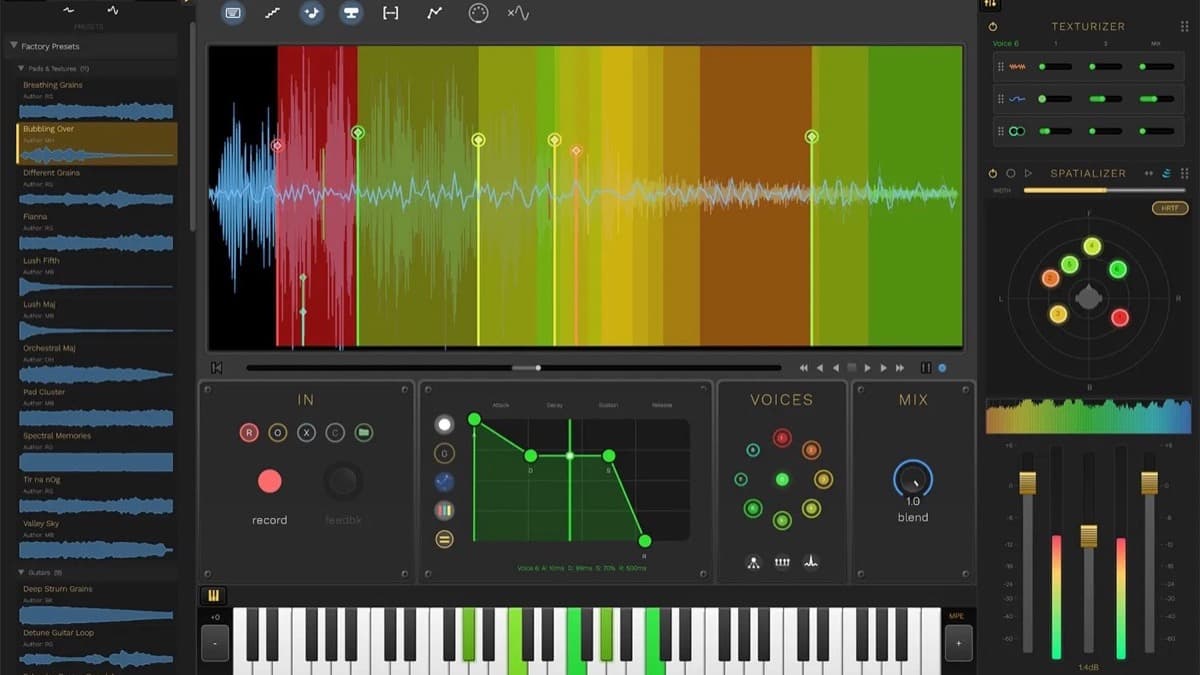
Delta Sound Labs has released Stream Pro, a granular synthesizer that captures audio live, plays it back polyphonically, and places each grain in a three-dimensional space using Steam Audio's binaural engine. It is the full instrument version of the company's long-running Stream granular effect, it costs 99 dollars, and it runs on macOS, Windows and Linux. This is a first look based on the official product page, not a hands-on review.
At a glance: Stream Pro splits incoming audio into grains and reassembles them for time-stretching, pitch-shifting and texture work. A Single Mode captures and scrubs sound in real time, while a Multi Mode turns the grain engine into an 8-voice polyphonic instrument you play from a keyboard. Steam Audio HRTF spatialization, four LFOs and an MPE-ready control layer round it out. It is 99 dollars for VST3, AU and standalone across all three desktop platforms.
What is Delta Sound Labs Stream Pro?
Delta Sound Labs is a US maker better known for Eurorack hardware, with modules that nod to Buchla, ARP and Oberheim. Its Stream plugin arrived in 2020 as a granular effect: feed it audio and it chops the signal into tiny grains you can freeze, stretch and scatter. Stream Pro is the next step, promoting that engine from an effect into a standalone granular instrument that you can play, capture into, and spatialize.
Granular synthesis has been popular for years now, and most of the familiar options are effects that process whatever you send them. Output Portal is the obvious example, a granular effect built around an approachable macro control. Stream Pro aims higher up the chain. It works as the source as well as the processor, recording its own audio and turning it into pads, textures and playable voices, with a spatial engine few rivals offer at all.
What Stream Pro does, feature by feature
Single Mode for live capture and scrubbing. Single Mode is the performance heart of Stream Pro. It records, overdubs or replaces audio into a buffer, then lets you scrub through it in real time with independent control over pitch and time. Playback speed and direction are bipolar, running from minus two times to plus two times with a freeze option, so you can halt a sound mid-grain and crawl through it backwards. A one-tap buffer undo and session persistence mean your captures survive experimentation and project reloads.
Multi Mode for polyphonic playing. Switch to Multi Mode and the grain engine becomes a proper instrument. It offers up to eight voices of polyphony, each with its own ADSR envelope, and adds stochastic per-grain jitter so repeated notes never sound mechanically identical. This is what separates Stream Pro from a pure effect: you can map a captured texture across the keyboard and play it like any other synth.
Steam Audio HRTF spatialization. The headline feature is 3D sound. Stream Pro uses Steam Audio's HRTF technology to place grains binaurally for headphone listening, and in Multi Mode each note becomes its own spatial object. Beyond simple panning, it offers ping-pong grain distribution, BOIDS-style flocking that moves voice nodes like a swarm, and recordable movement paths you can automate from your DAW. For ambient, cinematic and game audio work, that turns a flat texture into something that surrounds the listener.
Four LFOs and deep modulation. Modulation comes from four LFOs with seven shapes each, feeding 16 routing slots that can run free or locked to tempo. With grain parameters, spatial position and the filter all available as targets, this is enough routing to keep a patch evolving on its own for minutes at a time.
Built-in effects and filtering. Stream Pro includes soft saturation, a per-voice Moog-style filter with low-pass and band-pass modes, and a stereo delay. The order of the spatial engine and the effects can be swapped, which changes whether grains are colored before or after they are placed in the field.
MPE and MIDI control. The instrument is MPE-capable, with specific profiles for the ROLI Seaboard, GeoShred and Sensel controllers, and every parameter is MIDI-mappable. That makes it a strong fit for expressive controllers where pressure and slide can drive grain density or spatial motion.
Stream Pro specifications
| Spec | Detail |
|---|---|
| Type | Granular synthesizer |
| Developer | Delta Sound Labs |
| Modes | Single Mode (live capture, scrub) and Multi Mode (polyphonic) |
| Polyphony | Up to 8 voices, per-voice ADSR |
| Spatial engine | Steam Audio HRTF, flocking, ping-pong, automatable paths |
| Modulation | 4 LFOs, 7 shapes, 16 routing slots, free or tempo-synced |
| Effects | Soft saturation, Moog-style filter, stereo delay (swappable order) |
| Control | MPE-ready (Seaboard, GeoShred, Sensel), full MIDI mapping |
| Grain windows | Triangle, Gaussian, Noise |
| Formats | VST3, AU, standalone |
| Platforms | macOS 10.13+, Windows 10+, Linux x64 (Ubuntu 20.04+) |
| Price | 99 dollars |
Stream Pro vs Output Portal
The granular plugin most producers will weigh against Stream Pro is Output Portal. Both turn audio into grains. One is a focused effect, the other a full instrument with a spatial engine, and that gap drives the decision.
| Delta Sound Labs Stream Pro | Output Portal | |
|---|---|---|
| Type | Granular synthesizer and effect | Granular effect |
| Plays polyphonically | Yes, up to 8 voices in Multi Mode | No, processes incoming audio |
| Live capture | Yes, record and overdub into a buffer | No, works on input or a loaded sample |
| 3D spatial audio | Yes, Steam Audio HRTF | No |
| Platforms | macOS, Windows, Linux | macOS, Windows |
| Price | 99 dollars | 149 dollars |
Which to pick. If you want granular texture fast, with a huge preset library and a single macro to ride, Portal is the more immediate tool and it drops into a mix in seconds. If you want to build and play granular patches, capture your own source live, and move grains around in a 3D field, Stream Pro is the deeper instrument and it costs less. Producers who lean on the granular engine inside Arturia Pigments or the textural approach of Emergence Audio Envoy will recognize the territory, but neither offers Stream Pro's spatial layer.
Who Stream Pro is for
It suits you if you write ambient, cinematic, score or game audio and you want textures that move in space. The live capture and spatial engine reward sound designers who build from field recordings and improvised input rather than preset banks, and the MPE support makes it expressive under the fingers.
Skip it if you mainly want quick, mix-ready granular color on an existing track. A plug-and-play effect such as Portal will get you there with less setup, and Stream Pro's depth would be wasted. The plugin also lists VST3, AU and standalone but not AAX, so Pro Tools users should confirm compatibility before buying.
How much does Stream Pro cost?
Stream Pro is 99 dollars, sold directly by Delta Sound Labs and its distributor ILIO. That price sits below what the original Stream effect plus a separate instrument would cost. The developer's Stream Pro product page has the current download and system details. For context, the original Stream granular effect remains available at 49 dollars for producers who only need the processing side.
If granular and texture design is your thing, our plugin database compares Output Portal and Emergence Audio Envoy, and the best free synth VSTs of 2026 guide lists no-cost ways to start experimenting.
FAQ
What is the difference between Stream and Stream Pro?
The original Stream is a granular effect that processes audio you send it. Stream Pro is a full granular synthesizer. It adds a polyphonic Multi Mode you play from a keyboard, live capture, an 8-voice engine and Steam Audio 3D spatialization on top of the granular core.
What platforms and formats does Stream Pro support?
Stream Pro runs as a VST3, AU or standalone application on macOS 10.13 or later, Windows 10 or later, and Linux x64 on Ubuntu 20.04 or newer. AAX is not listed, so Pro Tools users should check before relying on it.
Does Stream Pro support MPE controllers?
Yes. It is MPE-capable with dedicated profiles for the ROLI Seaboard, GeoShred and Sensel Morph, and every parameter can be mapped to MIDI, so expressive controllers can drive grain and spatial behaviour directly.
What is the Steam Audio spatial engine for?
Steam Audio provides HRTF-based binaural spatialization, the same kind of 3D audio used in games and VR. In Stream Pro it places grains and, in Multi Mode, individual notes as objects in a 3D field, with flocking and automatable movement paths for immersive, surrounding textures on headphones.