Suno Speech: Voice and Music Generated as One Track
Suno Speech is a new beta that generates spoken voice and original backing music together as one track. Here is how it works, who it is for and how it compares.
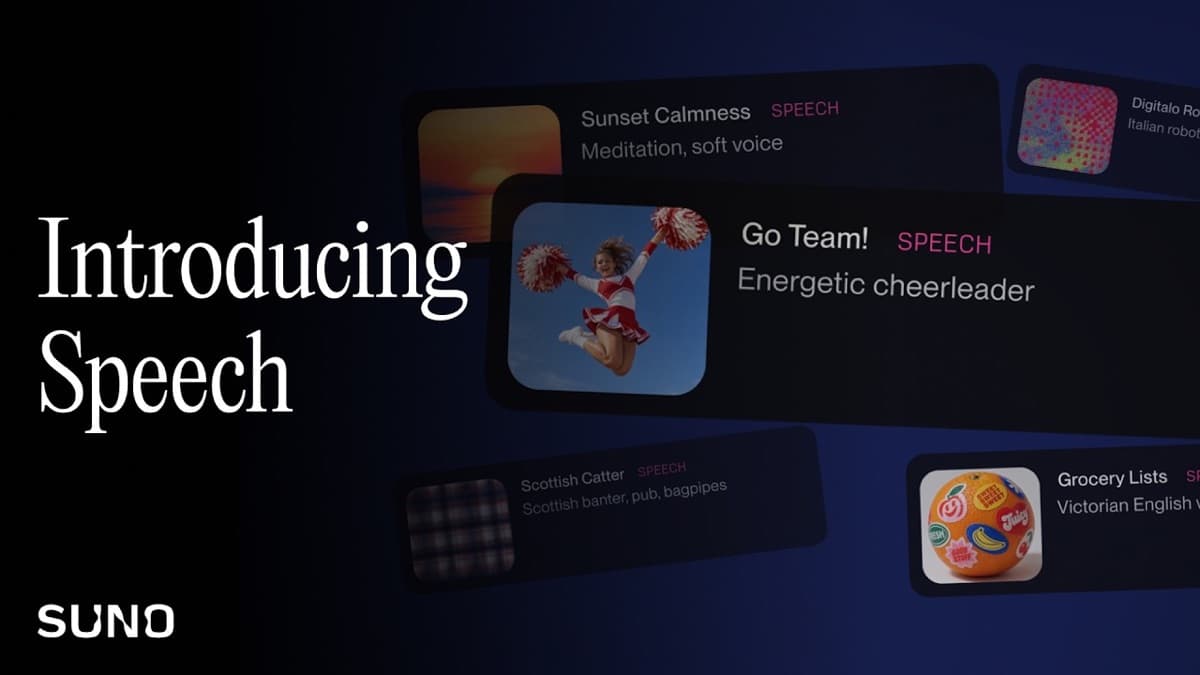
Suno announced Speech on October 1, 2026, in a post by chief product officer Jack Brody. The company calls it the first audio model that generates voice and music together as one cohesive track. Instead of reading text aloud and leaving you to score it afterwards, Speech writes the spoken performance and its backing music at the same time. It spent the past month in private testing, and the beta is now open to the whole Suno community. Here is what the official announcement covers and what it means for anyone who makes audio.
Suno Speech at a glance
- What it is: A generative audio model that produces spoken voice set to original background music, as a single track.
- How you use it: Type an idea, a poem or something you have written, then describe the voice and the musical style you want.
- Where it lives: Built directly into Suno, alongside the song tools you already use.
- Status: Public beta as of October 1, 2026, after a month of testing with a small group.
- Current limits: It is a beta. Accents can drift and dramatic pauses can run long.
What is Suno Speech?
Suno Speech is a new mode inside Suno that turns written words into a spoken performance with its own soundtrack. The pitch is simple. You give it text and a short description of the voice and musical feel, and it returns spoken audio that already sits inside original music, rather than a bare voice file you then have to mix.
That one cohesive track framing is the whole point. Most AI voice tools generate speech on its own. If you want music under a narration, you render the voice in one app, find or generate a bed in another, then line them up and balance them in a DAW. Speech collapses that chain into a single prompt. The model decides how the voice and the music move together, so the phrasing, the pauses and the swells are composed as one piece instead of stitched after the fact.
It also fits the way people already use Suno. The platform is full of songs made for birthdays, weddings, inside jokes and quiet personal moments. Speech extends that same instinct to the spoken word, and the examples Suno shared lean personal rather than corporate: dramatic readings of a friend's texts, voice notes given an unnecessarily epic score, meditations, pep talks and bedtime stories.
How Suno Speech works
The workflow is text in, scored speech out. You give it three things.
The words. You paste or type whatever you want spoken. The announcement points at short, personal pieces, a poem, a note, a passage you wrote, rather than long-form scripts, which fits a first beta.
The voice. You describe the voice you have in mind in plain language. This is where the model decides tone, delivery and character, and it is also where the current limits show. Suno is candid that accents are not nailed down yet, joking that a British accent can wander off to Australia and back.
The musical style. You describe the backing music the same way you would prompt a song. The model scores the narration around the words, so a meditation can sit on something calm and a pep talk can ride something that builds.
Because voice and music come from one model, the result is meant to feel composed rather than layered. The trade, for now, is control. You are steering with descriptions, not drawing automation, and beta output can surprise you. Suno frames that unpredictability as part of the fun, and says it will keep improving Speech based on what the community does with it.
Suno Speech specifications
| Spec | Detail |
|---|---|
| Type | Generative audio model for voice and music |
| Developer | Suno |
| What it makes | Spoken audio set to original backing music, as one track |
| Input | Text, plus a plain-language description of the voice and musical style |
| Output | A single track with voice and score composed together |
| Platform | Built into Suno |
| Status | Public beta (opened October 1, 2026) |
| Known limits | Accents can drift; dramatic pauses can run long |
Suno Speech vs AI voiceover tools
The obvious comparison is a dedicated text-to-speech tool such as ElevenLabs, which many creators already use for narration. The difference is scope. A voiceover tool gives you a clean, controllable voice and nothing else. Speech gives you a voice and a soundtrack built together, with less fine control over the voice itself. It is also worth separating Speech from Suno's own Voices feature, which is about singing voices and personas inside songs rather than spoken narration.
| Suno Speech | AI voiceover (e.g. ElevenLabs) | Suno Voices | |
|---|---|---|---|
| Core output | Spoken voice plus original music, one track | Spoken voice only | Singing voice inside a song |
| Music included | Yes, composed with the voice | No, you add it yourself | Yes, it is a song |
| Voice control | Described in words, beta-level | Fine, with voice libraries and settings | Persona and style based |
| Best for | Scored narration, personal pieces | Clean standalone voiceover | Vocals for original tracks |
| Maturity | New beta | Established | Shipping feature |
If you need a precise, repeatable narration voice for client work, a dedicated voiceover tool still wins on control. If you want a spoken piece that already feels scored, and you prefer describing a vibe to tuning parameters, Speech does something those tools do not. For music specifically, our best AI music generators of 2026 guide covers the wider field, and Suno vs Udio weighs the two biggest song generators.
Who Suno Speech is for
Speech suits people making personal, expressive audio: a scored poem, a meditation, a bedtime story, a voice note turned into something dramatic, or a short narration that needs a mood without a separate scoring session. It is also a natural fit for creators already working in Suno, since it lives in the same place as their songs and uses the same describe-it-in-words approach as Suno Studio.
Skip it, for now, if you need broadcast-grade narration with a consistent voice, exact pronunciation and tight control over timing. Suno is clear that this is a beta with rough edges, so it is a playground and a sketchpad more than a delivery tool for professional voiceover today.
How much does Suno Speech cost?
Suno's announcement does not attach a separate price to Speech. It is rolling out as part of Suno, so it arrives inside the app rather than as a standalone purchase, and the company has opened the beta to the whole community rather than limiting it to one tier. Suno's generation has historically run on its Free, Pro and Premier plans, so how much you can make will follow whatever plan you are on. For the exact plan details and limits as Speech moves through beta, Suno's own site is the place to check, since those terms can change while a feature is still in beta.
FAQ
What is Suno Speech?
Suno Speech is a beta mode inside Suno that generates spoken voice together with original background music as a single track. You give it text and describe the voice and musical style, and it returns scored narration rather than a bare voice file.
How is Speech different from normal text-to-speech?
A standard text-to-speech tool produces a voice on its own, which you then have to score and mix yourself. Speech composes the voice and the music together in one model, so the narration arrives already set to music.
Is Suno Speech free?
Suno has not announced a separate price for Speech. It is part of Suno and is rolling out to the whole community in beta, so your access follows your existing Suno plan. Check Suno's site for current plan limits.
How good are the voices and accents?
They are beta quality. Suno says accents can drift, giving the example of a British accent wandering toward Australian, and that dramatic pauses can run long. Expect character and surprises rather than precise, repeatable control.
What can I make with Suno Speech?
Suno points at personal, expressive audio: dramatic readings, scored voice notes, meditations, poems, pep talks and bedtime stories. Anything where a spoken piece benefits from music composed around it is a good fit.