Best AI Music Generators in 2026: Suno, Udio, Stable Audio 3 and More
Best AI music generators in 2026. Compare Suno, Udio, Stable Audio 3, Moises, and LANDR on vocals, length, licensing, and fit.

| Pick | Score | Price |
|---|---|---|
Suno | 8.5 | Free tier; paid plans from ~$8/mo (billed annually) → |
Udio | 7.0 | Subscription; licensed platform launching Q2 2026 → |
Stable Audio 3 | 7.5 | Open weights free; large model via API / enterprise license → |
Moises | 8.0 | Free tier; paid plans from ~$3.99/mo → |
LANDR | 7.5 | Subscription tiers → |
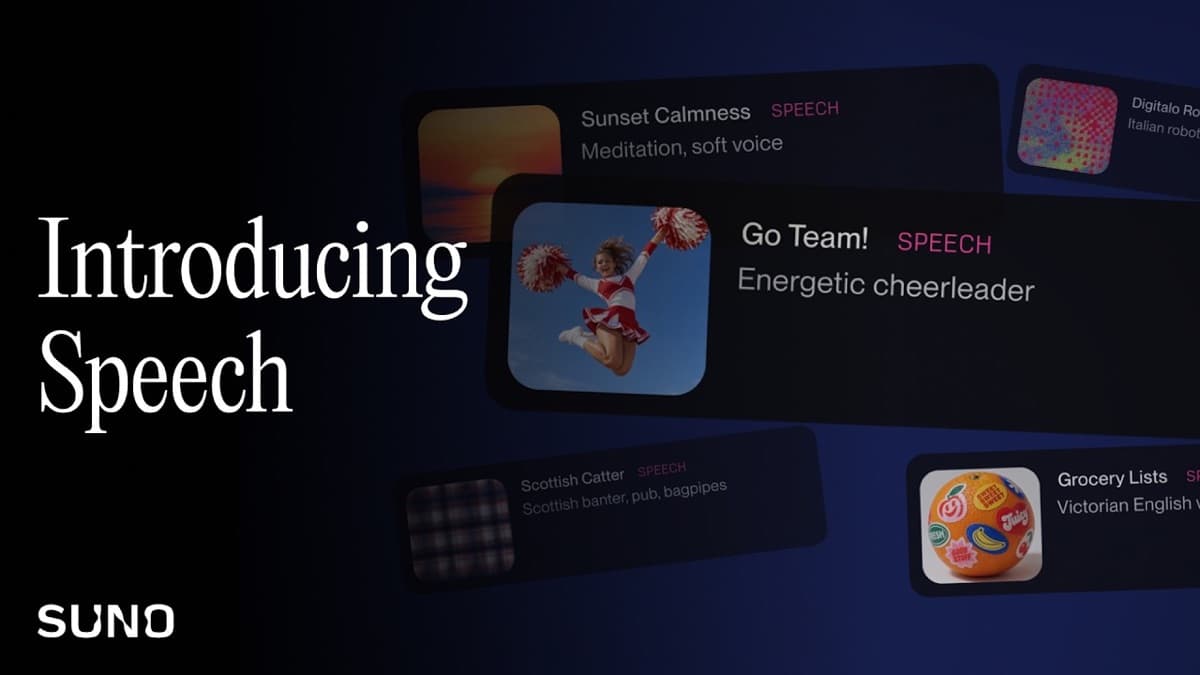
AI music generators have grown up fast. Two years ago they were a novelty. Now they sit somewhere between a sketchpad, a session player, and a full production tool. The catch in 2026 is that the legal ground keeps shifting under everyone's feet. Major labels have started signing licensing deals, and at least one pivotal court ruling is still pending. The 2026 note on this category is Suno Speech AI music tool.
This guide breaks down the AI music tools worth your time right now. We cover vocals, track length, licensing, and the thing that matters most: who each tool is actually for. We lean on official sources only, and we flag both real strengths and real limitations. A newer AI music tool in this lane is Suno Speech.
Quick Picks
Short on time? Here are our picks by use case.
- Best all-rounder for songs with vocals: Suno. It is the most polished end-to-end songwriting tool, with strong vocals and a built-in browser DAW.
- Best for licensed, artist-style music: Udio, once its new platform fully arrives. The trade-off is a closed "walled garden" you cannot export from.
- Best for developers and sound design: Stable Audio 3. Open-weight models, licensed training data, and fast local generation.
- Best for musicians, not generation: Moises. Stem separation, practice tools, and vocal isolation rather than text-to-song.
- Best for finishing tracks: LANDR. AI mastering and distribution for music you have already made.
Comparison at a Glance
The table above scores each tool out of 10 and shows who it suits, with current pricing as of June 2026. Below, we dig into what those scores actually mean.
Suno: The Strongest All-Rounder
Suno remains the tool most people mean when they say "AI music generator." Its flagship model, v5.5, arrived on March 26, 2026. According to Suno, it adds Voices for capturing your own singing voice, custom Personas trained on your catalog, and a free personalization engine called My Taste. The current first look is Suno v6.
The headline strengths are vocals and structure. Suno produces convincing lead vocals, harmonies, and full arrangements from a text prompt. Tracks can run past eight minutes. The Premier tier unlocks Suno Studio, an in-browser DAW that bridges generation and editing. We covered the current release in Suno Speech.
There are real catches in 2026. After Warner Music Group settled its lawsuit with Suno in November 2025, the platform changed how ownership and downloads work. Free-tier tracks are playable and shareable but not downloadable, and they cannot be used commercially. Paid plans allow downloads up to a monthly cap, while Suno Studio keeps unlimited downloads. Suno also confirmed it will launch new licensed models in 2026 and phase out its current ones. So the model you use today may not be the model you use next quarter. The latest pass here is Suno Speech.
Who it's for: songwriters, content creators, and anyone who wants finished vocal tracks quickly. If you want a sketch with a topline melody in two minutes, this is the pick.
Udio: The Licensed Platform Play
Udio took a different road. In October 2025, Universal Music Group settled its lawsuit with Udio and announced a strategic licensing deal. Warner Music Group followed in November 2025. The result is a new licensed platform, which UMG and Udio say will launch in Q2 2026 — still under the Udio name.
The model is fundamentally different from Suno's open approach. Udio's new service is built on authorized and licensed music, with filtering to prevent unauthorized reproduction. UMG artists and songwriters are compensated when their licensed material is used. That is a genuine first for the industry. The current first look is Suno Speech.
The cost is creative freedom. The platform operates as a "walled garden." Creations live inside the app and cannot be downloaded or posted elsewhere. Udio's existing service has already turned off downloads. The pitch is less "make a song to release" and more "play with licensed music" through remixing and artist-style prompts.
Who it's for: fans and hobbyists who want to experiment with real artist styles legally, inside a closed environment. It is not a tool for producing tracks you intend to own and release.
Stable Audio 3: The Open, Developer-Friendly Option
Stability AI released Stable Audio 3 on May 20, 2026. It is a family of audio models trained, the company says, on licensed data. That combination of open access and clean training data is rare.
There are four models. Two small ones run at 459M parameters, including an SFX-focused variant. A medium model sits at 1.4B, and a large model at 2.7B. The medium and large models generate compositions up to six minutes and twenty seconds. That is more than double what Stable Audio 2.0 managed in 2024. The small models target on-device generation up to two minutes.
The licensing terms are practical for builders. The small and medium models ship as open weights you can download and modify. The large model is available through Stability AI's API, through partner fal.ai, or via enterprise self-hosting. Vocals are not the focus here. Stable Audio shines for instrumentals, textures, and sound effects. A newer AI music tool in this lane is Suno v6.
Who it's for: developers, sound designers, and producers who want instrumental beds or SFX, plus anyone who values open weights and local generation.
Moises and LANDR: The Practical Sidekicks
Not every AI music tool generates songs. Some make the music you already have easier to work with.
Moises is built for musicians, not prompt-writers. It separates any track into stems: vocals, drums, bass, and more. It also offers chord detection, a speed changer, lyric transcription, and AI voice conversion. A free tier exists, with paid plans starting around $3.99 per month and a higher tier for better separation quality. If you practice, remix, or need a clean instrumental, Moises earns its place.
LANDR handles the finishing line. Its AI mastering engine analyzes a track, identifies its style, then builds a processing chain for dynamics, frequency balance, and stereo width. A master takes a minute or two. The platform now bundles mastering with distribution, sample packs, and collaboration tools, so it covers the gap between a finished mix and a released track. LANDR Studio subscriptions are available at Best Service.
Who they're for: working producers who write their own material and want AI to assist, not replace, the creative work.
If you are building tracks around these tools, you will still need raw material. Royalty-free sample libraries from Loopmasters and the subscription service Loopcloud pair well with AI-generated stems and instrumentals.
A Note on the Law Before You Commit
The licensing picture is unsettled. Warner and Universal have signed deals, but Sony Music has not. Its cases against Suno and Udio are expected to produce a pivotal ruling around the middle of 2026.
That ruling matters beyond music. It turns on whether training AI on copyrighted material counts as fair use, a question that touches text, images, and code too. Until it lands, treat the commercial rights of AI-generated music as a moving target. Read each platform's current terms before you release anything. We covered the current release in Suno v6.
How to Choose
Match the tool to the job. Want a finished vocal song from a prompt? Start with Suno. Want to experiment with licensed artist styles and don't need to export? Watch Udio's new platform. Building a product or designing sound? Stable Audio 3 gives you open weights and local control. Already have a track and need stems or a master? Moises and LANDR are the practical picks. None of these tools replaces a producer's ear — they speed up the parts that used to take hours. The 2026 note on this category is Suno v6 AI music tool.
FAQ
Which AI music generator is best for vocals?
Suno leads on vocals in 2026. Its v5.5 model produces convincing lead vocals and harmonies, plus a Voices feature for capturing your own singing voice. Udio's licensed platform also handles voice well, but it restricts what you can do with the output.
Can I legally release music made with AI generators?
It depends on the platform and its terms. Suno's paid plans allow downloads within monthly caps, while free-tier tracks cannot be used commercially. Udio's new walled-garden platform blocks exports entirely. Always check the current terms of service, since the Sony ruling expected around mid-2026 could change the landscape.
How long can AI-generated tracks be?
Suno generates tracks past eight minutes. Stable Audio 3's medium and large models reach roughly six minutes and twenty seconds. Most tools were limited to short clips just two years ago, so length has improved sharply.
Is there a free AI music generator?
Yes. Suno offers a free tier with daily song limits, though those tracks cannot be downloaded or used commercially. Stable Audio 3 releases several models with open weights at no cost. Moises also has a free tier for stem separation.
What is the difference between Suno and Udio in 2026?
Suno is an open, export-friendly songwriting tool with download caps on paid plans. Udio is pivoting to a licensed, closed platform where creations stay inside the app. Suno suits releasing music; Udio suits experimenting with licensed artist styles.