Squarp Core Turns One 6HP Module Into 64 CV Outputs
Squarp Core is a 6HP Eurorack MIDI-to-CV/Gate brain with 14 generative engines, driving up to 64 outputs through one or two xp32 expanders. From 190 euros.
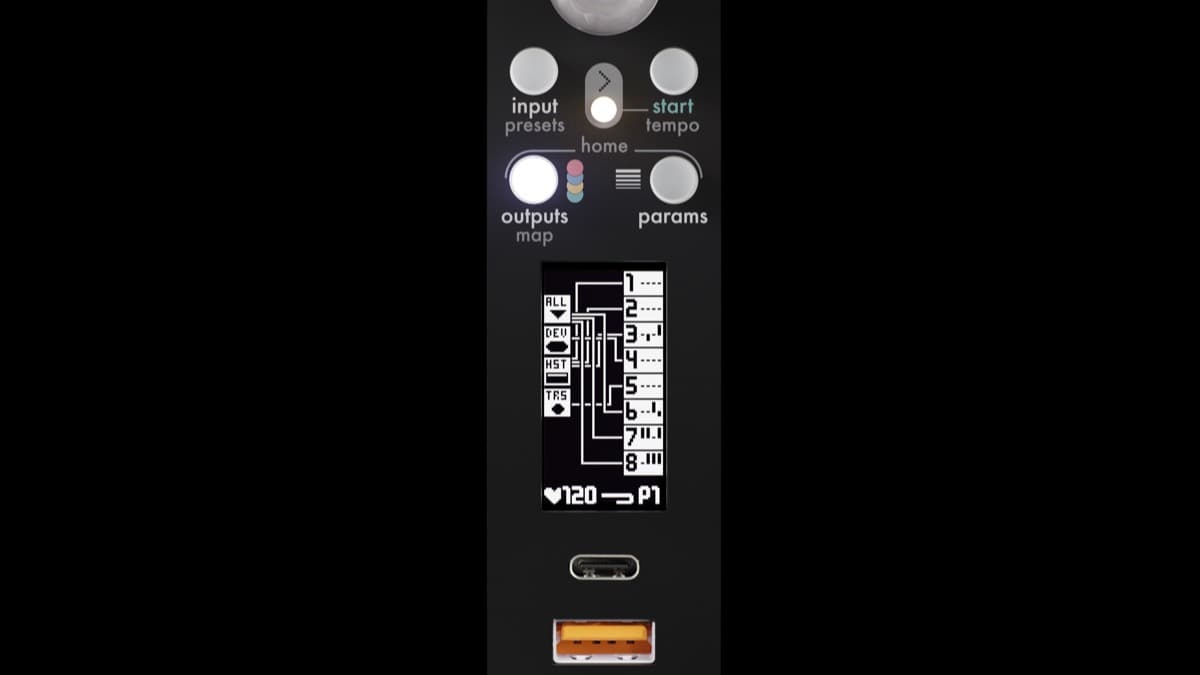
Squarp Instruments has released Core, a 6HP Eurorack module that turns MIDI into control voltage and gate signals, with a bank of generative engines layered on top. It sits between your computer, keyboards, and sequencers on one side and an analog or modular rig on the other. Paired with Squarp's xp32 expanders, it drives up to 64 outputs. Core sells direct for 190 euros, and a Core and xp32 bundle costs 590 euros. This is a first look based on the official Squarp product page, not a hands-on review.
At a glance: Core is a 3U, 6HP MIDI-to-CV/Gate interface with 14 engine types and deep generative tools. One or two xp32 expanders give it 32 or 64 physical outputs, each assignable to pitch, gates, envelopes, LFOs, Euclidean rhythms, clock, or logic. It carries USB host and device ports, TRS MIDI in and out, and a dedicated DIN-style MIDI output, with an OLED screen and eight recallable global presets. Output voltage runs from -10V to +10V, it supports V/Oct and Hz/V, and it quantizes to custom scales per preset. Core is 190 euros on its own, or 590 euros bundled with one xp32.
What Squarp Core is
Squarp built its reputation on sequencers. The Pyramid and then the Hapax made the company a reference name for hardware that drives a studio full of synths. The Hermod+ brought that brain into Eurorack, working as a sequencer and MIDI-to-CV module in one. Core is the next step, and a more focused one. It is the translation and modulation layer, the part that takes MIDI from anywhere and turns it into the precise voltages a modular system runs on.
The design reflects that focus. Core is a MIDI-to-CV/Gate interface with generative engines built in. Feed it MIDI from a DAW, a keyboard, a groovebox, or a Squarp Hapax, and it routes and transforms that data into pitch, gates, envelopes, clocks, and modulation across its outputs. It is the hub that lets a computer-based or keyboard-based workflow talk fluently to analog hardware.
There is one thing to know before you buy. Core is the brain, and the physical output jacks live on the xp32 expander. On its own, Core handles the routing, the MIDI, the engines, and the screen. Add one xp32 for 32 CV and gate outputs, and a second to reach 64. That is why the realistic purchase for most people is the 590-euro bundle, not the 190-euro module alone.
What the engines do
Every output on Core runs an engine, and the engine decides what that output produces. There are 14 types in all. These engines are what lift Core above a plain converter into creative territory.
The conversion engines are the expected ones: Pitch sends note pitch as control voltage, Gate sends note on and off triggers, and Velocity, Aftertouch, and CC turn playing dynamics and controller moves into voltage. These are what you patch when you just want Core to play a synth voice from a keyboard or a sequence.
The generative engines are the real draw. LFO gives you up to 64 low-frequency oscillators for movement, Euclid generates Euclidean rhythms for evolving gate patterns, and AHDSR and Slope produce envelopes and slews directly, so you can shape a sound without spending rack space on dedicated modules. Clock and Sync handle timing, DC sends a fixed offset for tuning or bias, and Logic combines signals for conditional patching. Motif adds a melodic sequence engine. Because any output can run any engine, a two-xp32 rig can produce dozens of LFOs, clocks, and Euclidean generators at once, a lot of modulation from a single 6HP module.
Timing, scales, and presets
Core has its own clock, running from 1 to 360 BPM, and it syncs to external MIDI clock, so it can lead the rest of your gear or follow it. A front-panel Play and Stop pair drives the transport. A master Swing control nudges the whole system off the grid at once, a fast way to loosen a stiff pattern.
Pitch handling goes deeper than most converters. Core outputs V/Oct or Hz/V to suit both modern and vintage oscillators, its voltage range is configurable from -10V to +10V, and it can quantize compatible engines to a custom scale. Each of the eight global presets stores its own scale. You can jump from a minor sequence to a different mode by recalling a preset, with no reprogramming. Those eight presets recall complete routing and scale setups, which suits live use.
A MIDI Map mode rounds it out with MIDI CC learn for output parameters, including custom minimum and maximum ranges and inverted response, so an external controller can ride Core's parameters in performance.
Connectivity
The back and front carry a full set of MIDI connections for a small module. Core has a USB Device port for a computer, a USB Host port for class-compliant controllers and keyboards, and TRS MIDI input and output in the type A standard. There is also a dedicated MIDI Output that converts USB MIDI to classic MIDI, which means Core can act as a USB-to-DIN host for a synth that only speaks five-pin MIDI. The TRS and USB outputs can be set to sync or to forward MIDI. Firmware updates load from a USB flash drive on the host port, so you do not need a computer to keep it current.
Squarp Core specifications
| Spec | Detail |
|---|---|
| Type | Eurorack MIDI-to-CV/Gate interface with generative engines |
| Width | 6HP (3U), 25mm deep including ribbon cables |
| Outputs | Up to 64 assignable (32 per xp32 expander; outputs live on the xp32) |
| Engine types | 14: Pitch, Gate, Velocity, Aftertouch, CC, Clock, Sync, LFO, AHDSR, Slope, DC, Motif, Euclid, Logic |
| Generative | Up to 64 LFOs, 64 clocks, 64 Euclidean generators, plus ADSR envelopes |
| Clock | Internal 1 to 360 BPM, external MIDI clock sync, Play/Stop, master Swing |
| CV range | -10V to +10V, configurable; V/Oct and Hz/V; custom-scale quantization |
| MIDI and USB | USB Device, USB Host, TRS (type A) in and out, dedicated DIN-style MIDI Out |
| Presets | 8 global presets, each with its own scale |
| Display | OLED, 64 x 128 pixels |
| Power | 5mA at +12V, 5mA at -12V, 150mA at +5V (plus up to 500mA if a USB Host device is powered by Core) |
| Firmware | Updates via USB flash drive on the Host port |
| Price | Core 190 euros; Core and xp32 bundle 590 euros |
Squarp Core vs Expert Sleepers FH-2
The obvious reference point is the Expert Sleepers FH-2, the module most people reach for when they want MIDI and USB turned into a wall of CV. It is an 8HP module with 8 CV outputs on board, expandable to 64 with the FHX-8CV expander and up to 128 gates with a gate expander, and it carries USB host and device plus DIN or TRS MIDI. It sells for around 269 pounds in the UK and 319 US dollars.
| Squarp Core | Expert Sleepers FH-2 | |
|---|---|---|
| Width | 6HP (outputs on xp32) | 8HP (8 CV on board) |
| Max outputs | 64 CV/gate via two xp32 | 64 CV via expander, up to 128 gates |
| Onboard generators | LFOs, Euclid, AHDSR, Slope, Motif, Logic | LFOs, arpeggiator, Euclid, sequencer |
| MIDI | USB host and device, TRS in and out, DIN-style out | USB host and device, DIN or TRS via breakout |
| Screen | OLED | Small status display, deeper editing in software |
| Price | 190 euros (590 with one xp32) | Around 319 US dollars / 269 pounds |
The FH-2 packs eight outputs into the module itself and has years of firmware behind it, so a single 8HP unit does real work before you buy any expander. Core splits the job differently. The brain is only 6HP, and the outputs arrive on the xp32, which keeps the controls and the jacks on separate panels and makes two-expander rigs tidy. Core's engine model is the more approachable one, since any output can be pitch, a gate, an envelope, or a Euclidean generator, and the OLED keeps editing on the module rather than in an app. The FH-2 wins on output density in a single module and on a mature feature set. Core wins on clarity and on fit, so if you already run a Hapax or a Hermod+, it speaks your language.
Who Squarp Core is for
Core suits a modular player who drives the rack from MIDI, whether that is a DAW, a keyboard, or a Squarp sequencer, and who wants one clean device to handle pitch, gates, envelopes, and modulation. It is a strong fit for anyone already inside the Squarp world, since it shares the design language of the Hapax and Hermod+. The generative engines also make it appealing to patch programmers who would rather generate LFOs and Euclidean rhythms from one module than fill a case with single-function utilities.
Skip it if you need the outputs in the smallest possible space, because the FH-2 puts eight CV jacks in the module itself, or if you want a full standalone sequencer, in which case Squarp's own Hermod+ or the desktop Hapax is the better buy. Remember too that Core needs an xp32 to produce any CV at all, so budget for the bundle rather than the bare module.
How much does Squarp Core cost?
Core is 190 euros direct from Squarp, in stock. The output jacks live on the xp32 expander, so the practical package is the Core and xp32 bundle at 590 euros, which Squarp lists down from 680 euros. A second xp32 takes it to the full 64 outputs. Squarp sells Core directly through its own store, and its sequencers and modules also reach modular retailers over time. You can see the full specification and buy it on the official Squarp Core page. Prices and stock on new hardware move, so check before ordering.
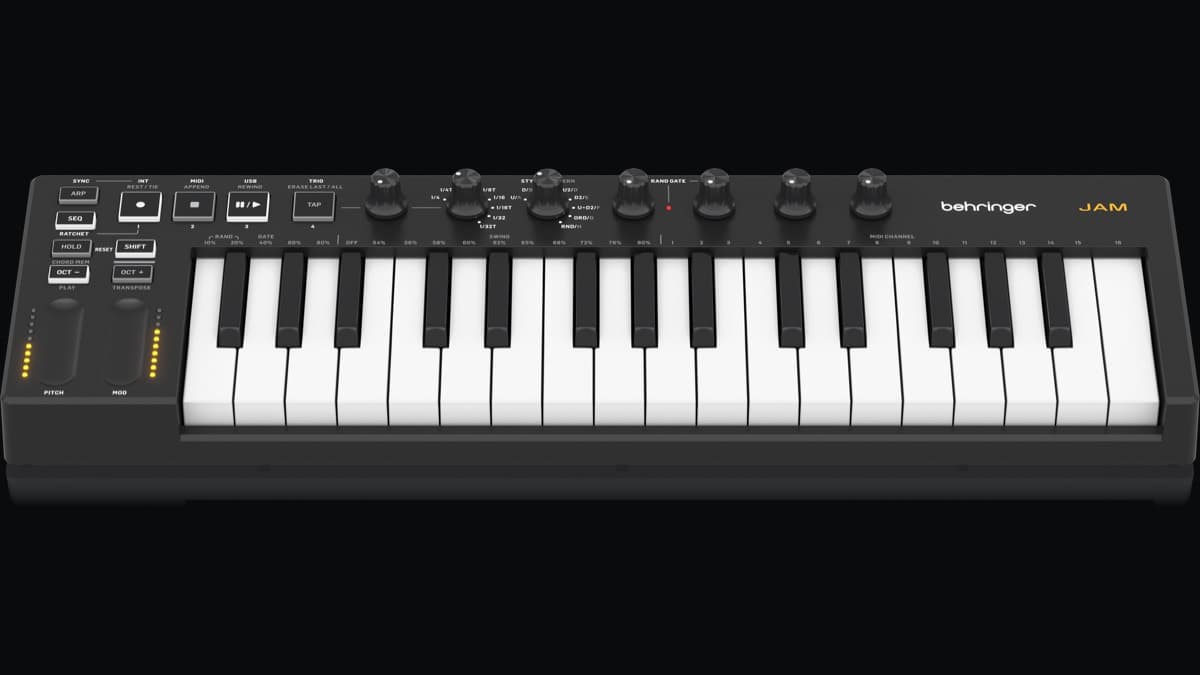
If you are building out a hybrid setup around it, our u-he MELT first look covers a characterful analog filter to sit at the end of a voice, and the Behringer JAM is a budget keyboard and sequencer with its own CV and gate. For keyboards to drive Core, start with our best MIDI keyboards of 2026 guide, and browse more gear in the Dubspot plugin database.
FAQ
Do I need an xp32 to use Squarp Core?
Yes, for CV and gate output. Core is the brain that handles MIDI, routing, engines, and the screen, but the physical output jacks live on the xp32 expander. One xp32 gives 32 outputs and two give 64. That is why Squarp sells a Core and xp32 bundle at 590 euros, and it is the realistic package for most buyers.
How many CV outputs does Squarp Core have?
Up to 64, across two xp32 expanders at 32 outputs each. Every output is assignable to any of the 14 engine types, so you can mix pitch, gates, envelopes, LFOs, Euclidean rhythms, clock, and logic however a patch needs.
Squarp Core vs Expert Sleepers FH-2?
The FH-2 puts 8 CV outputs in the module itself and expands to 64, with a mature feature set, for around 319 US dollars. Core is a 6HP brain whose outputs arrive on the xp32, with an engine-per-output model and an OLED for on-module editing, at 190 euros plus an expander. Pick the FH-2 for output density in one module, and Core for clarity and for fitting the Squarp ecosystem.
What can the generative engines do?
They produce modulation and rhythm without extra modules. Core can run up to 64 LFOs, 64 clocks, and 64 Euclidean rhythm generators, plus AHDSR and Slope envelopes, a Motif melodic engine, and a Logic engine for conditional patching. Any output can be any of these, so a single module replaces a shelf of utility modules.
What are the system requirements?
Core is a Eurorack module, so it needs a case and power supply. It draws 5mA at +12V, 5mA at -12V, and 150mA at +5V, with up to 500mA more at +5V if a USB Host device is powered by Core. It connects to a computer or controllers over USB and to other gear over TRS or DIN MIDI, and firmware updates load from a USB flash drive with no computer needed.
Core is a clear, modern take on the modular brain, and it leans on everything Squarp has learned building sequencers. The engine-per-output design, up to 64 assignable CVs across two xp32 expanders, deep generative tools, and full USB and MIDI connectivity add up to a capable hub for a hybrid rig. Just plan for the xp32 from the start, since that is where the outputs live, and the real entry point is the 590-euro bundle. For more hardware, browse the Dubspot plugin database.