S1gns Of L1fe Tranquility Review: An Ambient Hybrid
S1gns Of L1fe Tranquility is a 20 dollar hybrid analog and wavetable synth built for ambient. Full review, specs, pricing and how it compares to Pigments.
See full specs, price, and alternatives in the plugin database →
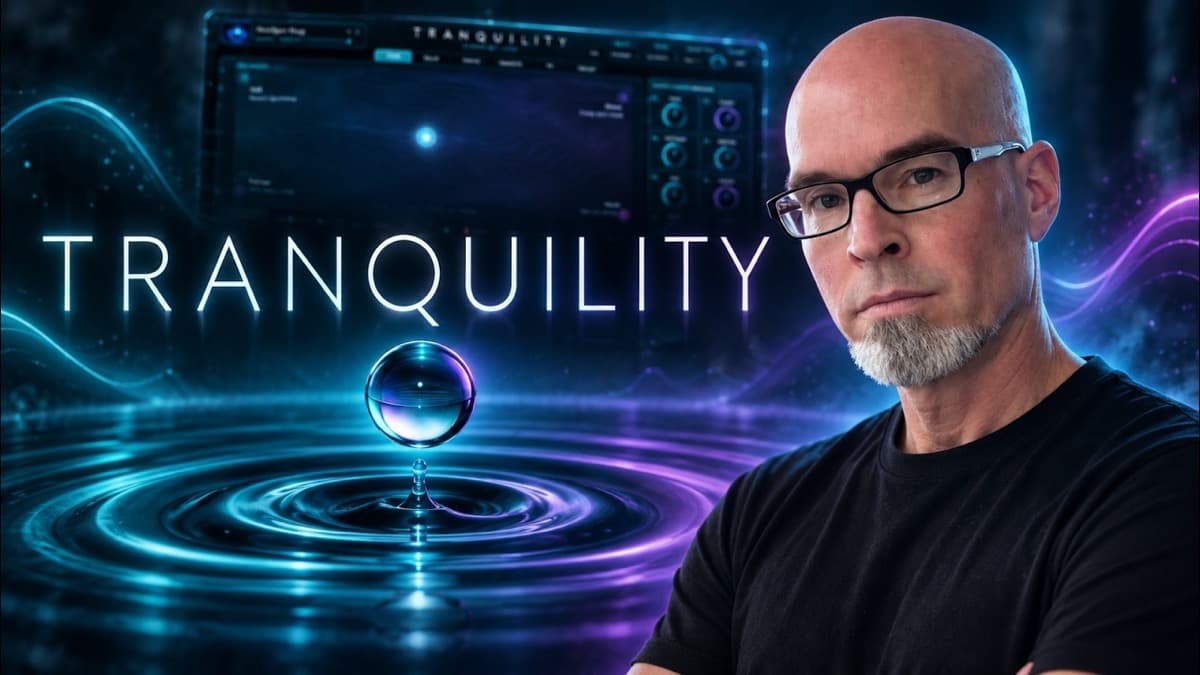
S1gns Of L1fe released Tranquility on September 17, 2026. It is a full polyphonic software synth built by Chris Bryant, the ambient producer behind the S1gns Of L1fe channel, and it aims squarely at evolving atmospheres rather than punchy leads. The engine blends analog waveforms, wavetables and samples, then routes them through dual filters and deep modulation. This review works from the official S1gns Of L1fe specifications.
At a glance: 20 dollars, sold through Bandcamp as a bundle with the plugin, factory sounds and a manual. Tranquility runs as VST3 and AU on macOS and Windows. It offers three oscillators and a sub source, up to eight unison voices per source, two flexibly routed multimode filters, chord and sequencing tools and onboard effects, all in a deliberately menu-light layout.
What is S1gns Of L1fe Tranquility?
Tranquility is a hybrid synthesizer with a clear point of view. Most flagship synths try to do everything, which is powerful but can bury simple tasks under layers of menus. Tranquility narrows the target. It is built for ambient, cinematic and textural work, and it keeps the controls that matter for that job in front of you rather than nested deep.
The engine is hybrid in the real sense. Each of its three oscillators, plus a sub source, can draw on analog-style waveforms, wavetables and samples, so a single patch can mix a warm analog core with a moving wavetable and a sampled texture. That combination is what lets the synth produce the glassy, evolving pads and drones its maker is known for.
Tranquility comes from a solo developer with a deep background in ambient sound design. That background shows in the factory sounds and the workflow choices. This is a focused instrument built by someone who uses this exact kind of sound every day.
What Tranquility offers, feature by feature
Here is what each part of Tranquility adds, and what it does for your sound.
- Three oscillators plus a sub source. Each oscillator can combine analog waveforms, wavetables and samples, and the sub fills out the low end. Blend three hybrid sources and a single note gains real depth, sitting somewhere between analog warmth and digital shimmer.
- Up to eight unison voices per source. Stacking unison voices thickens and widens each oscillator. With eight per source, you can build the huge, detuned beds that ambient and cinematic music lean on, without layering multiple instances.
- Dual multimode filters. Two filters with flexible routing let you shape tone in series or in parallel. That routing freedom matters for evolving sounds. You can move energy between the filters over time instead of sitting on one static curve.
- Deep modulation. Tranquility is built for movement, so it puts modulation front and center. Route envelopes and modulators across the oscillators, filters and effects, and a static chord turns into a slowly breathing texture.
- Chord and sequencing tools. Onboard chord and sequencing features turn single notes into harmony and motion. For producers who compose from atmospheres rather than riffs, having these built in means ideas form inside the plugin instead of the piano roll.
- Onboard effects. A built-in effects section lets you finish a patch with space and color without reaching for inserts. For ambient work, where reverb and modulation are part of the instrument, that keeps the sound whole in one window.
Put together, Tranquility is a specialist that plays to its strength. It will not out-muscle a flagship on bass and leads, but for evolving, harmonic, atmospheric sound it gives you a fast, deep path from note to texture.
S1gns Of L1fe Tranquility specifications
| Spec | Detail |
|---|---|
| Type | Hybrid analog and wavetable synthesizer |
| Oscillators | 3 main sources plus a sub |
| Source material | Analog waveforms, wavetables and samples |
| Unison | Up to 8 voices per source |
| Filters | 2 multimode filters, flexible routing |
| Modulation | Deep modulation aimed at evolving movement |
| Extras | Chord tools, sequencing, onboard effects |
| Workflow | Menu-light layout for fast, evolving patches |
| Included | Plugin, factory sounds and user manual |
| Formats | VST3, AU (macOS and Windows) |
| Price | 20 dollars via Bandcamp |
Tranquility vs Arturia Pigments
The natural benchmark is Arturia Pigments, the hybrid many producers treat as the default. Both mix synthesis types, but they aim at very different users and budgets.
| S1gns Of L1fe Tranquility | Arturia Pigments | |
|---|---|---|
| Focus | Ambient, cinematic and textural sound | A do-everything hybrid flagship |
| Engines | Analog waves, wavetables, samples across 3 oscillators plus sub | Wavetable, analog, granular, sample and harmonic engines |
| Filters | 2 multimode, flexible routing | Dual filters with a large filter collection |
| Workflow | Deliberately menu-light | Deep, visual, extensive |
| Formats | VST3, AU | VST3, AU, AAX, standalone |
| Price | 20 dollars | Around 199 dollars |
Pigments is the broader, deeper and far more expensive instrument, and it remains the reference hybrid for a reason. Tranquility answers with focus and price. It does not try to match Pigments feature for feature. It gives you a fast, atmosphere-first hybrid for the cost of a sample pack. If you want the flagship route, you can compare prices on Arturia Pigments. For a free alternative to experiment with first, our Vital entry is a strong starting point, and the best free synth VSTs in 2026 guide has more.
Who Tranquility is for
Consider it if you make ambient, cinematic or textural music, you want evolving pads and drones without deep menu diving, or you want a capable hybrid synth for 20 dollars. The built-in chord and sequencing tools suit producers who compose from harmony and atmosphere.
Skip it if you need a punchy bass-and-lead workhorse, the deepest possible wavetable editor, or an AAX and standalone build for your setup. Tranquility is a specialist, and it makes no secret of that.
How much does Tranquility cost?
Tranquility is 20 dollars, sold through Bandcamp as a bundle that includes the plugin, factory sounds and a user manual. It installs as VST3 and AU on macOS and Windows. There is no separate demo tier at this price, so the low cost is the entry point. Buy it from the official Tranquility page on Bandcamp. If you want to browse other synths while you decide, Plugin Boutique carries a deep catalog of alternatives.
FAQ
Is Tranquility only for ambient music?
It is built for ambient, cinematic and textural work, and that is where it shines. The hybrid engine and modulation can serve other genres, but the design choices, from the menu-light layout to the factory sounds, are aimed at evolving atmospheres rather than punchy leads or basses.
How is Tranquility different from Arturia Pigments?
Pigments is a deep, expensive flagship that tries to cover every kind of synthesis. Tranquility is a focused, 20 dollar hybrid aimed at atmosphere, with a simpler layout. Pigments is the deeper tool, Tranquility is the faster and cheaper path to evolving pads.
What formats and systems does Tranquility support?
Tranquility runs as a VST3 and AU plugin on macOS and Windows. It does not currently ship an AAX or standalone build, so Pro Tools users who need AAX should check compatibility before buying.
The bottom line
Tranquility is a focused instrument that knows exactly what it is for. Three hybrid oscillators, a sub, dual filters, deep modulation and built-in chord and sequencing tools give it real depth for evolving, harmonic, atmospheric sound, and the menu-light layout keeps that depth fast to reach. It will not replace a flagship for bass and leads, and the Bandcamp delivery and VST3 and AU only formats are worth noting. At 20 dollars, though, it is one of the easiest ambient synths to recommend this year. For more fresh synth coverage, see the KeySolutions Traveler review, the Timbre Space Vuoksi overview, and our guide to the best free synth VSTs in 2026.