Sprite Spores: A Free Multi-Chip Synth for Retro and Ruined Sound
Sprite Spores is a free multi-chip synth with AY/YM, SID and Yamaha FM engines, a drawable wavetable and glitchy video-memory effects. Full feature guide.

Phantomexposure released Sprite Spores in September 2026, a free multi-chip synthesizer that gathers four families of vintage sound chips into one instrument and then adds tools the original machines never had. It is the same developer behind the Casio-inspired Interphase Cartograph, and Sprite Spores follows the same instinct: take an obscure corner of digital sound and build a deep, playable instrument around it.
At a glance: Sprite Spores is free, or pay what you want, with no serial or registration. It runs as a 64-bit Windows VST3 and a signed universal macOS VST3, with a resizable interface, a factory preset library and full MIDI control. Inside are five engines, a drawable wavetable, a chord system, polymetric sequencing and a bank of effects modeled on corrupted video memory.
What is Sprite Spores?
Chip music comes from the sound hardware inside old computers and consoles: the buzzy square waves of a ZX Spectrum, the growling filters of a Commodore 64, the metallic FM of a Sega Genesis. Each chip has a distinct voice, and producers have spent years chasing those voices with emulations and trackers. Sprite Spores puts several of them in one plugin and lets you blend them.
Phantomexposure describes it as an impossible multi-chip instrument, because no real machine ever combined these chips. Each one opens as its own editable mini-synth, and then you can layer them into a single patch. The plugin is aimed at authentic retro tones, but also at glitch, ambient, leftfield electronics and cinematic sound design, so it reaches well beyond nostalgia.
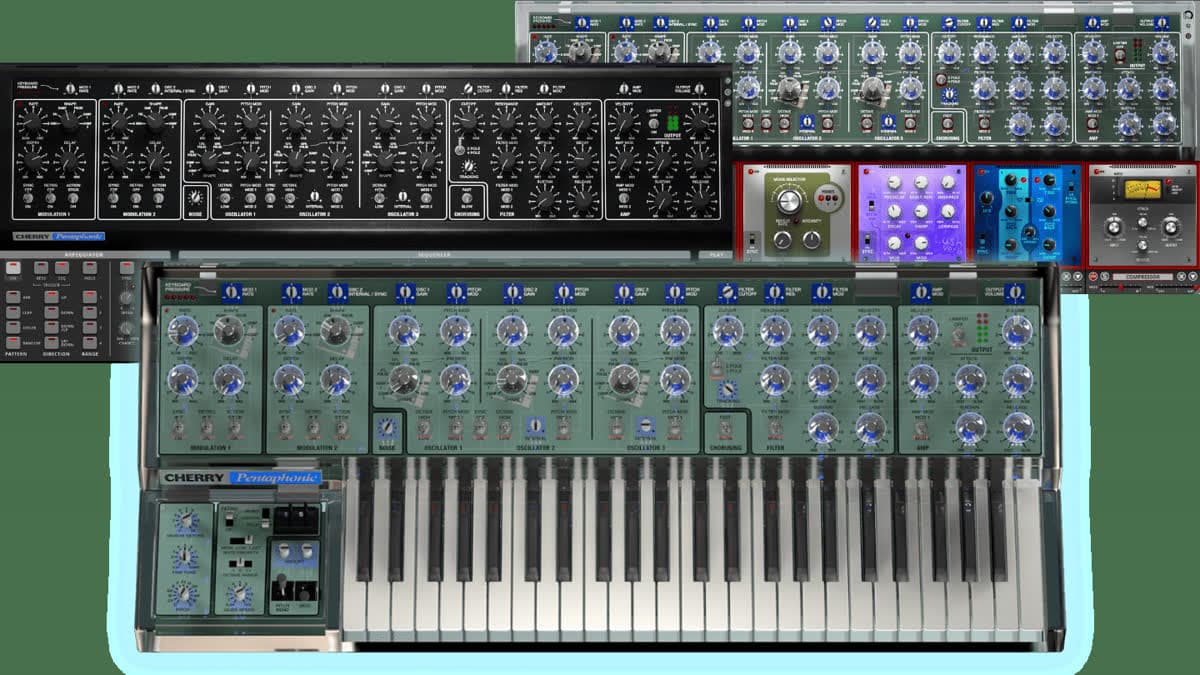
The developer spent roughly two years building it and added macOS support before release. The interface is wrapped in reactive CRT and demoscene-inspired displays, including a live register-bus monitor that shows the chip data changing as you play, which turns the plugin into part instrument, part visualizer.
What Sprite Spores does, engine by engine
The plugin is organized around five sound engines plus a set of creative tools. Here is what each part gives you.
- AY/YM engine. This models the General Instrument AY-3-8910 and Yamaha YM2149, the chips behind the ZX Spectrum and many arcade boards. You get free programming plus ZX Spectrum 128K and Atari ST inspired profiles, with control over clocks, mixer behavior, envelopes, noise and stereo options, and access to live R0 to R13 register data for authentic behavior.
- SID engine. A recreation of the MOS 6581 and 8580 chips from the Commodore 64, with both personalities available. It offers three voices, pulse-width control, combined waveforms, ring modulation, hard sync, flexible routing and the model-specific filters and envelopes that give each SID revision its character.
- Yamaha FM engine. Two distinct engines, the YM2612 (OPN2) from the Sega Genesis and the YM2151 (OPM) from many arcade machines. Both provide four-operator algorithms, feedback, detuning, key scaling and LFO behavior, and they reproduce the characteristic converter differences that make FM chip sound so recognizable.
- Ghost ASIC. A fictional chip, invented by the developer, that acts as a feedback-and-memory engine for evolving residue, spectral leakage and unstable texture. It is the part of Sprite Spores that has no historical equivalent, and it is where the strangest sounds come from.
- Multi-chip layering. The point of the whole design. Blend any of the engines into one coherent, playable patch, so a single note can carry a SID bass, an FM pluck and an AY arpeggio at once.
On top of the engines, Sprite Spores adds modern tools:
- A drawable wavetable. Draw and reshape your own wavetable with bit depth, folding, warping and playback controls, so you are not limited to the stock chip waveforms.
- A chord system. Create tuned chords, inversions, voicings and octave structures, and turn a single held note into animated harmonic textures.
- Three polymetric sequencer lanes. Three independent lanes animate pitch, level, morphing and chip behavior, each able to run its own length for shifting, polyrhythmic patterns.
- The Sprout randomizer. A musical randomizer that generates tuned, playable starting points, designed to avoid the uncontrolled noise that random buttons usually produce.
- Video-memory effects. Process sound through decaying VRAM buffers, bitplanes, nibble swaps and register interference. This is the register-tear character: glitch and corruption used as an instrument rather than an accident.
- A finishing chain. Delay, reverb, speaker color, saturation, filtering and protected output control let you polish a patch inside the plugin.
Sprite Spores specifications
| Spec | Detail |
|---|---|
| Type | Multi-chip synthesizer |
| Engines | AY-3-8910/YM2149, MOS 6581/8580 SID, YM2612 (OPN2), YM2151 (OPM), Ghost ASIC |
| Layering | Blend all engines into one patch |
| Wavetable | Drawable, with bit depth, folding, warping and playback controls |
| Chords | Tuned chords, inversions, voicings and octave structures |
| Sequencing | 3 independent polymetric lanes (pitch, level, morph, chip behavior) |
| Randomizer | Sprout musical randomizer for playable starting points |
| Effects | Decaying VRAM buffers, bitplanes, nibble swaps, register interference; delay, reverb, saturation, filtering, speaker color |
| Interface | Resizable, with reactive CRT displays and a live register-bus monitor |
| Formats | 64-bit Windows VST3; signed universal macOS VST3; MIDI-controlled |
| Price | Free, or pay what you want; no serial or registration |
Sprite Spores vs Plogue chipsynth
The best-known commercial route to multi-chip sound is the Plogue chipsynth range, so it is the natural comparison.
| Sprite Spores | Plogue chipsynth | |
|---|---|---|
| Price | Free, pay what you want | Paid, per chip or as a suite |
| Chips covered | AY/YM, SID, two Yamaha FM chips, plus a fictional engine | Deep, per-chip products (SID, FM, portable) |
| Focus | Layering, creative tools, glitch effects | Meticulous per-chip accuracy |
| Modern extras | Drawable wavetable, chords, polymetric lanes | More traditional per-chip workflow |
| Formats | VST3 (Windows and macOS) | VST, VST3, AU, AAX |
Plogue's chipsynth line is the accuracy benchmark, with each product devoted to reproducing one chip family in fine detail. Sprite Spores is broader and more playful. It trades some of that per-chip depth for the ability to blend chips, draw your own wavetables, sequence polymetric patterns and smear the result through video-memory corruption, all for nothing. If you want the most faithful single-chip emulation, buy the dedicated tool. If you want a creative, layerable chip playground with a strong glitch streak, Sprite Spores is hard to argue with at its price. For more no-cost options, see our best free synth VSTs in 2026 and the wider best free VST plugins in 2026.
Who Sprite Spores is for
Consider it if you make chiptune, glitch, ambient or leftfield electronics, you want vintage chip character without hunting down old hardware, or you like designing sound and want an instrument that rewards deep patching. The layering, polymetric lanes and video-memory effects make it a genuine sound-design tool, not just a nostalgia box, and the price makes it an easy install.
Skip it if you only need a single accurate SID or FM emulation for a specific track, where a dedicated per-chip plugin is more precise, or if you work in an AU-only host on macOS, since Sprite Spores ships as VST3 rather than AU.
How much does Sprite Spores cost?
Sprite Spores is free, on a name-your-price basis, and needs no serial or registration. It is available direct from the official Phantomexposure Sprite Spores page, where you can set your own price, including zero, and download the Windows or macOS VST3. If you find it useful, paying the developer something is a fair way to support more releases like it.
FAQ
Is Sprite Spores really free?
Yes. Sprite Spores is free, or pay what you want, with no serial or registration required. You set your own price on the developer's store, and you can download it for nothing if you choose. Paying is optional and supports future development.
Which sound chips does Sprite Spores emulate?
It brings together four chip families: the AY-3-8910 and YM2149 (ZX Spectrum and arcade), the MOS 6581 and 8580 SID (Commodore 64), and two Yamaha FM chips, the YM2612 (Sega Genesis) and YM2151 (arcade). It adds a fifth, fictional engine called the Ghost ASIC for unstable, evolving textures.
What formats and systems does Sprite Spores support?
Sprite Spores runs as a 64-bit Windows VST3 and a signed universal macOS VST3, so it works on both Intel and Apple Silicon Macs. It is a MIDI-controlled instrument with a resizable interface, and it does not ship an AU version at launch.
For another small-developer synth built around one strong idea, read our look at the Phantomexposure Interphase Cartograph, the studio's Casio-inspired phase-distortion instrument.