Some links on this page are affiliate links. If you buy through them, Dubspot may earn a commission at no extra cost to you. It never affects our scores or what we recommend — read our policy.
Interphase Cartograph Revives Casio VZ Phase Distortion
Phantomexposure Interphase Cartograph is a Casio VZ-1 style interactive phase distortion synth for Mac and Windows at around $7. Full specs and how it compares to Arturia CZ V.
T
Theo Nakamura
September 16, 2026 · 8 min read
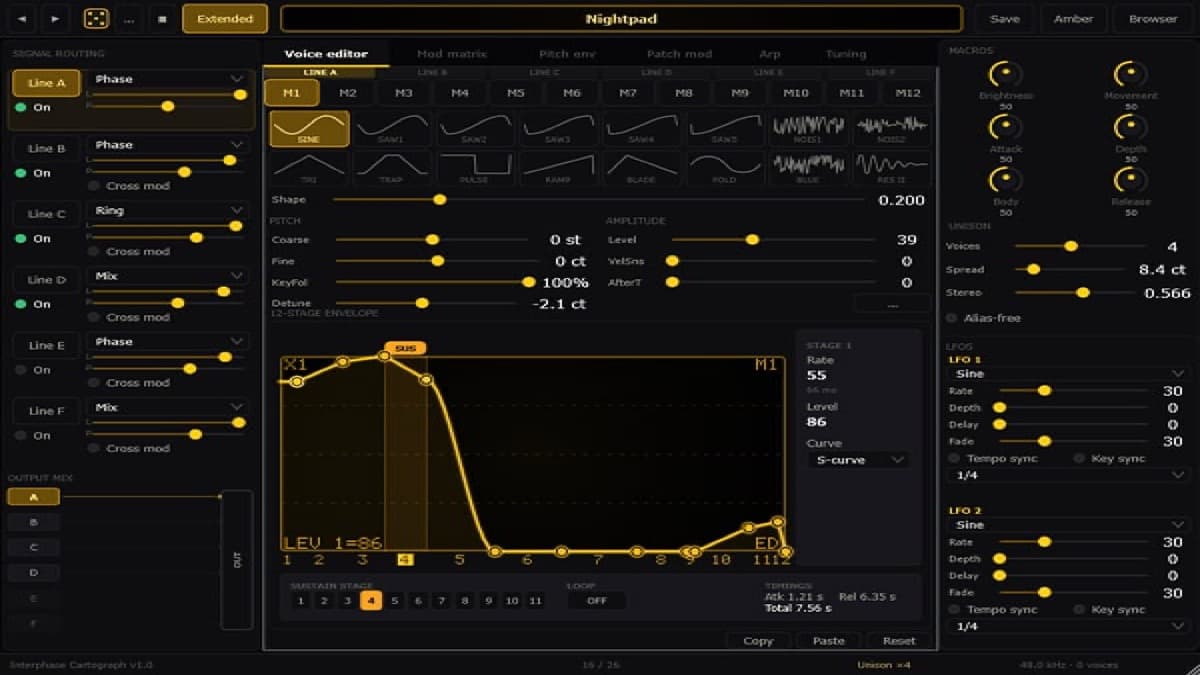
Phantomexposure released Interphase Cartograph in September 2026. It is a software recreation of the Casio VZ-1 and VZ-10M, the 1988 synths that ran interactive phase distortion, and it goes on sale for around $7. That price is deliberate: the developer wants people who never touched the original hardware to be able to hear what phase distortion actually does. Everything below comes from the official Phantomexposure product page.
At a glance: Around $7 (about $10 CAD) on Gumroad. VST3 and standalone on Windows 64-bit and signed Universal macOS (Apple Silicon and Intel). Two modes, from a faithful VZ-1 recreation to an extended engine with six lines and twelve modules. Imports original Casio VZ-1 SysEx banks. 43 factory presets and an illustrated PDF manual.
What is interactive phase distortion?
Phase distortion is the synthesis method Casio built into the CZ line in the mid-1980s as its answer to Yamaha's FM. Instead of frequency modulation, it warps the phase of a read-through waveform to add harmonics, which is why a CZ can sound bright and glassy without the brittle edge of early FM. The VZ-1 that followed in 1988 pushed the idea further with interactive phase distortion, or iPD. It paired oscillator modules into lines and let one module shape another, bending its phase or ring-modulating into it. The result is a hybrid that sits between phase distortion and FM, capable of metallic, evolving, and slightly unpredictable tones.
The VZ has never had a mainstream software recreation. Arturia covered the earlier CZ with CZ V, but the VZ's iPD architecture is a different and more complex beast, and it has largely been left to hardware collectors. Interphase Cartograph is the attempt to map that architecture into a plugin, which is where its name comes from.
What Interphase Cartograph does, feature by feature
Classic mode: the VZ-1 recreated
Classic mode mirrors the original. It gives you a four-line, eight-module structure, the eight original iPD waveforms, and eight-stage envelopes, the long multi-segment shapes the VZ used to sculpt motion over time. You choose how the modules connect through four modes: single, mix, phase, and ring. Single plays a module on its own, mix blends them, phase is the core iPD move where one module distorts another, and ring cross-modulates the pair for clangorous metal. This is the mode for anyone chasing an authentic VZ sound.
Extended mode: the architecture pushed further
Extended mode takes the same idea past what the hardware could do. It opens the structure up to six lines and twelve modules, adds eight morphable waveforms on top of the originals, and lengthens the envelopes to twelve stages. It also adds two modulation types the original lacked: amplitude modulation and through-zero FM. Through-zero FM in particular is what lets a phase-distortion engine reach into cleaner, deeper FM territory, so extended mode is where the plugin stops being a museum piece and becomes a modern synth.
Modulation, performance, and tuning
Around the engine sits a proper modern control set. There are two LFOs, a 16-slot modulation matrix for routing them and other sources wherever you want, and six performance macros for grouping moves under a single control. An arpeggiator handles pattern work, microtuning support opens the door to non-standard scales, and a lockable randomizer generates new patches while protecting the parameters you want to keep. None of this existed on the 1988 hardware, and together it turns a vintage method into something you can actually modulate and perform.
SysEx import and presets
For collectors, Classic mode can import original Casio VZ-1 SysEx banks, so decades-old patch libraries load straight into the plugin. Out of the box you get 43 factory presets and an illustrated PDF manual, which matters for a synthesis method most producers have never met.
Interphase Cartograph specifications
| Spec | Detail |
|---|---|
| Product | Interphase Cartograph |
| Developer | Phantomexposure |
| Type | Interactive phase distortion (iPD) synthesizer |
| Based on | Casio VZ-1 and VZ-10M (1988) |
| Classic mode | 4 lines, 8 modules, 8 iPD waveforms, 8-stage envelopes |
| Connection modes | Single, mix, phase, ring |
| Extended mode | 6 lines, 12 modules, 8 morphable waveforms, 12-stage envelopes, AM, through-zero FM |
| Modulation | 2 LFOs, 16-slot modulation matrix, 6 macros |
| Extras | Arpeggiator, microtuning, lockable randomizer, VZ-1 SysEx import |
| Presets | 43 factory presets, illustrated PDF manual |
| Formats | VST3, standalone |
| System | Windows 64-bit; signed Universal macOS (Apple Silicon and Intel) |
| Price | Around $7 (about $10 CAD) |
Interphase Cartograph vs Arturia CZ V
The nearest named competitor is Arturia CZ V, which recreates the earlier Casio CZ-1 and CZ-101. They share a family tree but emulate different generations, and they aim at very different buyers.
| Interphase Cartograph | Arturia CZ V | |
|---|---|---|
| Developer | Phantomexposure | Arturia |
| Emulates | Casio VZ-1 / VZ-10M (iPD) | Casio CZ-1 / CZ-101 (PD) |
| Architecture | Up to 6 lines, 12 modules, through-zero FM | Classic CZ phase distortion, expanded |
| Extras | 16-slot mod matrix, microtuning, SysEx import | Arturia modulation, effects, NKS |
| Formats | VST3, standalone | Standalone, VST, AU, AAX, NKS |
| Presets | 43 | Hundreds |
| Price | Around $7 | $99 |
Which to pick. Choose Arturia CZ V if you want the polished CZ sound, a big preset library, AAX and NKS support, and long-term support from a major developer. Choose Interphase Cartograph if you specifically want the VZ's interactive phase distortion, if you own VZ SysEx banks to import, or if you just want to explore an under-served synthesis method for the price of a coffee. For most producers this is a curiosity buy, and at $7 it is an easy one.
Who Interphase Cartograph is for
Consider it if you are a sound designer or synth history buff who wants a method you cannot get anywhere else, if you owned or admired a VZ-1, or if you like building metallic, evolving, slightly unpredictable tones that sit between phase distortion and FM. Extended mode gives it enough depth to earn a permanent slot rather than a single session.
Skip it if you want a polished, preset-and-play synth with deep factory content and guaranteed long-term updates from a large company. This is a focused tool from a solo developer, sold cheap, and it rewards curiosity more than convenience.
How much does Interphase Cartograph cost?
Interphase Cartograph is around $7 (roughly $10 CAD), sold through the developer's official Gumroad page. There is no subscription. It installs as a VST3 and a standalone app on Windows 64-bit and on signed Universal macOS, so it runs natively on both Apple Silicon and Intel Macs.
FAQ
What is Interphase Cartograph based on?
It recreates the Casio VZ-1 and VZ-10M from 1988 and their interactive phase distortion engine. Classic mode follows the original four-line, eight-module design, and extended mode grows it to six lines and twelve modules with amplitude modulation and through-zero FM.
How is it different from Arturia CZ V?
Arturia CZ V emulates the earlier Casio CZ series, which used standard phase distortion. Interphase Cartograph emulates the later VZ line, whose interactive phase distortion lets modules modulate each other. They are related methods from different generations of Casio synths.
Can I load old Casio VZ patches?
Yes. Classic mode imports original Casio VZ-1 SysEx banks, so existing hardware patch libraries load directly into the plugin.
What are the system requirements?
It runs as a VST3 and standalone app on Windows 64-bit and on signed Universal macOS, native on both Apple Silicon and Intel.
The bottom line
Interphase Cartograph fills a real gap. The Casio VZ and its interactive phase distortion have gone unrecreated in software while the CZ got the Arturia treatment years ago, and this plugin brings that stranger, more interactive method to any DAW for a handful of dollars. Classic mode nails the vintage sound and imports old SysEx banks, while extended mode adds enough modules, modulation, and through-zero FM to make it a modern instrument. It is a solo-developer release with a small preset count, but at around $7 it is one of the most interesting cheap synths of the year.