Some links on this page are affiliate links. If you buy through them, Dubspot may earn a commission at no extra cost to you. It never affects our scores or what we recommend — read our policy.
discoDSP OPL 3.0: The AdLib FM Chip, Reworked
discoDSP OPL 3.0 rebuilds the Yamaha OPL2/OPL3 FM chip with all eight waveforms per operator and 16x oversampling. Specs, pricing, and how it compares.
M
Marcus Feld
August 25, 2026 · 7 min read
See full specs, price, and alternatives in the plugin database →
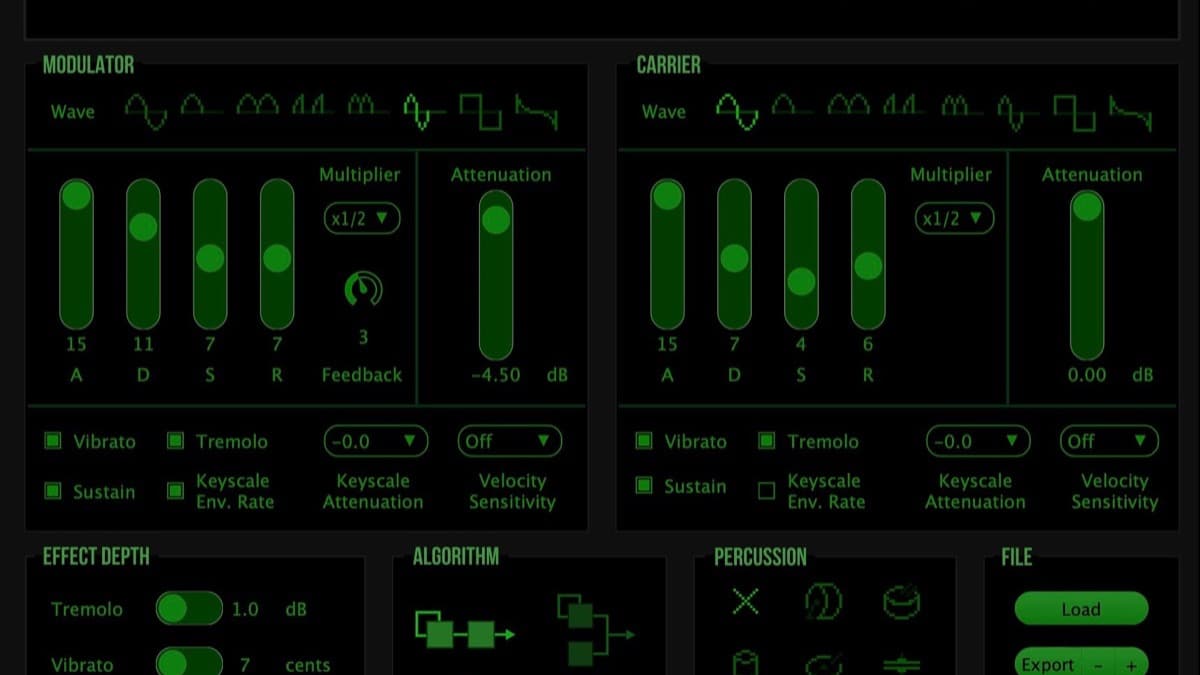
discoDSP has shipped OPL 3.0, a major update to its emulation of the Yamaha OPL2, the FM synthesis chip behind AdLib and early Sound Blaster game soundtracks. The update landed on 10 August 2026. It is $49 for new buyers and a free upgrade for existing owners, and it brings the full OPL3 waveform set to every operator plus higher oversampling.
At a glance: $49 desktop, $9.99 on iOS, free for owners. Two-operator FM synthesis with authentic OPL2/OPL3 chip behavior, eight waveforms per operator, 16x oversampling, OPL2 percussion mode, and over 2,000 presets with SBI import. Runs as VST, VST3, AU, AAX, and standalone on Windows, macOS, Linux, and iOS.
What is discoDSP OPL?
OPL is a software recreation of the Yamaha OPL2 (YM3812), the sound chip that defined PC game audio in the late 1980s and early 1990s. If you remember the FM soundtrack of a DOS game, or the punchy leads of a demoscene track, that is the OPL2. discoDSP wraps that chip behavior in a plugin so you can play it from a MIDI keyboard and run it in a modern DAW.
The emulation is built on ymfm, the open-source Yamaha chip library by Aaron Giles, released under a BSD license. That matters, because it means the plugin is modeling the real chip logic rather than approximating it by ear. The result is the authentic, slightly brittle FM tone that chiptune and retro-leaning producers want, rather than a smoothed-over modern reinterpretation.
It sits in a specific niche. This is not a general-purpose FM workstation. It is a focused, characterful instrument for a particular sound, and version 3.0 widens what that sound can be.
What is new in OPL 3.0
All eight OPL3 waveforms on every operator
The headline change is the waveform set. Earlier versions gave each operator four waveforms. Version 3.0 exposes all eight from the OPL3: sine, half sine, absolute sine, quarter sine, alternating sine, camel sine, square, and logarithmic sawtooth. Each operator can now use any of them.
That doubles the raw material for every patch. The square and logarithmic sawtooth shapes in particular push the sound into brighter, more aggressive territory than the sine-based OPL2 palette allowed. For lead and bass design, this is the biggest practical gain in the update.
16x oversampling
FM synthesis is prone to aliasing, the harsh digital artifacts that appear when high harmonics fold back down into the audible range. Version 3.0 raises internal oversampling to 16x, which pushes those artifacts up and out of the way. Patches stay cleaner in the high end, especially bright, resonant FM leads, without sacrificing the core chip character.
Percussion mode and presets
OPL keeps the OPL2 percussion mode, which uses the chip's dedicated rhythm channels to produce bass drum, snare, tom, cymbal, and hi-hat. It is a fast route to authentic 8-bit-era drum tones. The library ships with over 2,000 presets, and the plugin imports SBI files, the classic instrument format from the AdLib and Sound Blaster era, so archive patches from old games and trackers load straight in.
discoDSP OPL 3.0 specifications
| Spec | Detail |
|---|---|
| Product | discoDSP OPL 3.0 |
| Type | FM synthesizer, Yamaha OPL2/OPL3 chip emulation |
| Engine | Two-operator FM via ymfm (Aaron Giles, BSD) |
| Waveforms | Eight per operator (sine, half, absolute, quarter, alternating, camel sine, square, log sawtooth) |
| Percussion | OPL2 rhythm mode: bass drum, snare, tom, cymbal, hi-hat |
| Oversampling | Up to 16x |
| Presets | 2,000+, plus SBI import |
| Formats | VST, VST3, AU, AAX, standalone; AUv3 on iOS |
| Platforms | Windows 10+, macOS 10.14+ (Apple Silicon), Linux (Debian 10+), iOS 14+ |
| Requirements | AVX2 CPU, 8 GB RAM (desktop) |
| Price | $49 desktop, $9.99 iOS, free upgrade for owners |
| Released | 10 August 2026 |
OPL 3.0 vs Dexed vs FM8
OPL is FM, but it is a different kind of FM from the DX-style synths most producers know. The table makes the split clear.
| discoDSP OPL 3.0 | Dexed | FM8 | |
|---|---|---|---|
| Price | $49 | Free | $99 |
| Chip / model | Yamaha OPL2/OPL3 | Yamaha DX7 (6-op) | DX-style 6-operator |
| Operators | 2 | 6 | 6 |
| Character | Retro game / chiptune | Classic DX / 80s digital | Modern, refined FM |
| Presets | 2,000+, SBI import | DX7 cartridge import | 1,000+ |
| Best for | Authentic OPL/AdLib tones | Free DX7 emulation | Deep modern FM design |
Which to pick. Choose OPL if you specifically want the OPL2/OPL3 sound: game audio, demoscene, chiptune, and retro FM textures that a six-operator synth cannot fake. Choose Dexed if you want the classic DX7 sound for free and value its huge cartridge library. Choose FM8 if you want the deepest, cleanest modern FM engine for pads, keys, and evolving textures. They overlap on paper but aim at different eras and different jobs.
Who OPL 3.0 is for
Consider it if you make chiptune, demoscene-inspired music, or retro game soundtracks, and you want the real OPL2 voice rather than a modern impression of it. The chip-accurate engine and SBI import are exactly what that work needs.
Consider it if you want a lightweight, characterful FM synth to sit alongside a bigger instrument. At two operators it is easy to program and quick to load, and the eight new waveforms give it more range than its size suggests.
Skip it if you want deep, modern FM for lush pads and complex evolving sounds. Two operators is a deliberate limit, and a six-operator synth like FM8 or a hybrid like Corona 7 will serve you better.
How much does OPL 3.0 cost?
The desktop plugin is $49 for VST, VST3, AU, AAX, and standalone. The iOS AUv3 app is $9.99. Version 3.0 is a free upgrade for existing OPL owners. A demo is available from discoDSP, and European buyers can find OPL on Best Service as an alternative to buying direct. Licensing is a single online activation, after which the plugin runs offline.
FAQ
Is OPL 3.0 a real OPL3 chip emulator?
Not exactly. The engine emulates the OPL2 (YM3812) and borrows the OPL3 waveform set, giving each operator all eight OPL3 shapes, but it does not implement every OPL3 feature such as four-operator channels. Think of it as an OPL2 emulator with the OPL3 waveforms bolted on.
Is the update free for existing owners?
Yes. Version 3.0 is a free update for anyone who already owns OPL. New buyers pay $49 for the desktop version.
What is SBI import?
SBI is the instrument file format from the AdLib and Sound Blaster era. OPL can load SBI files, so patches from old games, trackers, and demos can be dropped straight into the plugin.
Does OPL run on Apple Silicon and Linux?
Yes. The desktop build is native on Apple Silicon Macs and also runs on Windows 10+ and Debian-based Linux, in all major plugin formats plus standalone.
The bottom line
OPL 3.0 is a small, focused instrument that does one thing extremely well: it puts the authentic Yamaha OPL2 sound, the voice of a whole era of PC game audio, into a modern DAW. The move to all eight OPL3 waveforms per operator and 16x oversampling meaningfully widens the palette and cleans up the top end, and it arrives free for existing owners. Two-operator FM is a narrow brief, but for chiptune, demoscene, and retro FM work, that narrowness is the point.