Some links on this page are affiliate links. If you buy through them, Dubspot may earn a commission at no extra cost to you. It never affects our scores or what we recommend — read our policy.
Arturia MiniFreak 49: Full-Size Keys, Touch Matrix, $849
Arturia MiniFreak 49 puts the six-voice hybrid synth on 49 semi-weighted keys with an XYZ touch matrix, Filter FM and 256 MB memory. Specs, prices and rivals.
P
Priya Raman
October 23, 2026 · 9 min read
Black Friday 2026Arturia Black Friday 2026: dates and deals →
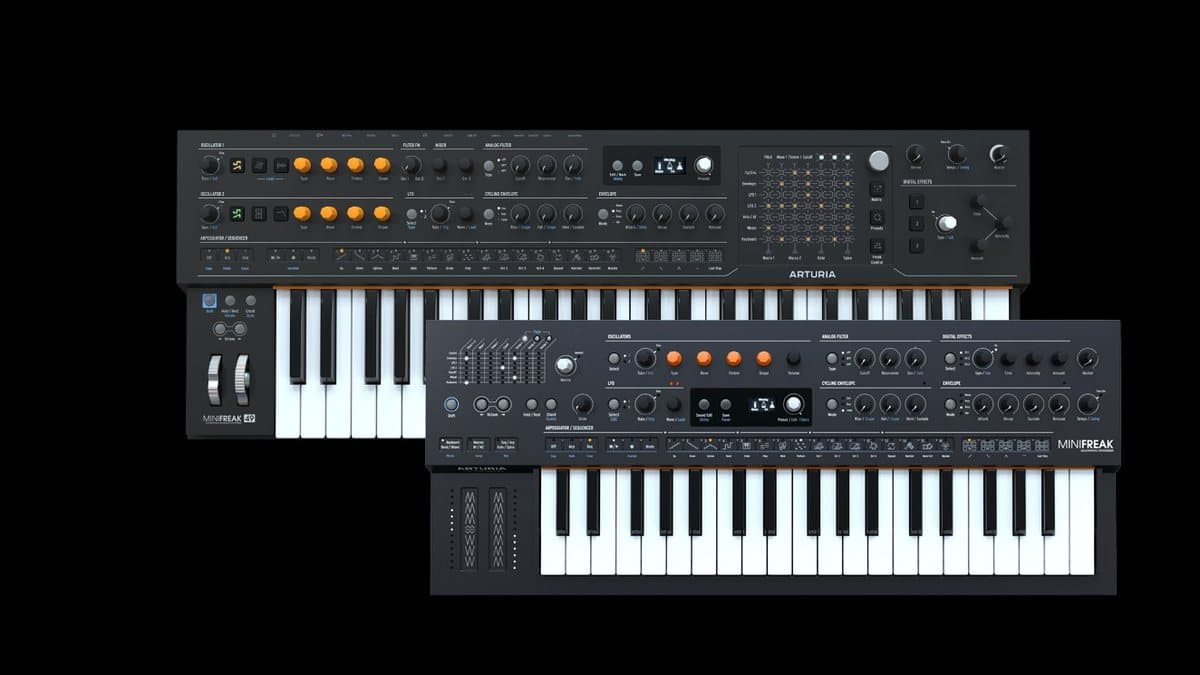
Arturia has launched MiniFreak 49, a bigger version of its six-voice hybrid synthesizer. The sound engine is the one MiniFreak owners know: two digital oscillator engines feeding an analog filter on every voice. Around it Arturia has built a new instrument, with 49 full-size semi-weighted keys, a pressure-sensitive XYZ touch matrix, metal pitch and mod wheels, audio-rate Filter FM, stereo Voice Panning and eight times the sample memory. It costs $849 (€799) from Arturia, and the original 37-key MiniFreak stays on sale at $649.
At a glance: 6 voices, 2 digital engines with more than 30 modes, a per-voice analog state-variable filter, 3 stereo effect slots with 13 algorithms each, a 64-step sequencer with 4 modulation lanes, 256 MB for samples and wavetables, MIDI in/out/thru, USB-C, clock and audio input. 777 x 288 x 71 mm, 5.7 kg. The MiniFreak V software comes with it. $849 / €799.
What is MiniFreak 49?
MiniFreak arrived in 2022 as a compact, affordable polysynth with an unusual idea at its core. Instead of analog oscillators, it runs two digital engines per voice, with modes ranging from virtual analog and wavetable to granular, sample playback and physical modelling, several of them built on algorithms from Mutable Instruments and Noise Engineering. Those engines then pass through a real analog filter per voice. The result is a synth that can sound clean and classic or broken and strange, which is why it found a following among sound designers as well as players.
The weak spot was always the body. The 37 slim keys and touch strips made it portable, but awkward for chords and two-handed playing. MiniFreak 49 is Arturia's answer: the same architecture in a wider, heavier instrument with more direct controls. Last month's free MiniFreak 5.0 update added user sample and wavetable import, and MiniFreak 49 ships with that ability built in, with far more room to store your own material.
What's new on MiniFreak 49
49 full-size semi-weighted keys. The keybed has velocity and mono aftertouch, so you can lean into a chord to open a filter or add vibrato. This is the change most owners asked for, and it moves MiniFreak from a desktop sketchpad to an instrument you can play properly.
XYZ touch matrix. A grid of touch-sensitive pads replaces the original's small modulation matrix. Rows are sources and columns are destinations, so you touch an intersection to create a routing and set its depth with an encoder. Active routings stay lit, which makes complex patches easier to read. The same surface browses presets in pages of 49, colour-coded by sound type, and draws custom LFO shapes.
Freak Control. The matrix also works as a performance pad. Slide across X and Y and press for Z to move several parameters at once, with bipolar layouts that put opposite values on each axis and vector layouts that blend four destinations. Two Macros, Gate and Spice sit on the same surface, and a Hold function keeps the gesture after you lift your hand.
Audio-rate Filter FM. Either engine can now modulate the analog filter cutoff at audio rate. Small amounts add grit and sidebands. Larger amounts make vocal, metallic or abrasive tones that the original MiniFreak could not reach.
Voice Panning. A dedicated Stereo control spreads the six voices across the stereo field, with Centered and Gradual distributions. Chords and arpeggios open up without reaching for a chorus.
Direct engine controls. Each oscillator gets its own Type, Wave, Timbre and Shape knobs plus three shortcut buttons. On the original, more of this sat behind menus.
256 MB of memory. That is eight times the original's 32 MB for user samples and wavetables. You import them in MiniFreak V and send them to the hardware.
Wheels and a larger screen. Aluminium pitch and mod wheels replace the touch strips, and the OLED display is bigger.
What stays the same is good news: the 64-step sequencer with four lanes of recorded modulation, the arpeggiator with ratchets and Spice & Dice variations, Chord and Scale modes, and three effect slots with 13 algorithms, including two vocoders. Original MiniFreak presets load on the 49.
MiniFreak 49 specifications
| Spec | MiniFreak 49 |
|---|---|
| Polyphony | 6 voices (Mono, Poly, Para and Unison modes) |
| Oscillators | 2 digital engines, more than 30 modes; Engine 2 can process Engine 1 |
| Filter | Analog state-variable per voice: low-pass, band-pass, high-pass; self-oscillates |
| Filter FM | Audio-rate, from Engine 1 or Engine 2, bipolar |
| Modulation | 2 LFOs per voice with custom shapes, cycling envelope, ADSR, XYZ touch matrix |
| Effects | 3 stereo slots, 13 algorithms each, insert or send |
| Sequencer | 64 steps, 4 modulation lanes; arpeggiator with ratchets and mutate |
| Memory | 256 MB for samples and wavetables |
| Keyboard | 49 full-size semi-weighted keys, velocity, mono aftertouch |
| Controls | Aluminium pitch and mod wheels, OLED display |
| Connections | MIDI in/out/thru (5-pin DIN), USB-C, sustain pedal, clock in/out and reset out (3.5 mm), audio in, stereo line outs, headphones |
| Size and weight | 777 x 288 x 71 mm, 5.7 kg |
| In the box | 12 V power supply, USB-C cable, MiniFreak V licence |
| Software | MiniFreak V (Standalone, VST, AU, AAX, NKS); macOS 11+ or Windows 10+, ARM Windows not supported |
| Price | $849 / €799 |
MiniFreak 49 vs MiniFreak vs Korg opsix mkII
| MiniFreak 49 | MiniFreak | Korg opsix mkII | |
|---|---|---|---|
| Arturia price | $849 | $649 | – |
| Thomann (US store, 23 Oct) | $744 | $459 | $522 |
| Keys | 49 full-size, semi-weighted, aftertouch | 37 slim, aftertouch | 37 velocity-sensitive |
| Voices | 6 | 6 | 64 |
| Engine | 2 digital engines + analog filter per voice | Same | 6-operator FM with filter and wavefolder modes |
| Pitch and mod | Aluminium wheels | Touch strips | Wheels |
| Touch matrix | Yes (XYZ, pressure) | No | No |
| Filter FM, Voice Panning | Yes | No | Filter FM operator mode |
| Sample and wavetable memory | 256 MB | 32 MB | – |
| Weight | 5.7 kg | 2.94 kg | 2.9 kg |
Which one to pick: If you play chords and want a keyboard that sits at the centre of a studio, MiniFreak 49 is the version to buy. The keybed, the wheels and the touch matrix all serve playing rather than programming. If you travel, have little desk space or mostly sequence the synth from a DAW, the original MiniFreak now costs much less at Thomann and has the same core sound, minus Filter FM, Voice Panning and the extra memory. The Korg opsix mkII is the other way into digital hybrid sound at this size: it has far more voices for pads and layered chords, but it is an FM-first instrument with no analog filter and a small keyboard.
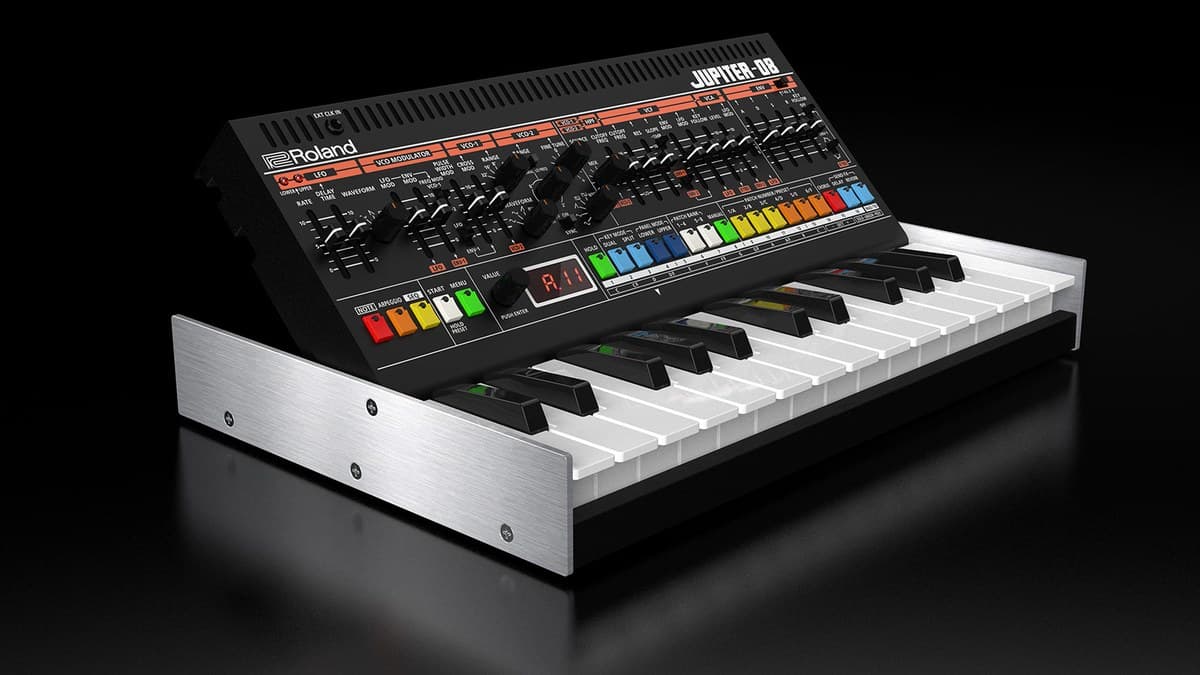
If you are weighing it against other keyboards rather than other hybrids, our best hardware synthesizers guide covers analog and digital polys across every budget, and the Roland JUPITER-08 and n/vision are the smaller, cheaper digital option if you already own a controller.
Who MiniFreak 49 is for
- Players who outgrew the original. If the slim keys and touch strips were the only things stopping MiniFreak from being your main synth, this fixes both.
- Sound designers. Filter FM, 256 MB of user content and the matrix's visible routings make deep patching faster.
- Live performers. Freak Control, Macros and Hold give you more to play with in real time than most synths at this price.
Who should skip it: anyone who needs more than six voices for big pads and sustained chords, anyone who wants a fully analog signal path, and owners of the 37-key MiniFreak who are happy with it. The sound engine is the same, so you would mainly be paying for the keyboard and the new controls. If space is tight, the 777 mm width and 5.7 kg weight are a real change from the 2.94 kg original.
Price and availability
MiniFreak 49 is out now at $849 in the US and €799 in Europe from Arturia. Thomann lists it at $744 in its US store, with a lead time of three to four weeks at the time of writing. The original MiniFreak is $459 there, against $649 from Arturia.
Arturia also offers a free Freak Renaissance bank of 250 presets on top of the factory library, and MiniFreak V for the 49 is included for registered owners.
FAQ
How much does MiniFreak 49 cost?
$849 or €799 from Arturia. Thomann's US store lists it at $744.
What is the difference between MiniFreak 49 and MiniFreak?
The engines, filter, effects and sequencer are the same. MiniFreak 49 adds 49 full-size semi-weighted keys, an XYZ touch matrix with Freak Control, aluminium wheels, audio-rate Filter FM, Voice Panning, direct engine controls, a larger display and 256 MB of memory instead of 32 MB.
Is MiniFreak 49 analog?
It is a hybrid. The oscillators are digital, and each of the six voices runs through its own analog filter.
Can I load my own samples and wavetables?
Yes. Import them in MiniFreak V and transfer them to the hardware. There is 256 MB of space for them.
Does MiniFreak 49 include software?
Yes. A MiniFreak V licence is included for registered owners, so you can use the same engine in your DAW and move presets between the two.
Verdict
MiniFreak 49 does not change what MiniFreak sounds like. It changes how it plays, and that was the original's real limit. Full-size keys with aftertouch, real wheels and a touch matrix that turns modulation into something you can see and perform make it a more serious keyboard, and Filter FM gives the sound engine a harder edge. Six voices remain the main constraint. If that suits your music, this is the MiniFreak to buy. If you already own the 37-key model and mostly program it from a computer, keep it.