Roland Melody Flip Review: AI Co-Writer Explained
Roland Melody Flip analyzes your audio and suggests melodies, chords, bass, and drums. Here's what it does, how it works, and who it's for in 2026.
Black Friday 2026Roland Black Friday 2026: dates and deals →
Roland announced Melody Flip, a melody-generation tool that listens to your audio and suggests where the song could go next. It builds on research from Sony Computer Science Laboratories (Sony CSL), and it runs inside your DAW. The pitch is simple. Feed it an idea, get usable musical material back.
Melody Flip is not a one-click song button. It analyzes what you already have and proposes options you can keep, edit, or ignore. That framing matters. It shapes how the tool fits into a real session.
At a glance
- What it is: AI-assisted composition software that turns an audio file into melodic and harmonic suggestions.
- How it runs: A plug-in for macOS and Windows, delivered through Roland Cloud.
- Built on: Research from Sony Computer Science Laboratories (Sony CSL).
- What it makes: Melodies, chord progressions, basslines, and drum parts, exported as audio or MIDI.
- The philosophy: AI as a co-writer, not a replacement. Human intent stays at the center.
- Availability: Announced March 2026, with a free trial launching in May 2026 via Roland Cloud.
- Best for: Producers who get stuck after the first idea and want fast, editable direction.
What is Roland Melody Flip?
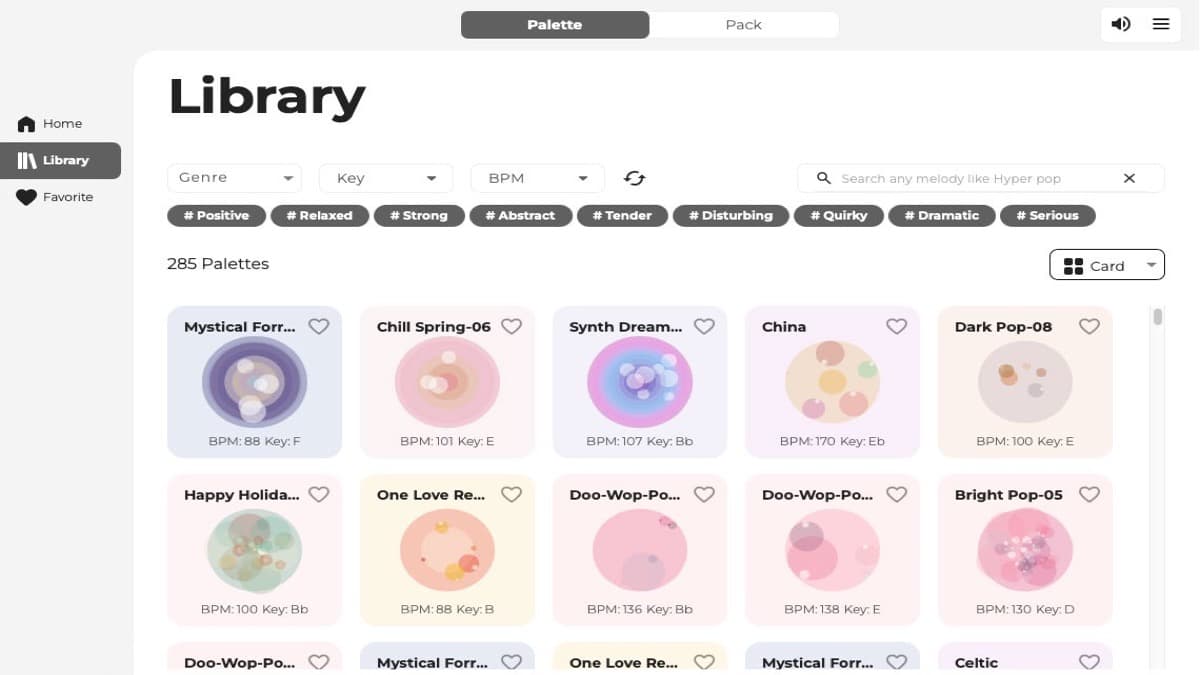
Melody Flip is AI-assisted composition software that turns an audio file into melodic and harmonic suggestions. You import audio, and the software extracts what Roland calls its "musical DNA" — structure, tempo, key, chord progression, genre, and mood. It then pairs that analysis with a curated library of around 300 creative palettes to generate ideas.
The name undersells it slightly. Despite the focus on melody, Melody Flip can also generate chord progressions, basslines, and drum parts. Each result exports as audio or MIDI, so you can drop the parts straight into your project and reshape them however you like.
Roland positions the tool around a clear stance on responsible AI. The company is a founding supporter of The Principles for Music Creation with AI, and it frames Melody Flip as a partner that amplifies the artist rather than replacing them.
Roland Melody Flip: features and specs
Here is what Roland has confirmed about the software so far.
| Feature | Detail |
|---|---|
| Product type | AI-assisted melody and composition plug-in |
| Underlying research | Sony Computer Science Laboratories (Sony CSL) |
| Input | Imported audio file |
| Analysis ("musical DNA") | Structure, BPM, key, chord progression, genre, mood |
| Creative palettes | Around 300, filterable by genre, key, BPM, and mood |
| Output types | Melody, chords, bass, drums |
| Export formats | Audio and MIDI |
| Platforms | macOS and Windows |
| Format | Plug-in for major DAWs |
| Delivery | Roland Cloud (via Roland Cloud Manager) |
| Announced | March 2026 |
| Free trial | May 2026 |
| Price | Not disclosed at announcement |
How Melody Flip works
The workflow follows three stages.
- Analyze. Import an audio file and let the software read its musical characteristics, including BPM, key, and chord movement.
- Browse palettes. Filter the roughly 300 palettes by genre, key, BPM, or mood — tags include Positive, Relaxed, Strong, Tender, and Dramatic, among others.
- Generate and export. Pick a direction, generate suggestions, then export the melody, chords, bass, or drums as audio or MIDI.
Visual aids show the song's structure and key information as you work, so you are steering the output rather than rolling dice. Because everything lands as MIDI, nothing is locked. You can swap instruments, rewrite notes, and treat the suggestions as a starting sketch.
Roland describes the interaction as "pick, tweak, chop, or rebuild." That is the point. The software hands you raw material, and you decide what survives.
The Sony CSL connection
Melody Flip incorporates technology derived from Sony CSL's research into AI-assisted music creation, an area Sony has explored for years through work on extracting and analyzing musical elements. Roland's framing is deliberate. The company positions AI as a partner that coexists with the creative process, not a replacement for the songwriter. Human intent stays central, and the tool supplies material to react to.
CEO Masahiro Minowa called Melody Flip "a significant step forward in the era of responsibly developed AI." That philosophy is the most interesting thing about the release. Plenty of tools now generate finished tracks. Fewer aim to keep the producer in the driver's seat while still cutting the time between a blank session and a workable idea.
Melody Flip vs Suno: two different bets on AI music
The clearest way to understand Melody Flip is to compare it with a full-track generator like Suno. Both use AI, but they answer different questions. Suno generates complete songs from a text prompt. Melody Flip generates editable parts from your own audio and hands them back as MIDI.
| Roland Melody Flip | Suno | |
|---|---|---|
| Core approach | Assists your idea | Generates a finished track |
| Input | Your audio file | Text prompt (and optional audio) |
| Primary output | Melody, chords, bass, drums | Full song with vocals and mix |
| Editability | MIDI and audio stems you reshape | Song output, with stem separation on some tiers |
| Producer control | High — you steer every stage | Lower — the model makes most choices |
| Runs in your DAW | Yes, as a plug-in | No, web and app based |
| Best for | Beating writer's block, building arrangements | Fast complete tracks and ideation |
Neither is strictly better. If you want a finished song in seconds, a generator wins. If you want to stay in your DAW and shape every part yourself, Melody Flip fits the workflow. For a closer look at the MIDI-composition side, see how Scaler approaches chord and melody suggestions, and browse the wider field in our roundup of the best AI music generators in 2026.
Platform, availability, and price
Melody Flip is a plug-in for macOS and Windows that runs inside major DAWs. It is delivered through Roland Cloud, so access is tied to a Roland Cloud membership rather than a standalone box purchase. Roland announced the software in March 2026 and set a free trial for May 2026, giving producers a way to test the workflow before committing. Roland did not disclose a final price at announcement.
If you already pay for Roland Cloud for its instruments and effects, Melody Flip slots into that ecosystem. If you do not, the free trial is the obvious entry point. To browse the wider world of production plug-ins while you wait, Plugin Boutique stocks most of the tools that pair well with a MIDI-first workflow.
Who is Melody Flip for?
Melody Flip is aimed at producers who get stuck after the first idea. You have a loop, a chord sketch, or a vocal, and you need somewhere to take it. The tool is less about generating finished songs and more about breaking writer's block with musically informed suggestions you can edit.
It will appeal to:
- Beat makers who want fresh melodic and bass ideas over an existing groove.
- Songwriters looking for chord and topline options that match a mood.
- Roland Cloud subscribers who want more from a membership they already hold.
- Producers wary of AI who still want a co-writer that leaves the final decisions to them.
If you prefer to write every note yourself, the value is thinner. But as a fast way to audition directions, it earns its place in the session.
Melody Flip in the wider AI-music picture
Melody Flip lands in a crowded year for AI music tools. Where full-track generators have grabbed headlines, Roland is betting on assistance over automation — a tool that hands you MIDI to shape rather than a finished master. Our guide to AI music licensing explains the rights questions that come with any AI-assisted workflow, and they matter here too.
For producers who lean on stems and sampling, Melody Flip also pairs with tools like Suno's advanced stem separation. Generate a direction in Melody Flip, then chop and rearrange the exported audio however you want.
Frequently asked questions
Is Roland Melody Flip a real product?
Yes. Roland announced Melody Flip in March 2026 as melody-generation software built on research from Sony Computer Science Laboratories. A free trial was set to launch in May 2026 through Roland Cloud.
Does Melody Flip write full songs for you?
No. Melody Flip generates parts — melodies, chords, bass, and drums — based on audio you import. It suggests directions you edit rather than delivering a finished master.
What can Melody Flip export?
It exports generated melodies, chords, basslines, and drum parts as either audio or MIDI, so you can drop them straight into your DAW and reshape them.
What do I need to run Melody Flip?
You need macOS or Windows, a compatible DAW that supports major plug-in formats, and access through Roland Cloud, since the software is delivered via Roland Cloud Manager.
How is Melody Flip different from Suno?
Suno generates complete songs from a prompt. Melody Flip analyzes your own audio and returns editable parts, keeping you in control of the arrangement inside your DAW.
The verdict so far
Melody Flip is a thoughtful take on AI in the studio. By keeping human intent central and exporting everything as editable MIDI and audio, it avoids the "press play, get a song" trap and instead acts like a co-writer with 300 ideas on tap. The Roland Cloud delivery means it is most attractive to existing subscribers, but the free trial lowers the bar to find out whether it clicks with your process.
If you want a tool that finishes the song for you, look elsewhere. If you want a fast, musically aware way to get unstuck, Melody Flip is worth an afternoon in your DAW.
To explore more music-production software and plugins, browse the latest releases at Plugin Boutique.