Insert Session's Insert Tape Plugin: A Focused New Saturation Tool With a $39 Intro Price
Insert Session's new Insert Tape plugin pairs tape-style saturation with a Vintage DSP mode, 32x oversampling, and full mid/side processing for $39 intro.
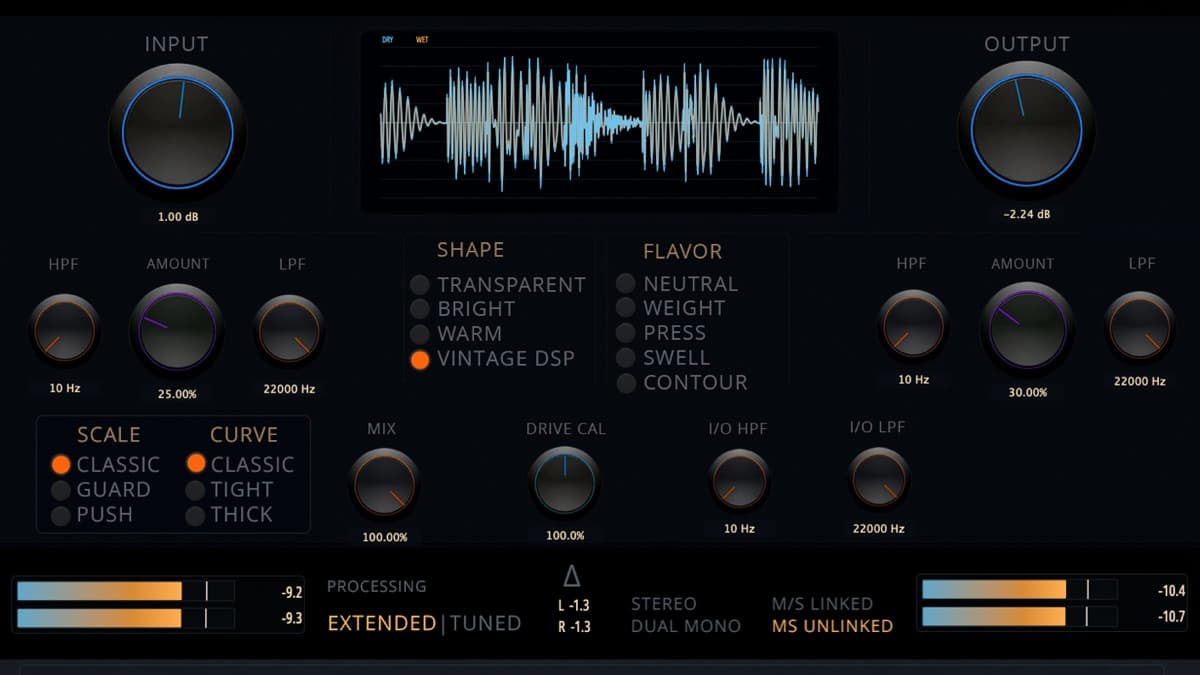
Tape plugins arrive in steady waves, and most of them try to do too much. Insert Session has taken the opposite route with Insert Tape. It is a single-purpose saturation and tone-shaping plug-in built to add musical color to a track, a bus, or a full mix without burying the engineer in pages of menus. The release sits inside a growing catalog from the same small studio, which also offers Insert Dynamics and the company's flagship host application that gives the brand its name.
The pitch is straightforward. You drop Insert Tape on a channel, push it until something feels right, and use the comparison tools to make sure you have not just made things louder. That clarity of purpose is what makes the plugin worth a closer look, especially at the introductory price.
A saturation tool with two distinct flavors
Insert Tape's main character comes from a tape-inspired saturation engine that sits comfortably across drums, vocals, full bus chains, and mastering work. The harmonics are weighted toward the warmth and roll-off most engineers reach for when they want a track to sit rather than shout. It is not trying to be a chameleon, and that is the point. Compared with a more feature-heavy focused competitor like Baby Audio TAPE, the appeal here is restraint rather than options.
Sitting next to the tape model is a Vintage DSP mode. This is the more colorful sibling. It pulls from classic digital-era processors and adds a touch of grit and movement that pure tape emulations tend to leave on the table. On synth bus duty or on a sub-master that needs life rather than smoothing, the Vintage DSP path is where Insert Tape stops feeling like a one-trick plug-in.
Both modes share the same routing flexibility. You can run them in stereo, mid/side, linked, unlinked, or dual mono. That kind of flexibility usually appears in dedicated mastering tools, so finding it inside a relatively simple saturation plug-in is a welcome surprise. It opens the door to widening tricks on a mix bus or to treating the side channel of a stereo guitar much more aggressively than the center.
Built for confident level decisions
One of the recurring frustrations with saturation plug-ins is that everything sounds better when it gets louder. Insert Tape acknowledges that problem head-on. The plug-in ships with both a gain-match function and a delta-listen control, so you can compare processed and unprocessed signal at the same loudness and hear only the difference Insert Tape is adding.
For working engineers, this is the kind of feature that turns a curiosity into a tool. You stop wondering whether the drive knob is flattering you and start making decisions based on tone alone. Combined with input and output filtering plus a tone-path filter that lets you carve out where the saturation acts, Insert Tape encourages a precise rather than a blanket approach to color.
Oversampling runs from a normal mode up to a high-quality 32x setting, which is generous for a plug-in at this price. The higher modes are the ones you reach for during final mixing or mastering passes when alias-free harmonics matter most. Day to day, the normal setting keeps CPU load reasonable so you can leave Insert Tape on every channel without worrying about the meter.
Where it fits in a mix
Insert Tape is a working plug-in rather than a sound-design experiment. It sits well on drum buses where you want glue without a hard compressor, on vocals that need a little weight in the body, and across the master bus when you are looking for that final layer of cohesion that pure linear EQ never quite delivers.
The mid/side and dual-mono routing options make it useful for engineers who want to drive stereo busses asymmetrically. A common move is pushing the side channel harder than the mid to widen a track without reaching for a stereo imager. Insert Tape handles that gracefully because the routing is built into the plug-in rather than tacked on through workarounds.
Mastering engineers will appreciate the tone-path filter the most. It allows the saturation to act only on a defined frequency band, so you can warm the low mids of a busy mix without smearing the top end or vice versa. That kind of precision used to require either a multiband saturator or a tedious parallel chain, as our Decapitator vs Saturn 2 comparison spells out.
Compatibility and pricing
Insert Tape runs as a VST3 and Audio Unit on macOS, and as a VST3 on Windows. AAX support is on the roadmap rather than shipping today, so Pro Tools users will want to wait for the next update before committing. The Mac build is signed and notarized, which means installation does not involve fighting with Gatekeeper warnings. License activation is handled via a serial key and works offline, a small but welcome detail for engineers who travel with locked-down studio laptops.
Pricing is $39 during the introductory window, which runs until 20 June 2026. After that the plug-in moves to its regular price. There is also a 14-day free trial, so you can put the plug-in to work on real sessions before deciding. For a saturation tool with this level of routing flexibility and oversampling on offer, $39 places Insert Tape well below most of the established competition in our best effect plugins ranking.
A young company worth watching
Insert Session is not a household name in the way that Universal Audio, Softube, or Soundtoys are. That is part of what makes this release interesting. The company has been quietly building out a small catalog of focused plug-ins alongside its named host application, and Insert Tape is the most directly mix-ready release in that lineup so far.
The technical decisions on display, from the routing options to the gain-matching workflow to the choice to ship a tone-path filter at this price point, suggest a developer that listens to working engineers. None of these features are flashy on a marketing page, but they are exactly the details that decide whether a saturation plug-in lives on your default channel strip or gets uninstalled after a week.
If you have been looking for a tape and saturation tool to slot into a busy template without committing to a yearly subscription, Insert Tape is worth pulling down for the free trial. At the intro price it is one of the more honest deals in the current crop of saturation plug-ins, and the company behind it is clearly just getting started.
If you are also shopping for samples and loops to pair with your new saturation chain, Loopmasters and Loopcloud remain solid starting points, and most of the plug-ins worth comparing against Insert Tape are available through Plugin Boutique.