ImpulseDie Puts Cable-Patched Drums in Your DAW
ImpulseDie is a €9.99 semi-modular drum synth for desktop and iOS, with four patchable voices, tape loopers, and a SOMA Pulsar-23-inspired signal domain.
Dubspot's best Black Friday dealsDubspot Tracker Pro: $15, was $24.99 ↗Drum Programming and Groove Production Course: $19, was $99 ↗
Diego Capoccitti has released ImpulseDie, a semi-modular drum synthesizer you patch with cables, for desktop and iOS. It arrived in early November 2026 at €9.99, and it treats audio, envelopes, clocks, and random steps as one shared signal domain. This is a first look based on the developer's official product page and walkthrough, not a hands-on review.
At a glance: ImpulseDie is a four-voice drum synth priced at €9.99 for desktop, with a separate iOS build on the App Store. It runs as VST3, AU, AAX, and standalone, plus AUv3 on iPhone and iPad. Four voices (kick, bass, snare, hi-hat) feed 122 patch pins, four tape loopers, a random generator, and a pair of effects. It is inspired by SOMA's Pulsar-23 and, per the developer, is not affiliated with or endorsed by SOMA Laboratory. Crucially, it plays out of the box, so the cables are optional, not required.
What is ImpulseDie?
ImpulseDie belongs to a small, interesting class: the semi-modular drum synth. Most software drum tools are either sample players or step-sequenced drum machines. This one is a patchable instrument where every output can feed any input, and where audio, envelopes, clocks, and random voltages all live in the same domain. That is the idea it borrows from the SOMA Pulsar-23, a cult hardware machine where patching blurs the line between sound and control.
The twist is that ImpulseDie has no step sequencer at all. Instead, its four loopers record your finger touches, including how long and how hard you press. You perform a part, the loopers capture the feel, and the machine plays it back. For producers who find grid sequencing stiff, that is a very different way to build a beat.
It also lowers the barrier to all of this. The Pulsar-23 is boutique hardware that is often sold out and costs as much as a used car. ImpulseDie puts the same patch-everything concept in a plugin for €9.99, which makes the experiment easy to try.
What ImpulseDie gives you
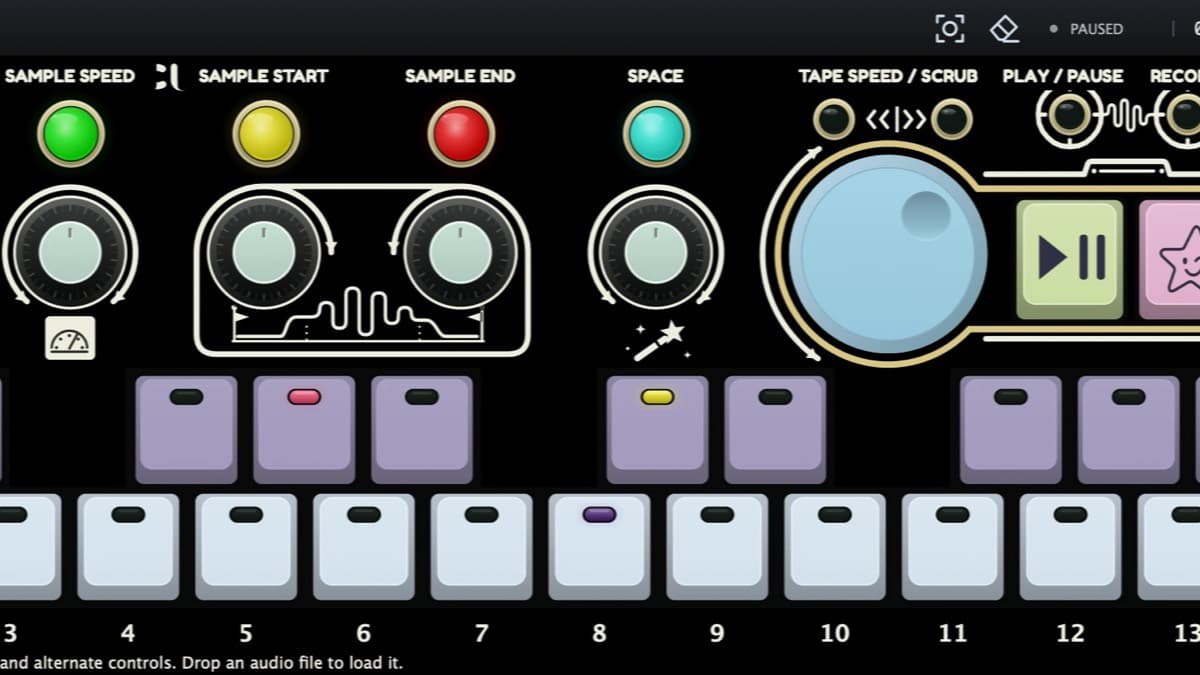
Four voices that respond to touch. The engine has BD (kick), BASS, SD (snare), and HHT (hi-hat). Each voice carries an attack-release envelope that follows your touch, so a quick tap is a hit and a long press becomes a held tone or drone. That single behavior is what lets a drum machine double as a noisy synth.
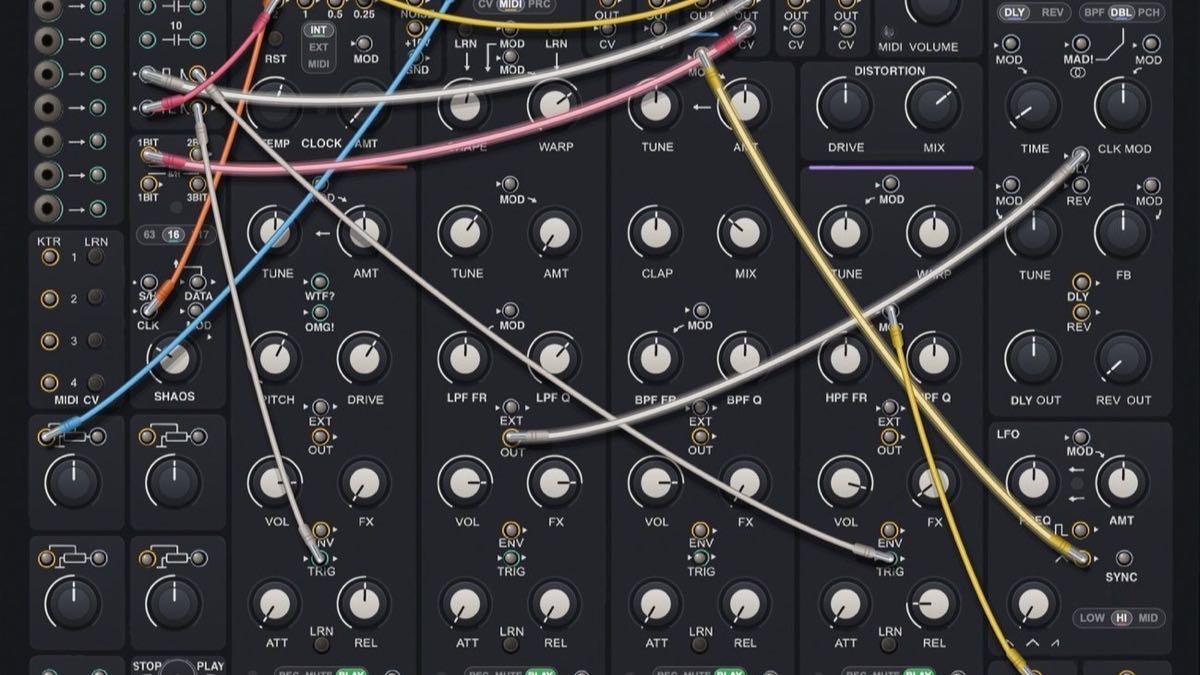
A full patch panel. There are 122 pins across 133 patch points, laid out over 55 knobs, 10 selectors, 13 touch pads, and 10 learn buttons. Any output can route to any input, pins sum automatically when stacked, and plugging into a jack disconnects the internal path through normalling. This is where the Pulsar-23 lineage shows: you can route a clock into audio, audio into an envelope, or random steps into pitch.
Four tape-style loopers. Each voice gets a looper with four banks. A loop runs four bars, which the manual defines as 128 clock ticks at 96 points per tick, and it records hit timing, hold duration, and pressure. A LOOP piano-roll view lets you draw or edit parts by hand when you would rather not perform them.
A clock, a random generator, and an LFO. The master clock runs from roughly 1 to 1500 BPM with seven divider outputs, and it syncs to your DAW or MIDI clock or runs free. SHAOS is a pseudo-random generator with four outputs, selectable step lengths of 63, 16, or 217, and a writable 16-step memory for repeatable chaos. The LFO stretches from one cycle every ten seconds up to about 5 kHz, with shape morphing and sync, so it can act as a modulator, a clock, or an audio-rate source.
Effects and routing built for a host. A delay and a reverb run side by side in three modes: band-pass, double echo, and pitch shifter. The effects clock can be pushed up to seven times faster for glitchy, rhythmic smears. There is parallel distortion across the full mix, a set of utility modules, and three tape players for dropping in your own audio. For mixing inside a DAW, ImpulseDie offers a mono summing bus like the hardware, plus six separate outputs (BD, BASS, SD, HHT, DELAY, REVERB) so you can process each voice on its own channel.
MIDI, presets, and two builds. BASS responds on MIDI channel 1, while BD, SD, and HHT share channel 10, and every knob supports MIDI Learn across 80 automatable parameters, with undo and redo on every move. It ships with 148 factory presets in thirteen folders, some drawn from SOMA's Pulsar-23 Patch Book with their authors credited, and user patches save as shareable .imp files that work on the iOS version too. There are two builds that share one engine and license: ImpulseDie, the instrument, and ImpulseDie FX, which runs your track's own audio through the machine.
ImpulseDie specifications
| Spec | Detail |
|---|---|
| Type | Semi-modular drum synthesizer |
| Developer | Diego Capoccitti |
| Voices | 4 (BD, BASS, SD, HHT), touch-following envelopes |
| Patching | 122 pins (133 patch points), any output to any input, normalling |
| Loopers | 4 tape-style loopers, 4 banks each, record timing and pressure |
| Sequencing | No step sequencer; loopers plus LOOP piano-roll editing |
| Clock | ~1 to 1500 BPM, 7 dividers, DAW/MIDI sync or free |
| Random | SHAOS: 4 outputs, step lengths 63/16/217, 16-step memory |
| LFO | 1 cycle per 10s to ~5 kHz, shape morph, sync |
| Effects | Delay + reverb (band-pass, double echo, pitch shifter); parallel distortion |
| Outputs | Mono summing bus plus 6 separate outs |
| MIDI | 80 automatable parameters, MIDI Learn, undo/redo |
| Presets | 148 factory presets, user .imp files shared with iOS |
| Formats | macOS VST3/AU/AAX/standalone; Windows VST3/AAX; iOS AUv3/standalone |
| Systems | macOS 12+, Windows 10 64-bit, iOS/iPadOS 15+ |
| Price | €9.99 desktop (iOS sold separately on the App Store) |
ImpulseDie vs the SOMA Pulsar-23
The honest comparison is the hardware that inspired it. The SOMA Pulsar-23 is a revered organismic drum machine, and ImpulseDie is an unofficial, software-only take on the same patch-everything philosophy.
| ImpulseDie | SOMA Pulsar-23 (hardware) | |
|---|---|---|
| Format | Plugin and iOS app | Standalone hardware |
| Voices | 4 (BD, BASS, SD, HHT) | 4 (BD, BASS, SD, HHT) |
| Patching | 122 pins, in the box | Physical pins and crocodile clips |
| Sequencing | Touch loopers, no step grid | Built-in loopers |
| Price | €9.99 | Boutique hardware, often sold out |
| Recall and automation | Total recall, DAW automation | Manual, no preset recall |
| Reach for it when | You want the concept affordably and in a session | You want the tactile instrument and its exact circuits |
Which to pick. If you own or crave the Pulsar-23, ImpulseDie is not a replacement for the hardware's feel, but it is the cheapest way to live inside the same ideas, with recall the hardware cannot offer. If you simply want punchy synthesized drums that sit in a grid, a classic drum-machine emulation like Drumazon 2 is a more conventional pick, and XO covers sample-based beat design. For where synthesized drums fit the wider field, see our best drum machines of 2026 guide.
Who ImpulseDie is for
Buy it if you like patching and performance over grids, and you want a cheap, deep sandbox for drum and noise sound design. The touch loopers and shared signal domain reward experimentation, and total recall plus six outputs make it practical inside a DAW.
It is also a good pick if you work on iPad. The AUv3 build and shared .imp presets mean you can sketch on iOS and finish on desktop, or the reverse.
Skip it if you want ready-made acoustic kits, realistic multisampled drums, or a straightforward step sequencer. ImpulseDie is a synthesis and patching instrument, not a sample library, and its no-grid approach is a feature, not a convenience.
How much does ImpulseDie cost?
ImpulseDie is €9.99 as a one-time purchase for the desktop version, with activation on up to two machines and a 15-day fully functional demo for macOS and Windows. The iOS version is a separate purchase on the App Store. Both builds, the instrument and the FX, share the same engine and license, and user presets move between desktop and iOS as .imp files. For a broader starter setup, our roundups of the best free VST plugins of 2026 and best drum machines of 2026 show where a €9.99 drum synth fits.
FAQ
Is ImpulseDie an official SOMA product?
No. The developer states that ImpulseDie is inspired by the SOMA Pulsar-23 but is not affiliated with, licensed by, or endorsed by SOMA Laboratory. It is an independent plugin by Diego Capoccitti.
Does ImpulseDie need patch cables to make sound?
No. It plays out of the box, with the clock driving the loopers and the four voices through the mixer. The 122 patch pins are there when you want to go deeper, but they are optional.
What formats and systems does ImpulseDie support?
On macOS it runs as VST3, AU, AAX, and standalone, universal for Intel and Apple Silicon, on macOS 12 or later. On Windows it runs as VST3 and AAX on Windows 10 64-bit. On iPhone and iPad it runs as AUv3 and standalone on iOS or iPadOS 15 and later.
How does ImpulseDie sequence beats without a step sequencer?
It uses four tape-style loopers instead of a grid. Each looper records your touches, including timing and pressure, and plays them back, and a LOOP piano-roll view lets you draw or edit parts by hand.
Verdict
ImpulseDie is a lot of instrument for €9.99. It takes the Pulsar-23's best idea, that patching should blur sound and control, and makes it cheap, recallable, and portable across desktop and iPad. The touch loopers are the headline, turning performance into pattern without a grid in sight, and the six separate outputs show it was built to live in a real DAW session. It will not satisfy anyone after polished acoustic kits or point-and-click convenience, and the no-sequencer approach takes a mindset shift. But as a patchable drum-and-noise playground at pocket-money pricing, it looks like one of the more inventive small releases of the season, and an easy demo to justify.