Some links on this page are affiliate links. If you buy through them, Dubspot may earn a commission at no extra cost to you. It never affects our scores or what we recommend — read our policy.
FabFilter Twin 3.10 Adds MPE and Note Expression
FabFilter Twin 3.10 adds MPE and Note Expression to the virtual analog synth, free for existing owners. Full specs, Serum 2 comparison, pricing and FAQ.
T
Theo Nakamura
November 3, 2026 · 9 min read
Black Friday 2026FabFilter Black Friday 2026: dates and deals →
See full specs, price, and alternatives in the plugin database →
FabFilter shipped Twin 3.10 on October 29, 2026, and the headline is short but overdue: the virtual analog synth now supports MPE and Note Expression. It's a free update for every existing Twin 3 owner, and it answers one of the most common requests from the plugin's user base since the version 3 rebuild. This breakdown is based on FabFilter's official release notes and product specifications.
At a glance: Twin 3 is a virtual analog synthesizer in VST, VST3, AU, AAX and CLAP for macOS 10.13 or later and Windows. The 3.10 update adds polyphonic expression via MPE and Note Expression, letting per-note pitch, pressure and slide drive the synth's modulation. It still costs $129 full, the update is free for Twin 3 owners, and a trial is available on the official site.
What is FabFilter Twin 3?
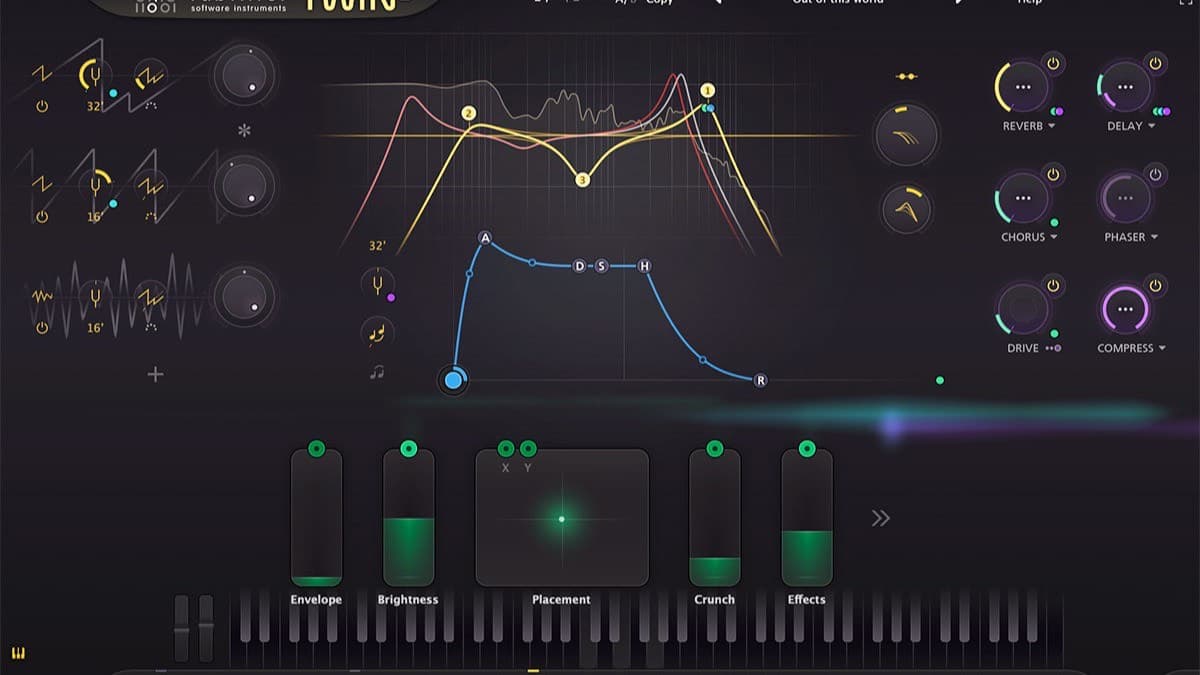
Twin 3 is FabFilter's virtual analog synthesizer, rebuilt from the ground up for the version 3 release with a new interface, more oscillators and a far deeper modulation system. It sits in the premium tier of software synths, next to wavetable flagships like Serum 2 and hybrid instruments like Arturia Pigments, but its character is different. Twin is unapologetically analog-leaning: four modeled oscillators, musical filters, and a modulation grid built for movement rather than spectral editing.
Where many modern synths chase wavetable scanning or granular textures, Twin 3 is the tool you reach for when you want classic subtractive sounds with FabFilter's signature clarity and workflow. The 3.10 update doesn't change that identity. It extends it, by letting an expressive controller reach deep into the engine.
What is new in Twin 3.10?
Full MPE support
MPE, or MIDI Polyphonic Expression, lets each note on a controller send its own pitch bend, pressure and slide data instead of sharing one channel for the whole chord. On controllers like the ROLI Seaboard, LinnStrument, Osmose or a modern Push, that means you can bend one note in a chord while the others hold, or add vibrato to a single voice. Until 3.10, Twin 3 could not read that data, which pushed expressive players toward other synths.
Now Twin 3 maps MPE's per-note dimensions straight into its modulation system. Per-note pressure and slide become modulation sources you can route to filter cutoff, oscillator pitch, FX depth or any of the synth's parameters through the matrix. For anyone who performs rather than only programs, this is the difference between a static patch and one that breathes under the hand.
Note Expression
Alongside MPE, 3.10 adds Note Expression support. This is the per-note automation standard used by DAWs such as Cubase and Bitwig Studio, where you draw expression curves on individual notes inside the arrangement rather than playing them live. Twin 3 now responds to that data too, so a programmed line can carry the same per-note pitch and pressure movement that an MPE controller would play in real time. Between the two, Twin 3 covers both the live performer and the in-the-box arranger.
Twin 3 feature recap
The 3.10 additions sit on top of an already deep engine. If you have not looked at Twin 3 since version 2, here is what the version 3 rebuild carries.
Four analog-modeled oscillators. Twin 3 runs four oscillators with built-in analog-modeled drift for that slightly unstable, alive quality, plus ring modulation between oscillators 1 and 2 and between 3 and 4. That is enough raw material for thick unison leads or layered pads without a second instance.
Four filters with filter panning. Each filter offers adjustable slope and shape, covering low, high and band pass, bell, shelves and notch. Large Filter Freq and Peak offset knobs move all filters at once and are themselves modulatable, which makes sweeping filter banks simple to automate.
A 100-slot modulation matrix. This is the heart of the synth. Sixteen-step XLFOs, envelope generators, XY controllers, envelope followers and MIDI sources all route with drag-and-drop connections, with source level from -200% to 200% and live visualization of every moving value. The MPE and Note Expression sources now slot straight into this grid.
A full effects section. Reverb, delay, chorus, phaser and flanger, drive and compression are built in, all modulatable, with an optional High Quality mode that adds internal oversampling.
Performance and workflow. Twin 3 gives you 64-voice polyphony, unison, polyphonic portamento, a flexible arpeggiator, a tagged preset browser, MIDI Learn, undo/redo, A/B switching and a resizable, GPU-accelerated interface.
FabFilter Twin 3 specifications
| Spec | Detail |
|---|---|
| Developer | FabFilter |
| Type | Virtual analog synthesizer |
| Latest version | 3.10 (October 29, 2026) |
| 3.10 additions | MPE and Note Expression support |
| Oscillators | 4 analog-modeled, with drift and ring modulation |
| Filters | 4, multi-shape, with filter panning and global offset |
| Modulation | 100-slot matrix; XLFOs, EGs, XY, envelope followers, MIDI, MPE |
| Effects | Reverb, delay, chorus, phaser/flanger, drive, compression |
| Polyphony | Up to 64 voices, unison, polyphonic portamento |
| Formats | VST, VST3, AU, AAX, CLAP |
| System | macOS 10.13 or later (Apple Silicon and Intel); Windows |
| Price | $129 full; 3.10 free for existing owners |
FabFilter Twin 3 vs Serum 2
The most common cross-shop for a premium software synth is Xfer's Serum 2. The two solve different problems. Serum 2 is a wavetable and hybrid powerhouse built for bright, detailed, evolving timbres. Twin 3 is a virtual analog synth built for musical subtractive sounds and fast modulation. With 3.10, Twin 3 pulls level on expressive control, where Serum 2 has long supported MPE.
| FabFilter Twin 3 | Xfer Serum 2 | |
|---|---|---|
| Core engine | Virtual analog, 4 oscillators | Wavetable and hybrid |
| MPE | Yes, added in 3.10 | Yes |
| Modulation | 100-slot matrix | Matrix with visual drag routing |
| Effects | 7 built-in, modulatable | Full rack of effects |
| Price | $129 | $199 |
| Best for | Analog character and performance | Wavetable design and bright leads |
If your sound leans analog and you value FabFilter's workflow and clarity, Twin 3 is the pick, and 3.10 removes the one real reason expressive players held off. If you live in wavetables and need the deepest spectral toolkit, Serum 2 still leads. Many producers who want a free middle ground also look at Vital, though it cannot match Twin 3's analog modeling or FabFilter's filters. For a lush analog alternative, u-he's Diva is the other classic reference.
Who Twin 3.10 is for
Twin 3.10 is aimed squarely at two groups. The first is MPE players: anyone with a Seaboard, LinnStrument, Osmose or an expressive pad controller who wanted FabFilter's analog character and finally has it. The second is in-the-box arrangers who use Note Expression in Cubase or Bitwig and want per-note movement without an external controller.
It's less essential if you already own Twin 3 and never touch expressive control, though there's no reason not to take a free update. It also won't convert anyone who needs wavetable or granular synthesis as their primary engine. That's simply not what Twin is for, and Serum 2 or a granular instrument remains the better home for that work.
How much does FabFilter Twin 3 cost?
Twin 3 is $129 for the full license, with the same figure in euros on FabFilter's shop. Version 3.10 is a free update for anyone who already owns Twin 3, and owners of Twin 2 can upgrade at a reduced price through FabFilter's store. A time-limited trial lets you run the full synth before buying, and FabFilter licenses are perpetual, not subscriptions.
Check price on Plugin BoutiqueYou can read the full feature list on the official FabFilter Twin 3 page. For more options, see our guide to the best synth VST plugins of 2026.
FAQ
Does FabFilter Twin 3 support MPE now?
Yes. The Twin 3.10 update, released on October 29, 2026, added full MPE support along with Note Expression. Per-note pitch, pressure and slide can be routed through the modulation matrix to any parameter.
Is the Twin 3.10 update free?
Yes. Version 3.10 is a free update for anyone who already owns Twin 3. You can download it from your FabFilter account.
What formats and systems does Twin 3 support?
Twin 3 installs as VST, VST3, AU, AAX and CLAP, on macOS 10.13 or later (Apple Silicon and Intel) and on Windows.
FabFilter Twin 3 or Serum 2?
Choose Twin 3 for virtual analog character, musical filters and FabFilter's workflow, now with MPE. Choose Serum 2 when wavetable synthesis and bright, detailed spectral design are central to your sound.
How much does Twin 3 cost?
Twin 3 is $129 for a perpetual full license. The 3.10 update is free for existing owners, and Twin 2 owners can upgrade at a reduced price.
Verdict
Twin 3.10 is a small version number carrying a big fix. MPE and Note Expression were the clearest omissions in an otherwise excellent synth, and adding them, for free, moves Twin 3 from a studio programmer's tool to one that expressive players can actually perform. The core engine was already strong: four analog oscillators, four musical filters, a 100-slot modulation matrix and a full effects rack, all wrapped in FabFilter's clean interface. The trade-offs stay the same. This is a paid flagship in a field with capable free rivals, and it is not a wavetable synth, so it won't replace Serum 2 for every producer. For analog-leaning sound, and now for hands-on expression, Twin 3 is easy to recommend. For the wider field, start with our best synth VST plugins of 2026.