Some links on this page are affiliate links. If you buy through them, Dubspot may earn a commission at no extra cost to you. It never affects our scores or what we recommend — read our policy.
Carbonated Audio TALLBOY Replays Your Line on a Chip
Carbonated Audio TALLBOY pitch-tracks your line and replays it on a four-channel console chip. $20, three machines, no iLok. Full specs and who it is for.
P
Priya Raman
August 26, 2026 · 9 min read
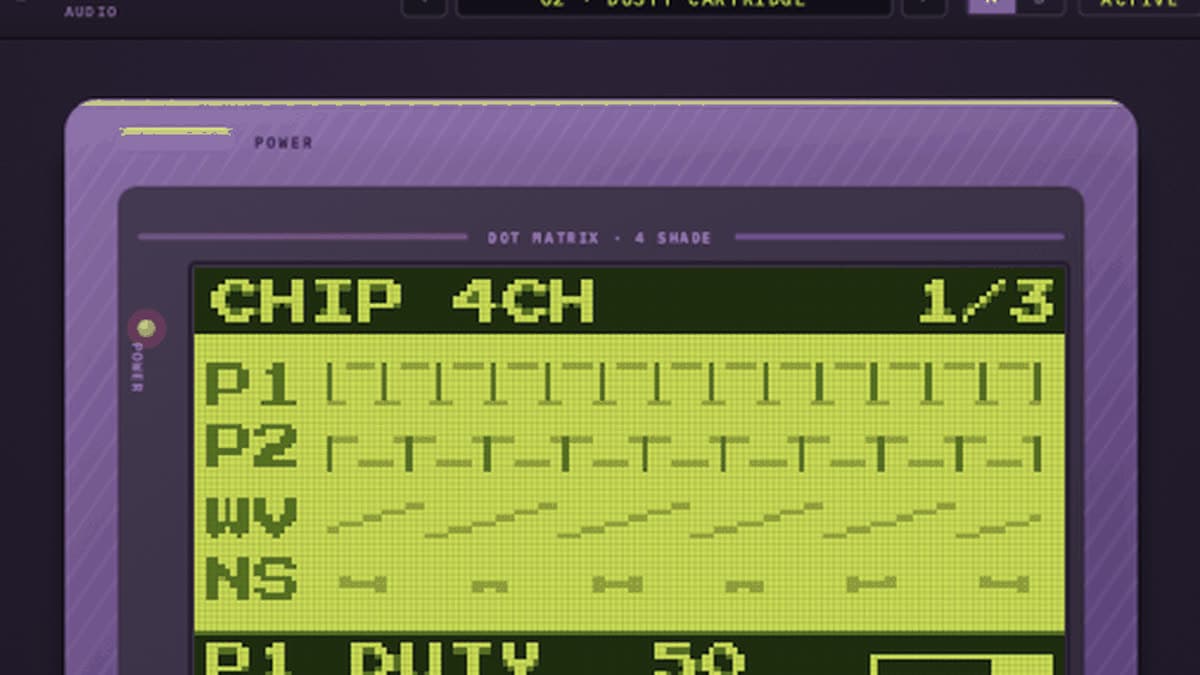
Carbonated Audio shipped TALLBOY on 24 August 2026. It listens to the pitch of whatever you feed it and plays that performance back through a four-channel console sound chip. That is resynthesis, not a filter on top of the recording. The UI is a D-pad and a four-shade dot-matrix screen. The license is $20, three machines, no iLok. This is a first look at the shipping feature set. We have not used it in a session.
At a glance: $20 one-time. macOS VST3, AU, and AAX (universal, Pro Tools-signed). Windows VST3 64-bit. Demo plays 60 seconds, mutes 10, loops, no email. Buy it from Carbonated Audio.
What TALLBOY is
A bitcrusher degrades the sample you already have. TALLBOY replaces it. CHIP 4CH tracks pitch and envelope, then rebuilds the line on four hardware-modelled channels: two pulse oscillators, a 32-sample 4-bit wavetable, and LFSR noise. The result is a chip voice following your melody, vocal, or bass, not a crushed version of the original waveform.
Carbonated Audio is blunt about the limits. The chip voice wants one clear pitch. Drums, pads, and full mixes do not have one. For those, you eject CHIP 4CH and the arp and run CRUSH ROM alone, which is a straight bit-and-rate decimator.
It sits next to lo-fi tools we already cover. Decimort 2 is a designed bitcrusher. Lossy is codec damage. Thermal is multi-stage distortion. TALLBOY is the one that tries to be a handheld console playing your part.
If you want actual FM chip hardware in software, Twisted Electrons vMEGAfm is a different instrument: a synth, not a resynth insert.
The three cartridges
Every cartridge has a power LED. Click it to insert or eject that stage. Any combination runs. Eject all three and TALLBOY is true bypass. Carbonated Audio says the dry nulls perfectly. We have not measured the residual.
CHIP 4CH — the resynth
This is the product. It tracks pitch and envelope, then voices the line on four channels:
- Two pulse channels with four duty cycles
- A 32-sample, 4-bit wavetable
- 15/7-bit LFSR noise, transient-keyed
- 11-bit frequency-register detune
That is a console-chip voice architecture, not a wavetable synth with a retro skin. Duty cycle, detune, and noise give you the NES-adjacent palette: square leads, detuned octaves, and noise chiffs on the attack. Because the engine follows pitch, a sung note becomes a chip note. A bassline becomes a pulse bass. A monophonic synth hook becomes a counter-melody that still phrases like the original take.
Best sources, from the official brief: vocals and doubles, bass lines, single-note leads, monophonic synth parts. Also useful for transitions, turning a hook into a chip counter-line, stacking chiptune under a real instrument, and game or video cues.
ARP + GLIDE — the sequencer
The second cartridge shapes the chip voice into a pattern. Modes are UP, DOWN, UPDN, RAND, and CHRD. Rate runs 1/4 to 1/32, locked to host tempo, with 1/8T in the official list. Span is one to four octaves. Portamento goes up to 400 ms.
With the transport running, the arp syncs. With the transport stopped, it free-runs and swing still applies. That is how you sketch a pattern before you hit play, then drop it on the grid.
CHRD is the chord-minded mode. The chip is still happiest with a clear pitch; a dense piano voicing will confuse the tracker. A held monophonic line, arpeggiated across octaves, is the intended picture.
CRUSH ROM — the decimator
The third cartridge is a proper bit and sample-rate reducer with deliberate aliasing. It works on the chip voice or on dry audio:
- 1 to 16 bits
- Rate divide 1–64, with jitter
- Drive into the quantiser
- Post filter from 18 kHz down to 540 Hz
This is the cartridge for drums and full mixes. Eject CHIP 4CH and ARP, leave CRUSH ROM in, and TALLBOY is a $20 decimator. Carbonated Audio's own drums demo is that patch. If you already own Decimort 2, you may not need this cartridge. If you do not, it is the reason TALLBOY earns a slot on a drum bus. For tape stops and stutters drawn per bar on that same drum bus, see the studio's SPRITZ beat flip plugin.
The D-pad UI
There are no knobs. You drive TALLBOY the way you drive the hardware it is modelled on.
- D-pad: up and down select, left and right adjust. Six parameters per cartridge stay on screen with a live value bar. Arrow keys work too.
- SELECT: cycles the cartridge page and replays the insert animation.
- START: power, true bypass.
- A / B: fullscreen the visualiser — four channels, arp steps, or the crushed waveform.
The screen is four-shade dot matrix. It is not a skeuomorphic toy layered on a normal plugin. The constraint is the interface. If you hate menu-diving, this is either a relief or a brick wall. There is no deep page behind the D-pad. Six parameters per cart. That is the design.
TALLBOY specifications
| Spec | Detail |
|---|---|
| Type | Pitch-tracked 4-channel console-chip resynth + decimator |
| Cartridges | CHIP 4CH, ARP + GLIDE, CRUSH ROM (any combination, including none) |
| Chip voice | 2 pulse (4 duties), 32-sample 4-bit wavetable, 15/7-bit LFSR noise, 11-bit detune |
| Arp | UP, DOWN, UPDN, RAND, CHRD; 1/4–1/32 host-sync; 1–4 octaves; portamento to 400 ms |
| Crush | 1–16 bit; rate divide 1–64 + jitter; drive; post filter 18 kHz–540 Hz |
| UI | D-pad, four-shade dot matrix, no knobs |
| macOS | VST3, AU, AAX; universal (Apple Silicon + Intel); Pro Tools-signed |
| Windows | VST3 64-bit |
| License | $20 one-time; 3 machines; no iLok; offline after one activation |
| Demo | 60 s audio / 10 s mute, looping; no email; macOS VST3+AU (AAX demo by email) |
| Payments | One shot, or 4 × $5 via Klarna or Afterpay at checkout |
TALLBOY vs Decimort 2 and Lossy
The comparisons are a bitcrusher and a codec-damage plugin. Neither tracks pitch.
| TALLBOY | Decimort 2 | Lossy | |
|---|---|---|---|
| Job | Pitch-tracked chip resynth + optional crush | High-end bit and rate reduction | Codec / lossy-format color |
| Follows pitch | Yes (CHIP 4CH) | No | No |
| Drums / mix | CRUSH ROM alone | Yes | Yes |
| UI | D-pad handheld | Conventional plugin | Conventional plugin |
| Formats | macOS VST3/AU/AAX; Windows VST3 | VST3, AU, AAX | Goodhertz set |
| License | $20, 3 machines, no iLok | €49 on our Decimort 2 card | $49 on our Lossy card |
| Buy from | Carbonated Audio | D16 / Best Service | Goodhertz |
Which to pick. Choose TALLBOY when you want a chip voice that phrases like the take you already recorded. Choose Decimort 2 when you want designed crush on anything, including drums, and you prefer a normal UI. Choose Lossy when the color you want is streaming-codec smear, not a console chip. Thermal is the modulation-heavy distortion rack if the job is movement, not 4-bit pulse.
A $20 plugin will not replace a €49 specialist if crush is your whole lane. It will replace a lot of "make this hook sound like a Game Boy" stacking if CHIP 4CH tracks cleanly. That last clause is the trial.
Who TALLBOY is for
Consider it if you write chip, game, or video cues and you want a recorded vocal or bass to become the chip line.
Consider it if you want a cheap, iLok-free decimator for drums and you like the handheld UI.
Consider it if three machines and offline use after one activation match how you work.
Skip it if you need the chip voice on polyphonic chords, pads, or a full mix. The tracker will chase the loudest partial.
Skip it if you already own Decimort 2 and you only wanted crush. You will not gain much from CRUSH ROM alone.
Skip it if Windows AAX or Windows AU is a requirement. Windows is VST3 only.
Skip it if a D-pad feels like a joke in a mix session. There is no knob fallback.
How much TALLBOY costs
$20 one-time. Three machines. No iLok, no dongle, no account. Activate once online, then run offline. Move a machine by emailing mixedbysoda@gmail.com for a reset. Checkout also offers four payments of $5 through Klarna or Afterpay.
The demo is free, no email: macOS VST3 and AU, or Windows VST3. Audio runs 60 seconds, mutes 10, and loops. The paid plugin is otherwise identical. AAX is not in the public demo; Carbonated Audio will sort a Pro Tools trial by email.
Buy it from carbonatedaudio.com/tallboy. The plugin card lives at /plugins/carbonated-audio-tallboy.
If you want a broader cheap-toolkit list first, our best free VST plugins roundup still applies. TALLBOY is paid, small, and specific.
FAQ
Is TALLBOY just a bitcrusher?
CRUSH ROM is a real decimator. CHIP 4CH is not. It tracks pitch and rebuilds the line on four modelled chip channels. A bitcrusher degrades. TALLBOY replaces.
What does it do on drums?
Leave CHIP 4CH and the arp out. Run CRUSH ROM. Drums do not give the tracker one pitch, and the chip voice will sound unstable if you force it.
Do I have to use all three cartridges?
No. Any mix, including none. All three out is true bypass.
Does the arpeggiator follow tempo?
Yes. 1/4, 1/8, 1/8T, 1/16, or 1/32 against the host. Stopped transport free-runs, with swing.
What formats and systems?
macOS: VST3, AU, AAX, universal, Pro Tools-signed. Windows: VST3 64-bit. Carbonated Audio lists Pro Tools, Logic, Live, FL Studio, Studio One, Cubase, and Reaper.
The bottom line
TALLBOY is a $20 pitch-tracked chip resynth with a D-pad, not a bitcrush overlay with a novelty skin. Three cartridges, three machines, no iLok. CHIP 4CH wants a single pitch. CRUSH ROM will do drums. The demo needs no email.
This is a first look, not a scored review. We have not printed a vocal through CHIP 4CH or null-tested the bypass. Download the 60-second loop, feed it a dry bass, and hear whether the chip voice follows the take. The live storefront is carbonatedaudio.com/tallboy.