Vienna Performer: VSL's AI Plug-in That Plays Your MIDI
Vienna Performer renders your MIDI as a played orchestral part from VSL models trained at Synchron Stage. Nine instruments, VST3/AU/AAX, from €9.99/month.
Dubspot's best Black Friday dealsDubspot Tracker Pro: $15, was $24.99 ↗Drum Programming and Groove Production Course: $19, was $99 ↗
Black Friday 2026Vienna Symphonic Library Black Friday 2026: dates and deals →
Vienna Symphonic Library released Vienna Performer on 9 November 2026, and it is the company's most radical product since the Synchron Series. It is a DAW plug-in that takes a MIDI part you wrote and sends it back as a rendered performance: phrasing, bow direction, breath, vibrato, note transitions and the small timing of a real player, recorded in the acoustic of Stage A at Vienna Synchron Stage. It composes nothing. Your notes and dynamics stay exactly as you wrote them. Plans start at €9.99 a month.
At a glance: AI-rendered orchestral performances from your MIDI; five soloists and four string sections at launch, with solo trumpet and double basses next; Room (Decca Tree) and Close stereo pairs in every render; VST3, AU and AAX on macOS 12+, VST3 and AAX on Windows 10+; no iLok, no standalone, rendering needs internet. Entry €9.99, Standard €19.99, Pro €49.99 a month. The most convincing route yet from a written line to a played one, if you accept a metered, online workflow.
What is Vienna Performer?
Every orchestral sample library, VSL's included, asks you to program the performance yourself. You pick articulations, draw CC lanes, nudge note starts and layer legato patches until a line stops sounding entered and starts sounding played. Vienna Performer hands that job to a model. It loads like any virtual instrument on a track, captures the MIDI as you play the passage back once, splits it into phrases and renders each phrase on VSL's servers. The finished audio lands in your project folder as FLAC and plays back like a recorded stem.
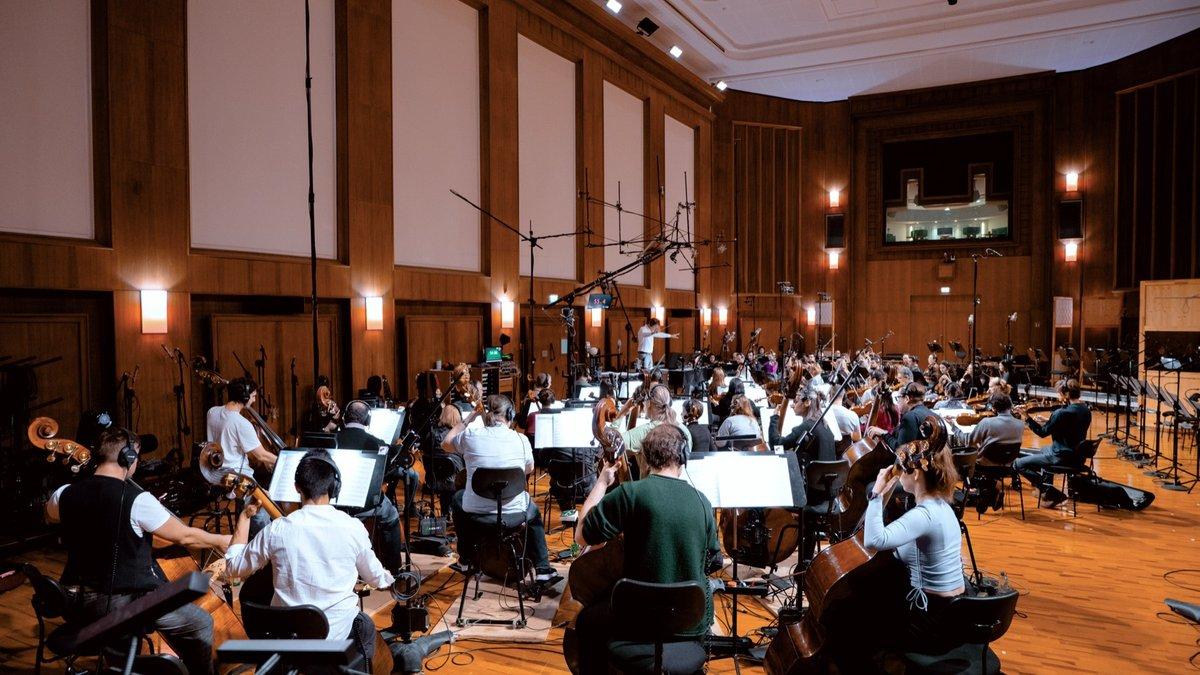
The models were trained only on recordings VSL made for the purpose, with session musicians of the Vienna Synchron Orchestra in Stage A, the same hall and the same players behind every Synchron library. That shared origin is the selling point for anyone with a VSL template: a rendered violin line sits next to Synchron strings without extra reverb or EQ. VSL also ships matching mixer presets, in a "31 Vienna Performer compatible" folder in Synchron Player, for Synchron Duality Strings, Synchron Solo Violin 2, Synchron Solo Cello, Synchron Flute 1, Synchron Clarinet 1 and Synchron Horn 1.
It is also a clear statement about what AI in orchestral writing should be. There is no prompt and no generative function. You supply note lengths, velocities, a single dynamics lane (CC1) and a handful of articulation switches, such as tremolo and pizzicato on strings. The model supplies the interpretation.
How Vienna Performer works, step by step
Play, then render
VSL calls the capture step integrated MIDI buffering. A musician reads the whole line before playing it, and so does the model, so you play the section back once to let the plug-in capture it, then press Render. Nothing is exported and there is no second application. While the server works you hear a simplified preview sound, so you can keep writing.
Room and Close in every render
Each render arrives as two stereo pairs: a Room signal from the Decca Tree and a Close signal, mastered to blend with the Synchron Series. You get a four-channel file to balance in your own mix rather than a baked-in reverb.
Sections recorded as sections
The string ensembles were recorded with real section sizes, not stacked soloists: 14 first violins, 12 second violins, 10 violas and 10 cellos. A section line thickens and blurs the way a real section does, which is exactly what layered solo patches get wrong.
Takes, not presets
A render you keep never changes, because it is an audio file. Change a bar and render again, though, and the phrase can come back slightly different, including notes you did not touch. VSL compares it to take two in a session. In practice it means you keep the takes you like and treat re-renders as fresh performances.
How the performance-minute meter works
Vienna Performer is metered, and the rules decide how much each plan is really worth.
- One minute of one instrument is one performance minute. A two-minute cue across twelve parts uses 24 minutes.
- Phrases render whole, in 10-second steps. A phrase runs until a pause of two seconds or more. A 7-second pickup costs 10 seconds, a 23-second phrase costs 30.
- Unchanged phrases are never charged twice. Edit two bars and only the phrase they belong to renders again.
- Credit Saver. You set a threshold, for example 30 seconds. Smaller edits render straight away; bigger ones ask first and show the cost. Anything that forces a full re-render, such as a tempo change, always asks.
- Monthly minutes lapse, top-ups do not. Plan minutes refresh on your billing day and unused ones expire. Top-up credits never expire and are spent last.
On VSL's own figures a performance minute works out at about 7 cents on Entry, 5.6 cents on Standard and 5 cents on Pro, and 10 cents on a top-up.
Vienna Performer specifications
| Spec | Detail |
|---|---|
| Type | AI performance renderer (virtual instrument plug-in) |
| Solo instruments | Violin, Cello, Flute, Clarinet, French Horn; Trumpet next |
| Sections | 1st Violins (14), 2nd Violins (12), Violas (10), Cellos (10); Double Basses (6) next |
| Input | Your MIDI: note lengths, velocities, CC1 dynamics, articulation switches |
| Output | FLAC renders with Room (Decca Tree) and Close stereo pairs |
| Training source | Dedicated recordings by Vienna Synchron Orchestra musicians in Stage A |
| macOS | macOS 12 or later; VST3, AU, AAX |
| Windows | Windows 10 or later; VST3, AAX |
| Notation | Dorico (Playback Templates via Dorico Wizard) and Sibelius; MuseScore not supported |
| Connection | Internet needed to render; existing renders play offline |
| Licensing | VSL account and active subscription; no iLok; no standalone version |
| Rights | Commercial use without royalties, kept after you cancel |
Vienna Performer vs Vienna Essential Orchestra vs BBC Symphony Orchestra vs Hollywood Orchestra Opus
These are not like-for-like products, and that is the point. Vienna Performer is a player; the others are instruments you play yourself.
| Vienna Performer | Vienna Essential Orchestra | Spitfire BBC Symphony Orchestra | EastWest Hollywood Orchestra Opus | |
|---|---|---|---|---|
| Price | €9.99 to €49.99/month | €9.99/month | Free Discover; Core £399; Professional £899 | $499+ |
| What you get | Rendered performances of your parts | Synchron and Studio orchestras | Full BBC SO library | Flagship cinematic orchestra |
| Programming effort | Notes, velocities, CC1 | Articulations, CC lanes, timing | Articulations, CC lanes, timing | Articulations, CC lanes, timing |
| Instrument range | Nine at launch | Full orchestra | Full orchestra | Full orchestra |
| Works offline | Playback only | Yes | Yes | Yes |
| Best for | Exposed solo and string lines that must sound played | An affordable Vienna template | A complete orchestra with a free way in | Big-room media scoring |
Which to pick: if you need a full orchestra today, buy a library. Nine instruments cannot carry a template on their own, and percussion, brass beyond the horn and the low strings are missing at launch. Vienna Performer earns its place on the lines where samples betray themselves: an exposed solo cello, a flute melody, a legato violin section. The two VSL products are designed to sit together, and our Vienna Essential Orchestra first look covers the €9.99 library half of that pairing. If you already work in EastWest, see how Hollywood Scoring Tools tackles speed from the other side, with phrase-based patches you still play yourself.
Who Vienna Performer is for
Buy it if you write to picture on deadlines and lose evenings to CC-lane editing; if you orchestrate or arrange and want to hear a line breathe before the session; if you are a student who learns fastest by writing a phrase and hearing a player answer; or if you own VSL Synchron libraries and want a solo or section line that already matches the room.
Skip it if you work offline or on unreliable connections, because nothing renders without internet. Skip it too if you want deterministic results, since re-renders vary, or if your style leans on the tight staccatissimo and hybrid trailer sound that sample libraries themselves created. VSL is candid that its renders lean towards a purist, scoring-stage reading. MuseScore users have to wait, and there is no education discount.
How much does Vienna Performer cost?
Every plan is the complete product. Only the monthly minutes differ, and all prices include VAT.
| Plan | Monthly | Yearly | Performance minutes per month |
|---|---|---|---|
| Entry | €9.99 | €99.90 | 140 |
| Standard | €19.99 | €199.90 | 360 |
| Pro | €49.99 | €499.90 | 1,000 |
Yearly plans cost ten months for twelve, and the minutes still arrive monthly. Top-up credits cost €50 per 500 minutes, in €50 steps up to €1,000, on any paid plan. There is no setup fee and no minimum term; you cancel online in MyVSL and the plan runs to the end of the period you paid for. Subscribe on the Vienna Performer site.
Price-timing note: this is a subscription with no launch discount to chase, so there is no reason to wait for Black Friday. Start on Entry, measure a real month of cues, then move up. An upgrade starts immediately and credits what you have not used; a downgrade waits for your next renewal.
FAQ
Does Vienna Performer compose music?
No. It has no prompt and no generative function. The notes, dynamics and phrasing intentions come from your MIDI; the model adds the articulations, transitions, timing and acoustic of a real performance.
Which instruments does Vienna Performer include?
Solo violin, cello, flute, clarinet and French horn, plus 1st violins, 2nd violins, violas and cellos sections. Solo trumpet and a double bass section follow, and new instruments are included in every plan.
Does Vienna Performer work offline?
Writing, editing and playback of existing renders work offline. Rendering needs an internet connection and a VSL account with an active subscription.
Can I use Vienna Performer renders commercially?
Yes, in releases, films, games and client work, without royalties, and the licence survives cancelling. You may not resell the sounds as a sample library or use renders to train AI. VSL deletes your MIDI and renders from its service after delivery and never uses them for training.
What are Vienna Performer's system requirements?
macOS 12 or later (VST3, AU, AAX) or Windows 10 or later (VST3, AAX), a host that loads those formats, an internet connection for rendering and disk space for FLAC renders. No iLok is needed.
Verdict
Vienna Performer solves the most tedious part of orchestral mock-ups by removing it: you write the part and a model trained on Vienna's own players plays it back in Stage A. Section sizes, Room and Close pairs, matched Synchron presets and a fair, phrase-based meter show how carefully VSL has thought it through. The limits are real. Nine instruments at launch, online-only rendering and re-renders that vary make it a specialist player rather than a full orchestra. For composers who already live in a Synchron template, or anyone whose exposed lines still sound programmed, Entry at €9.99 a month is the cheapest way to find out whether it changes how they write. Our Vienna Performer plugin page tracks plans and new instruments as VSL adds them.