Thenatan GRRR: Four Engines That Growl With the Beat
Thenatan GRRR is a beat-reactive growl designer with Trash, Talk, Wub, and Screech. It is $12 at Plugin Boutique, down from $49, through 17 October 2026.
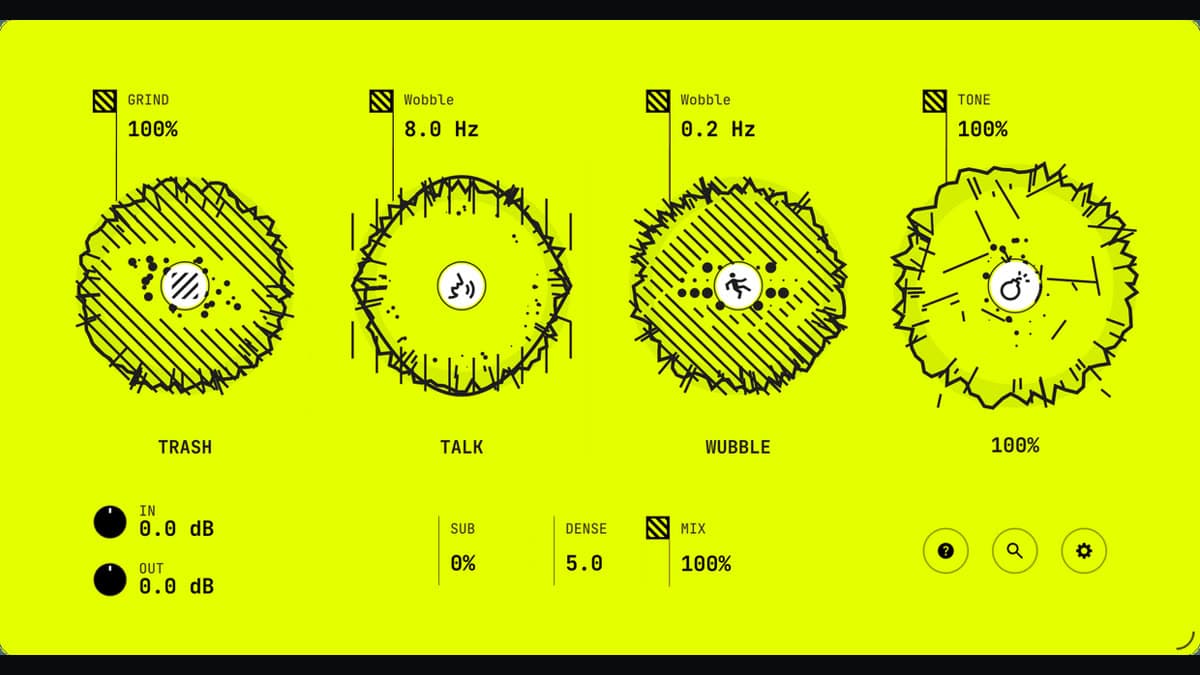
Thenatan has released GRRR, a beat-reactive growl designer for bass, vocals, and drums. Plugin Boutique has it at $12, down from $49, 75% off until 17 October 2026. The Thenatan store shows the same pair, $12 from $49. Four engines sit on one window, and a beat detector drives them so the growl moves with the hits. This is a first look from Thenatan's product page, the Plugin Boutique listing, and Thenatan's official video.
At a glance: $12 intro / $49 list through 17 October 2026. Windows VST and VST3. Mac AU, VST, and VST3. 64-bit. No AAX. Serial number, no iLok. Zero latency. About 22 MB per format. 20 or more presets.
What GRRR is for
GRRR is a growl designer, not a general channel distortion. Thenatan describes four racks chained to a detector that listens to the track and reacts in time: snarling on the hits, slurring between them. The intended input is a flat 808, a vocal that needs teeth, or a loop that is sitting still. The genres printed on the page are dubstep, drill, hip-hop, trap, EDM, and riddim.
That is a narrower brief than a saturation knob. Decapitator is $199 on its card and is built to add analog-style harmonics to a source that should still sound like itself. GRRR is built to stop the source sounding polite. If the part already growls, this plugin will push it further, not tidy it up.
The workflow Thenatan sells is short. Insert it, grab a knob, and the beat detector does the timing. You do not draw an LFO, and you do not set a sidechain threshold. The plugin listens to the audio you feed it.
Four engines, plus the master controls
Each engine is one main knob. Thenatan's copy, matched on the Plugin Boutique page, splits them like this.
Trash is wavefolding, decimation, ring modulation, and what they call throat rattle, on a single control. Low settings add grit. High settings are where the source stops reading as the original instrument.
Talk is the mouth. The bass speaks vowels. Thenatan says it accelerates on every hit and slurs back down between them. Plugin Boutique is more specific: the mouth can accelerate up to 4× on the hits. That is the "it talks" part of a modern bass drop, without a separate vocoder and an envelope follower.
Wub is a resonant wobble filter. The sweep is the classic dubstep move, with the depth tied to the same beat detector, so the wobble wakes up on the hit instead of looping on a free LFO that drifts off the grid.
Screech is a metallic resonator. A little of it cuts through a mix. A lot of it sweeps from a low growl to a high scream, which is the riddim laser. It is the engine you turn up when the drop needs a tone that is obviously not the dry 808.
Under those four, two master controls shape the whole monster. Sub adds octave-down weight. Thenatan calls it the chest. Dense scales drive, sweep depth, resonance, and gating across all four engines, so one knob makes the whole patch bigger without revisiting each rack. Plugin Boutique also lists per-rack mix and bypass, which is how you A/B one engine without unloading the preset.
The factory set is 20 or more presets. Thenatan says each one is already gated and limited, ready to drop in, and names Ghost Throat as a starting point. They are starting points for bass growls, vocal monsters, drum destruction, and riddim tones. Load one, then ride Trash, Talk, Wub, or Screech.
What it asks of the computer
Thenatan prints a short spec block. Formats are Windows VST and VST3, and Mac AU, VST, and VST3, all 64-bit. Size is about 22 MB per format. Activation is a serial number. There is no iLok and no dongle. The operating systems listed are Windows 7 or later, and macOS with native Apple Silicon support, named as M1 and M2. Hosts they name are FL Studio, Logic, Ableton Live, and Cubase. Performance is described as ultra-low CPU and zero latency, so it can sit on a bass channel you are still playing, not only on a printed stem.
Plugin Boutique's system block adds a few lines. Windows 7, 8, 10, or later, 4 GB RAM. OS X 10.9.5 or later, 4 GB RAM, with native Apple Silicon support. It also says the plugin works in most major DAWs and excludes Pro Tools, because there is no AAX. If you produce in Pro Tools, GRRR will not load. That is the clearest skip on the listing.
Thenatan emphasises native Apple Silicon, named as M1 and M2. Plugin Boutique also lists OS X 10.9.5 or later, with 4 GB of RAM. On an M-series Mac in Live, Logic, or Cubase, both the store page and the Plugin Boutique listing say it runs. If the Mac is older than Apple Silicon, use the 10.9.5 line as the floor.
GRRR specifications
| Spec | Detail |
|---|---|
| Price | $12 intro / $49 list. 75% off at Plugin Boutique until 17 October 2026. Same pair on the Thenatan store |
| Type | Beat-reactive growl designer. Four engines plus Sub and Dense |
| Engines | Trash (fold, decimate, ring-mod), Talk (vowels, up to 4× on hits), Wub (resonant wobble), Screech (metallic resonator) |
| Master | Sub (octave-down), Dense (drive, sweep, resonance, gating). Per-rack mix and bypass |
| Presets | 20 or more, including Ghost Throat |
| Latency | Zero, per Thenatan |
| Size | About 22 MB per format |
| Activation | Serial number. No iLok, no dongle |
| Windows | 7 or later, 64-bit. VST and VST3. 4 GB RAM on the Plugin Boutique listing |
| macOS | AU, VST, VST3, 64-bit. Native Apple Silicon. Plugin Boutique also lists OS X 10.9.5 or later and 4 GB RAM |
| Hosts named | FL Studio, Logic, Ableton Live, Cubase. No AAX, so not Pro Tools |
| Genres on the page | Dubstep, drill, hip-hop, trap, EDM, riddim |
| Buy | GRRR at Plugin Boutique or the Thenatan store |
GRRR vs ShaperBox 3 vs Trash 2
ShaperBox 3 is the drawable multi-effect people already use for rhythmic bass motion. Trash 2 is the distortion suite with an AAX build. GRRR is neither of those. It is a beat-follower with four growl engines and almost no drawing.
| Thenatan GRRR | ShaperBox 3 | Trash 2 | |
|---|---|---|---|
| Price | $12 / $49 through 17 Oct 2026 | €99 on the ShaperBox 3 card. Cableguys' page shows euros, not a USD price | $99 on the Trash 2 card |
| What it does | Beat-reactive growl: Trash, Talk, Wub, Screech, Sub, Dense | 11 shapers (pitch, reverb, time, drive, noise, liquid, filter, crush, volume, pan, width), each splittable into 3 bands | Distortion effect. The card lists it as an iZotope suite at $99 |
| How you time it | A detector follows the audio you feed it | Drawable LFOs and an envelope follower, per band | You design the distortion. Timing is not the product |
| Presets | 20 or more finished growls | A full multi-effect library | A distortion library |
| Formats | Win VST/VST3. Mac AU/VST/VST3. No AAX | Mac VST2, VST3, AU, AAX. Windows VST2, VST3, AAX | VST3, AU, AAX on the card |
| Latency | Zero | Not a tracking-latency product in the card's spec | Not stated as a latency figure on the card |
| Reach for it when | An 808, a vocal, or a loop needs to growl in time with the beat, today | You want to draw the motion and split it into bands | You need AAX, or a broad distortion toolbox rather than one growl |
Which to pick. Buy GRRR when the part is a bass drop, a drill vocal, or a drum that should bark, and you want that in one insert at $12 until 17 October. Buy ShaperBox 3 when the rhythm has to be a shape you drew, across volume, filter, crush, and time, including styles that are not a growl. The card prices that bundle at €99, and it does load in Pro Tools. Buy Trash 2, or keep it if you already own it, when the job is harmonic destruction with an AAX plugin and you will design the patch yourself. GRRR will not replace a multiband distortion you automate by hand. It will get to a synced growl faster.
Who GRRR is for
Consider it if you make dubstep, riddim, drill, trap, or the heavier end of EDM and hip-hop, and the bass is still a plain sample.
Consider it if you want the vowel motion and the wobble to follow the hits without drawing an LFO or routing a sidechain.
Consider it if you track bass in Live, FL Studio, Logic, or Cubase and you need the insert at zero latency.
Skip it if you work in Pro Tools. There is no AAX build.
Skip it if the goal is subtle tape or tube harmonics on a vocal that should stay natural. That is a saturation plugin. Decapitator is the one in our database built for that, at a much higher price.
Skip it if you need to draw the curve, split the band, and modulate ten other effects. That is ShaperBox, not this.
Skip it if your session is acoustic, jazz, or a clean pop vocal and "growl" is not the word you want in the chorus. The engines are aimed at the opposite result.
How much does GRRR cost?
$12 until 17 October 2026, $49 after that. Plugin Boutique prints both numbers and the end date. The Thenatan store shows $12 from $49 on the same product. Buy it at Plugin Boutique or from Thenatan.
Activation on the Plugin Boutique path is the usual library flow: download, open the plugin, enter the licence key from your library. Thenatan's own path is a serial, with no iLok. Either way there is no dongle.
The finder entry is the GRRR card.
FAQ
What does GRRR actually do?
It listens to the audio, finds the hits, and drives four engines in time with them: Trash for folding and decimation, Talk for vowel motion, Wub for a resonant filter sweep, and Screech for a metallic resonator. Sub adds an octave below. Dense scales the whole patch.
Will GRRR load in Pro Tools?
No. Plugin Boutique lists it as excluding Pro Tools because there is no AAX version. Windows gets VST and VST3. Mac gets AU, VST, and VST3.
How long is the $12 price?
Plugin Boutique prints 75% off until 17 October 2026, $12 from $49. The Thenatan store shows the same two prices.
GRRR vs a distortion plugin I already own?
If you already have Trash 2 or Decapitator, you can destroy a sound and shape harmonics. GRRR adds a beat detector and a talk/wub/screech set aimed at one genre family. Keep the distortion suite for general mix work. Add GRRR when the drop needs to growl on the grid without a drawn LFO.
Does it add latency?
Thenatan lists zero latency and ultra-low CPU, with about 22 MB on disk per format. It is meant to sit on a live bass or vocal channel, not only on a bounced stem.