Some links on this page are affiliate links. If you buy through them, Dubspot may earn a commission at no extra cost to you. It never affects our scores or what we recommend — read our policy.
Tapechild UDS-16: 16 Voices, No Samples
Tapechild UDS-16 is a $49, 16-voice drum synth with four models, tape saturation, and gated reverb. Real-time synthesis, no samples. VST3, AU, standalone.
M
Marcus Feld
September 10, 2026 · 8 min read
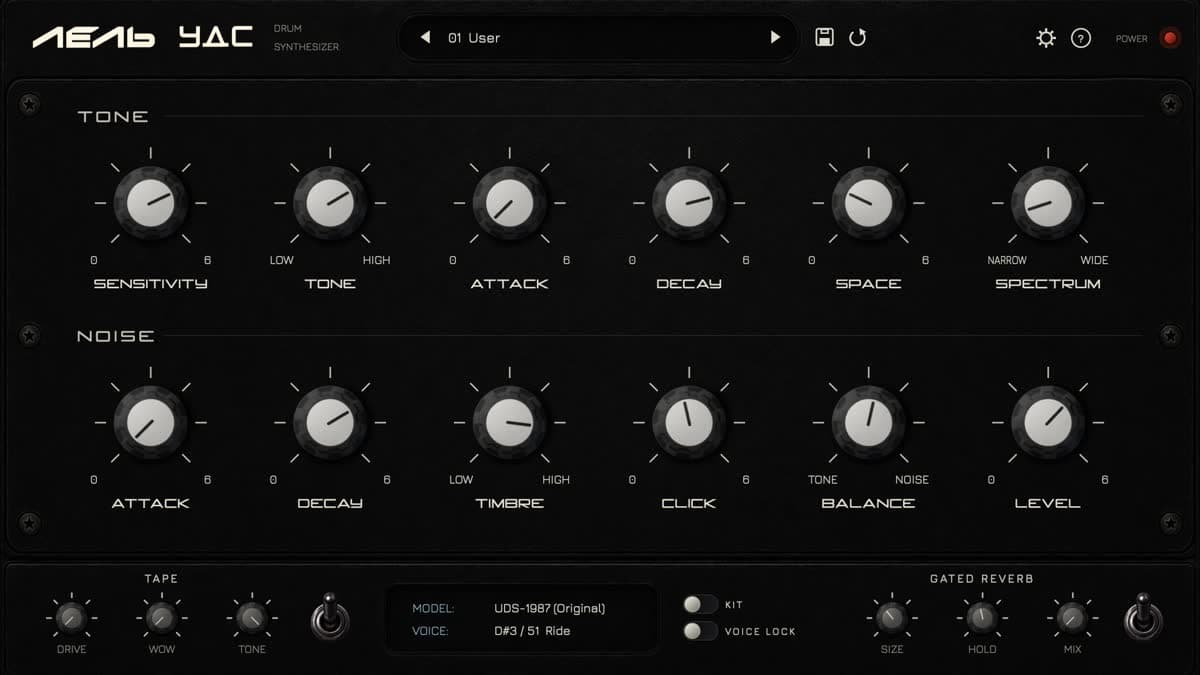
Tapechild released UDS-16, a 16-voice drum synthesizer inspired by the Soviet Lel UDS and Formanta Rockton. It synthesizes every hit in real time. There are no samples. The price is $49 USD, one-time.
At a glance: $49. Four synthesis models: UDS-1987, UDS-1988, UDS-16, and ROKTON. Sixteen voices. Tone, noise, and click with separate attack and decay. Tape saturation plus gated reverb. Twenty factory libraries. VST3, AU, and standalone. macOS 11+ Universal 2, Windows 10/11. Up to three machines, online or offline. No iLok. Sold direct from Tapechild.
This is a first look at the shipping instrument and the official product page. We have not run UDS-16 in a session yet.
What UDS-16 is
UDS-16 is a drum synth, not a sample player and not an official reissue. Tapechild is explicit about that last point. The plugin is independently developed. It is inspired by the Lel UDS and the Formanta Rockton. It is not affiliated with those manufacturers.
The pitch on the site is one line: "16 voices. No samples." Each pad is a voice you design from tone, noise, and a resonant click, then park in a kit. The four models share that layout and change the circuit character underneath.
That is a different job from a 909 clone or a kick designer. Drumazon 2 is a TR-909-style machine with a known voice set. Rhyzor16 is a 16-pad electronic kit with its own engine. Kick 2 is a dedicated kick synth. UDS-16 is a full 16-voice kit with a Soviet-circuit brief and a Tapechild-original model in the same window.
Four models, one kit
Two models lean on the Lel UDS channel. One leans on the Formanta Rockton. One is Tapechild's own.
UDS-1987 is the circuit model of the original analog channel: free-running tone, raw digital noise, resonant click, and a nonlinear output stage.
UDS-1988 is an alternative voicing of that same Lel-inspired channel. The controls stay familiar. The response changes.
UDS-16 (the model, not just the product name) is the Tapechild original. There is no direct hardware counterpart. If you want the plugin's own voice rather than a hardware sketch, start here.
ROKTON is inspired by the seven-channel Formanta Rockton and expanded to a sixteen-voice kit. Same pad count as the rest of the plugin, different synthesis flavour.
You load a kit, then you can mix sounds across those models. The official copy says to use a factory kit as it is, or pull individual drum presets from different libraries into one kit.
Tone, noise, click, tape, and gate
Each voice is three parts.
Tone and noise have their own attack and decay. That is the body: pitched analog-style tone against raw digital noise. Click is the resonant transient. Balance those three and you have the hit. There is no sample layer to hide a weak oscillator.
After the voice, two global treatments sit on the kit.
Tape adds saturation with Drive, pitch movement with Wow, and a tone control. It is the "this kit was printed" layer, not a separate tape plugin.
Gated reverb is size, gate hold, and wet/dry. That is the 1980s drum-room trick built in, so you are not forced to bus every pad to an 80s plate just to hear the instrument in its intended space.
The official page posts three arrangement clips (Electro 1988, a Deep Low hybrid, a Hip Hop hybrid) so you can hear kits in a track, not only dry hits.
Factory libraries and the licence
Tapechild ships 20 factory libraries across genres, with complete kits and individual drum presets for every synthesis model. That is the on-ramp. The deeper work is editing tone, noise, and click per pad, then deciding whether the tape and gate stay on the whole kit.
Licensing is simple on purpose. After payment, a key arrives by email. You download installers from your Tapechild account. Activate on up to three machines, online or offline (air-gapped). No subscription. No iLok. No dongle. Updates inside the UDS-16 line are free.
macOS is Universal 2: Apple Silicon and Intel, macOS 11.0 or later, as VST3, AU, and standalone. Windows is a signed 64-bit installer for Windows 10 and 11, VST3 and standalone. There is no AAX.
UDS-16 specifications
| Spec | Detail |
|---|---|
| Type | 16-voice drum synthesizer (no samples) |
| Models | UDS-1987, UDS-1988, UDS-16 original, ROKTON |
| Voice | Tone, noise, and resonant click with separate attack/decay |
| Kit FX | Tape saturation (Drive, Wow, tone) and gated reverb (size, hold, mix) |
| Presets | 20 factory libraries: full kits and per-drum presets |
| Formats | VST3, AU, standalone (no AAX) |
| macOS | 11.0+, Universal 2 (Apple Silicon and Intel), VST3 / AU / standalone |
| Windows | 10 or 11, 64-bit, VST3 / standalone |
| Licence | One-time, 3 machines, online or offline, no iLok |
| Price | $49 USD |
| Heritage | Inspired by Lel UDS and Formanta Rockton; not an official reissue |
UDS-16 vs Drumazon 2, Rhyzor16, and Kick 2
| UDS-16 | Drumazon 2 | Rhyzor16 | Kick 2 | |
|---|---|---|---|---|
| Job | 16-voice analog-style kit | 909-style machine | 16-pad electronic kit | Kick designer |
| Samples | None | Synthesis (909 voice) | Engine-dependent | Synthesis + samples |
| Voices | 16 | Classic 909 set | 16 pads | One kick, deep edit |
| Character | Lel / Rockton inspired plus original | TR-909 | Modern electronic | Club / sound-design kick |
| iLok | No | No (D16 account) | Developer licence | No |
| Price | $49 | €99 list (street varies) | Mid-tier kit | $99-class kick tool |
| AAX | No | Yes | Check card | Yes |
Pick UDS-16 when you want a full kit that is synthesized, cheap, and not another 909. Pick Drumazon 2 when the track needs that specific 909 map and you want per-voice 909 editing. Pick Rhyzor16 when you want a modern 16-pad electronic instrument without the Soviet brief. Pick Kick 2 when you only need to design the kick and the rest of the kit already exists.
UDS-16 will not replace a sampled acoustic kit, and it will not give you AAX. If those are the requirements, this is the wrong aisle.
Who UDS-16 is for
UDS-16 suits electronic producers who want a hardware-inspired kit without hunting rare Soviet drums or loading a sample folder. The $49 price, three-machine licence, and offline activation are the practical reasons it is easy to install on a studio machine and a laptop. The four models are the musical reason to stay: two Lel-inspired voicings, a Rockton-inspired kit, and a Tapechild original in one plugin.
Skip it if you need AAX. Skip it if you wanted an official Lel or Formanta product. Tapechild says it is not that. Skip it if you need acoustic recordings. This synthesizes drums. It does not play them.
How much does UDS-16 cost?
$49 USD, one-time, from Tapechild. The official offer lists that price. The key is emailed after payment. Updates in the UDS-16 line are free.
There is no Plugin Boutique, Thomann, or Best Service listing to send you to. Buy it on the Tapechild shop.
FAQ
Does UDS-16 use samples?
No. It synthesizes drum sounds in real time.
Is UDS-16 an official Lel or Formanta product?
No. Tapechild developed it independently. It is inspired by the Lel UDS and Formanta Rockton. It is not an official reissue.
How much does UDS-16 cost?
$49 USD, one-time, up to three machines, online or offline activation. No iLok.
What are the UDS-16 system requirements?
macOS 11.0 or later (Universal 2) as VST3, AU, or standalone. Windows 10 or 11, 64-bit, as VST3 or standalone.
How many synthesis models are in UDS-16?
Four: UDS-1987, UDS-1988, the UDS-16 original, and ROKTON.
Verdict
UDS-16 is a $49, 16-voice drum synth with a clear rule: no samples, no iLok, four models, tape and gated reverb on the kit. It is not an official Lel or Formanta box. It is Tapechild's instrument with that history as the brief. If you want a 909, buy a 909 plugin. If you want this circuit flavour in a full kit, this is the $49 version of that sentence.