Polyend Drums Review: Analog and Digital in One Box
Polyend Drums review: an 8-track hybrid drum machine with four analog SSI voices, four digital tracks, deep sequencing, and $2,699 price. Full specs inside.
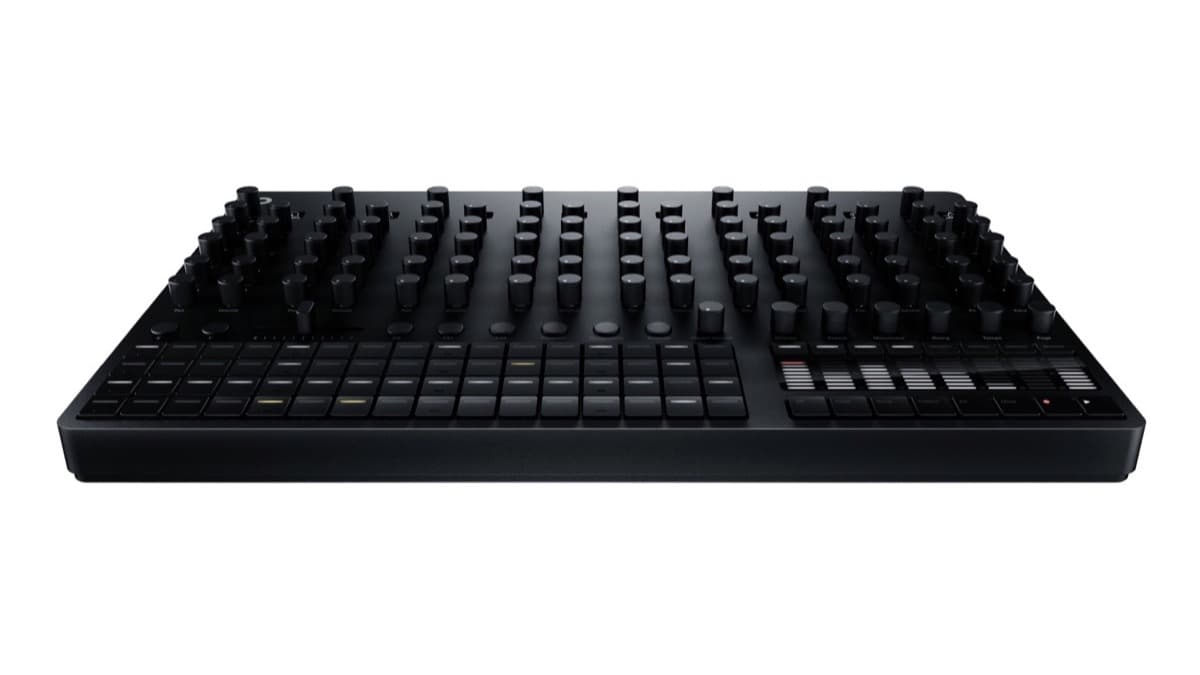
Polyend unveiled Drums at Superbooth 2026 and shipped its first batch mid-year. It is the company's most ambitious instrument so far. The machine packs four true analog voices and four digital tracks into a single aluminum chassis, wrapped in the deep step sequencing Polyend built its name on. At $2,699, it sits firmly in flagship territory, and it asks a serious question of anyone shopping at that level.
What is Polyend Drums?
Polyend Drums is a standalone desktop drum machine. No computer required. Most modern grooveboxes commit to one camp, either fully digital or fully analog, but Drums refuses to choose. Four of its eight tracks run real analog circuitry, while the other four are digital engines that also handle sampling. The payoff is practical: you can program a genuine analog kick and a crisp digital hat into the same pattern and sequence them side by side.
Polyend is best known for the Tracker and Play, instruments built around sequencing rather than sound generation. Drums marks the first time the company has paired that sequencing depth with a full analog voice architecture of its own design. That combination puts it in direct conversation with high-end drum boxes such as the Roland TR-1000. For a wider view of the field, see our roundup of the best drum machines of 2026. If you prefer tracker sequencing on a tablet, our Tracker Pro for iPad launch covers a sampler-and-synth take on the format.
What makes Polyend Drums different?
The split personality is the whole point. Each half is built out properly rather than treated as a bolt-on.
- Four analog voices. Each analog track runs on modern SSI chips and carries two VCOs, a noise source, an extra digital oscillator for layering or FM, a multimode analog filter, and an envelope-controlled amplifier. That is a full synth voice per drum, not a fixed drum circuit. You can tune, detune, and sound-design every one of them.
- Four digital tracks. The digital side draws on a library of more than 40 instruments with sub-mode mutations, which pushes the practical range into the hundreds of sounds. Sampling lives here too, so you can drop your own hits in alongside the synthesis.
- The sequencer. This is home turf for Polyend. Drums offers up to 64 steps per pattern, with 64 patterns, 64 sound kits, and 48 songs on board. Step tools cover probability, micro-timing, parameter locks, pattern chaining, generative functions, live recording, polyrhythms, and multiple track play modes. Eight independent LFOs feed modulation across the machine.
- Effects in three chains. Send, insert, and master effects run in parallel. You can sequence the insert effects per step, so an effect becomes part of the rhythm rather than a static treatment tacked on at the end.
- The X0Y fader. This performance control morphs between kit states, triggers fills, and switches patterns or kits without interrupting playback. It is the live-performance heart of the machine.
Polyend Drums specifications
| Spec | Detail |
|---|---|
| Tracks | 8 (4 analog, 4 digital) |
| Analog voice | 2 VCOs, noise, extra digital osc, multimode analog filter, env amp |
| Digital engines | 40+ instruments with sub-mode mutations, plus sampling |
| Modulation | 8 independent LFOs |
| Sequencer | Up to 64 steps, 64 patterns, 64 kits, 48 songs |
| Sequencer tools | Probability, micro-timing, parameter locks, polyrhythms, generative, chaining |
| Effects | Send, insert (per-step sequenceable), master |
| Performance | X0Y morph fader |
| Audio engine | 32-bit float internal at 96 kHz; 24-bit/96 kHz converters |
| Outputs | 8 individual outs, stereo out, headphone |
| Inputs | Stereo audio in |
| MIDI | MIDI over TRS |
| Build | Single-piece aluminum chassis, black or silver |
| Price | $2,699 / €2,699 |
Polyend Drums vs Roland TR-1000
The natural comparison is Roland's flagship TR-1000. It is the drum machine most producers weigh against Drums at this price.
| Polyend Drums | Roland TR-1000 | |
|---|---|---|
| Voices | 4 analog + 4 digital, with sampling | ACB modeling + analog circuit + sampling |
| Sound source | True analog VCOs + digital engines | Behavior-modeled classics + analog |
| Sequencer | 64 steps, deep param locks, polyrhythms | TR-style sequencing, motion recording |
| Individual outs | 8 | Multiple, model-dependent |
| Approach | Synth-voice-per-drum flexibility | Faithful classic TR sound and feel |
The honest read is simple. The TR-1000 wins if you want the definitive Roland drum sound and the TR workflow refined to its peak. Polyend Drums wins if you value sound-design flexibility: four analog voices you program like synths, plus digital engines and sampling, all driven by one of the deepest sequencers in hardware. One instrument chases a legendary sound done perfectly, the other chases range and modulation. Neither approach is wrong, and they serve different producers.
Who Polyend Drums is for
Drums targets producers who sequence in hardware and want their rhythm section to be a sound-design instrument, not just a playback engine. Techno, electro, IDM, and experimental artists who live in parameter locks and polyrhythms will feel at home fast. So will anyone who has wanted one box that covers analog warmth and digital precision without patching two machines together.
It is a harder sell if you mostly want quick, classic drum sounds. A cheaper groovebox or a software drum machine will get you there for far less money. At $2,699 with a wait for the next batch, Drums asks real commitment. If you produce mainly in the box, our coverage of the Akai MPC One G2 and Key 37 G2 points to a more affordable standalone route.
How much does Polyend Drums cost?
Polyend Drums is priced at $2,699 / €2,699. The first production batch sold out quickly. The next batch is reserved with a fully refundable $500 deposit through the official Polyend store, with delivery scheduled later in 2026. There is no software licence or subscription attached. It is a self-contained hardware instrument you buy once.
For context on other recent hardware synthesis, see our look at the Korg phase8 acoustic synthesizer, and browse related instruments in our plugin and gear database.
FAQ
Is Polyend Drums analog or digital?
Both. Four of its eight tracks are true analog voices built on SSI chips. The other four are digital engines that also handle sampling. You sequence all eight together in one machine.
Polyend Drums vs Roland TR-1000?
The TR-1000 delivers the definitive Roland drum sound and TR workflow. Polyend Drums trades some of that heritage for flexibility. You get four programmable analog synth voices, digital engines, sampling, and a deeper sequencer. Pick Roland for the classic sound, Polyend for sound-design range.
When does Polyend Drums ship?
The first batch shipped in 2026 and sold out. You can reserve the next batch with a refundable $500 deposit, with delivery scheduled later in 2026 through Polyend's official store.
Does Polyend Drums work without a computer?
Yes. It is a fully standalone desktop instrument with its own sequencer, sound engines, effects, and outputs. No computer or DAW is required.