AlphaTheta HDJ-F9 Puts SonicLink in an On-Ear DJ Headphone
AlphaTheta's HDJ-F9 brings 9 ms SonicLink wireless to a $349 on-ear DJ headphone. Specs, battery life, HP-TX01 costs and how it compares to the HDJ-F10.
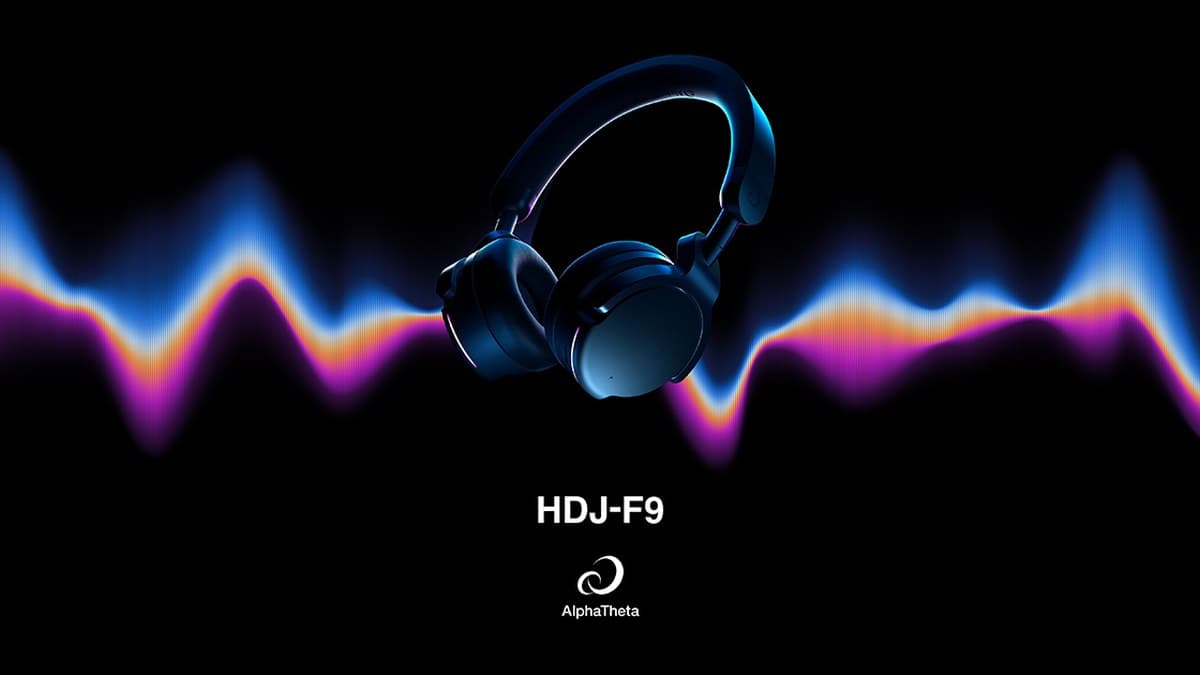
AlphaTheta announced the HDJ-F9 on October 15, 2026. It's a professional on-ear wireless DJ headphone built around SonicLink, the company's low-latency wireless system. At $349, it brings cable-free cueing to a lighter, more compact design than the flagship HDJ-F10, and that matters to anyone who monitors with one ear on and one ear off.
At a glance: The HDJ-F9 is a closed, on-ear wireless DJ headphone priced at $349 at the Pioneer DJ Store US, where it's listed in stock. SonicLink latency goes as low as 9 ms, and a new Touch Pairing feature connects the headphones to compatible gear like the DJM-V5 with a tap. It uses newly developed 40 mm drivers, weighs 285 g without the cable, runs approximately 7 to 9 hours on SonicLink and up to 25 hours on Bluetooth, and ships with a coiled cable for wired use. Mixers without SonicLink need the separately sold HP-TX01 transmitter.
What is the AlphaTheta HDJ-F9?
The HDJ-F9 is AlphaTheta's on-ear SonicLink headphone, and it sits below the over-ear HDJ-F10 in price. Wireless DJ headphones have always run into one problem: latency. Standard Bluetooth codecs add roughly 200 to 300 ms of delay. That's fine for a podcast, but it's useless when you're beatmatching or catching a cue point by ear.
SonicLink is AlphaTheta's answer. With latency as low as 9 ms, AlphaTheta says you can monitor and even scratch wirelessly. The HDJ-F9 takes that tech and puts it in an on-ear form factor. On-ears are what a lot of club DJs prefer for quick one-ear checks and for wearing around the neck between blends.
It's worth being clear about the category. These are DJ headphones, tuned and built for loud booths, isolation and rough handling. If you're shopping for mixing and mastering cans, our guide to the best studio headphones covers models designed for flat, analytical listening, which is a different job.
Features: what each one does for you
SonicLink low-latency wireless
This is the headline feature. At 9 ms, the delay is low enough that AlphaTheta pitches it for scratching, not just casual cueing. The practical upside is freedom in the booth: no cable snagging on decks, and no tangle when you swap with the next DJ. SonicLink range is approximately 15 m, so you can step away from the mixer without dropping the signal.
SonicLink Touch Pairing
New with this launch, Touch Pairing lets you touch the headphones to compatible gear like the DJM-V5 mixer to connect instantly. It works over NFC (ISO/IEC 15693), and it requires the latest DJM-V5 firmware. In a shared booth, that could save you from fiddling with pairing menus while the previous set winds down.
HP-TX01 transmitter for other mixers
Plenty of mixers in clubs and home setups don't have SonicLink built in. For those, AlphaTheta sells the HP-TX01 SonicLink transmitter separately. AlphaTheta lists the HP-TX01 at $159 in the U.S. (excluding sales tax). Factor that into your budget if your home rig or your regular venue doesn't have native SonicLink support.
40 mm drivers with a bass-reflex chamber
The HDJ-F9 uses newly developed 40 mm dome-type drivers with a PEEK-PU-PEEK composite film diaphragm. A bass-reflex chamber at the top of each housing is designed to keep kicks and basslines tight. That's the part of the mix you're locking onto when you beatmatch, so it's a sensible priority. AlphaTheta also claims high sound isolation for an on-ear model, which helps when the booth monitors are loud.
Fit and build for one-ear monitoring
Swivel-mounted hangers and a flexible silicone headband let you rotate a cup off one ear or rest the headphones on your shoulders. The adjustable slider is die-cast aluminum, and AlphaTheta says the HDJ-F9 has passed international durability tests. The cable connection uses a bayonet lock, so a wired cable won't pop out mid-set if someone bumps it.
Wired fallback
Batteries die, and some booths are just easier with a cable. The HDJ-F9 includes a 1.2 m coiled cable with an L-shaped plug that stretches to approximately 3 m. A 6.3 mm screw adapter is in the box too. Having a wired option means a flat battery doesn't end your night.
Bluetooth for everything else
Away from the decks, the HDJ-F9 works as an everyday Bluetooth headphone. It supports Bluetooth 5.3 with multipoint, so it can connect to two devices at once, plus Google Fast Pair and Windows Swift Pair. Codecs are SBC and AAC. A built-in omnidirectional mic handles hands-free calls. Bluetooth range is approximately 10 m unobstructed.
HEADPHONES CONNECT app
The companion app lets you change the status LED color and brightness, rename the headphones, set auto power off, and assign the assistant button to Siri or Google Assistant. There's also Find My Headphones, which plays a sound to help you locate them, along with firmware updates. The Android version comes first, and the iOS version arrives on the App Store later.
Battery life
With SonicLink, you get approximately 7 hours with the LED on and 9 hours with it off. On Bluetooth, it's 13 hours with the LED on and 25 hours with it off. A full charge takes approximately 2.5 hours, and a 30-minute charge gives you about 2.5 hours of use. That quick top-up is handy before a gig. Turning the LED off is a simple way to stretch a long set.
Specifications
| Spec | AlphaTheta HDJ-F9 |
|---|---|
| Type | Closed dynamic, on-ear |
| Drivers | 40 mm dome-type, PEEK-PU-PEEK composite film diaphragm |
| Frequency response | 5 Hz to 30 kHz |
| Impedance | 32 ohms |
| Output SPL | 106 dB |
| Weight | 285 g (without cable) |
| Wireless | SonicLink (latency as low as 9 ms), Bluetooth 5.3 multipoint |
| Bluetooth codecs | SBC, AAC |
| Bluetooth profiles | A2DP, AVRCP, HSP, HFP |
| Pairing | SonicLink Touch Pairing via NFC (ISO/IEC 15693), Google Fast Pair, Windows Swift Pair |
| Range | SonicLink approx. 15 m, Bluetooth approx. 10 m (unobstructed) |
| Battery (SonicLink) | Approx. 7 h LED on, 9 h LED off |
| Battery (Bluetooth) | Approx. 13 h LED on, 25 h LED off |
| Charging | Approx. 2.5 h full charge; 30 min charge gives about 2.5 h |
| Microphone | Omnidirectional electret condenser, 100 Hz to 4 kHz |
| Materials | Silicone head cushion, polyurethane leather-style ear pads, die-cast aluminum slider |
| In the box | 1.2 m coiled cable with L-shaped plug (extends to approx. 3 m), 6.3 mm screw adapter, 0.5 m USB-C to USB-C cable, carrying pouch |
| Warranty | 2 years |
| Price | $349 |
HDJ-F9 vs HDJ-F10
| AlphaTheta HDJ-F9 | AlphaTheta HDJ-F10 | |
|---|---|---|
| Price (Pioneer DJ Store US) | $349 | $469 |
| Fit | On-ear | Over-ear |
| Weight | 285 g | 356 g |
| Output SPL | 106 dB | 105 dB |
| Frequency response | 5 Hz to 30 kHz | 5 Hz to 30 kHz |
| Impedance | 32 ohms | 32 ohms |
| Drivers | 40 mm PEEK-PU-PEEK | 40 mm PEEK-PU-PEEK |
| Bluetooth version | 5.3 | 5.2 |
| SonicLink battery | Approx. 7 h (LED on), 9 h (LED off) | Approx. 9 h |
| HP-TX01 needed for non-SonicLink mixers | Yes | Yes |
The two share a lot under the hood: the same driver size and diaphragm material, the same frequency response and impedance, and the same reliance on the HP-TX01 for mixers without SonicLink. The differences come down to fit and extras. The HDJ-F9 is $120 cheaper and 71 g lighter, and its on-ear design suits DJs who constantly flip one cup off. The HDJ-F10 is over-ear and adds active noise cancelling and transparency modes, which make more sense for long sessions or travel.
So which one should you pick? If you cue with one ear and want the lighter option, the HDJ-F9 is the better match and the better value. If you wear headphones fully on for hours, or you want noise cancelling on flights between gigs, the HDJ-F10 earns its premium. Either way, budget for the transmitter if your mixer lacks SonicLink. That's $349 plus $159 for the F9 setup, or $469 plus $159 for the F10.
Who it's for
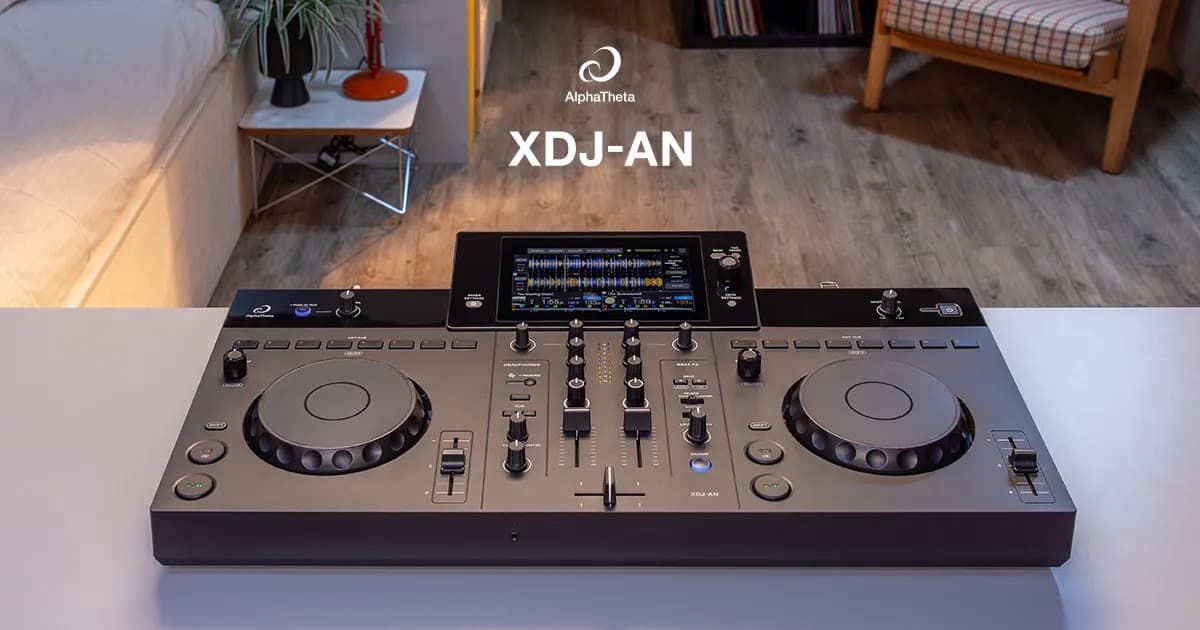
The HDJ-F9 is aimed at working DJs who want wireless monitoring without the delay that makes regular Bluetooth unusable at the decks. It's a strong fit if you already own or regularly play on a DJM-V5, since Touch Pairing and native SonicLink remove the need for extra hardware. If you're building a modern AlphaTheta setup around players like the CDJ-1500X or the XDJ-AN, these headphones slot naturally into that ecosystem.
It also suits DJs who want a single pair for the booth and the commute. Multipoint Bluetooth, a call mic and up to 25 hours of Bluetooth playback make it a reasonable everyday headphone.
Who should skip it
If you mostly play on mixers without SonicLink and don't want to buy a transmitter, the real cost climbs past $500, and a good wired DJ headphone may serve you better. Scratch DJs on setups from other brands, like the RANE System One, would also be relying on the HP-TX01 for wireless use. Producers looking for reference monitoring should look at studio headphones instead. And iPhone users who want the app on day one will have to wait, since the iOS version comes later.
Pricing and availability
The HDJ-F9 costs $349 and is listed in stock at the Pioneer DJ Store US. Full details are on the official AlphaTheta product page. The HP-TX01 transmitter is sold separately, and AlphaTheta lists the HP-TX01 at $159 in the U.S. (excluding sales tax). The headphones carry a 2-year warranty.
FAQ
Can you scratch with the HDJ-F9 wirelessly?
AlphaTheta says yes. SonicLink latency goes as low as 9 ms, compared with roughly 200 to 300 ms for Bluetooth with standard codecs. That low delay is what makes wireless scratching and tight beatmatching possible.
Do I need the HP-TX01 transmitter?
Only if your mixer doesn't support SonicLink. Compatible gear like the DJM-V5 connects directly, and Touch Pairing needs the latest DJM-V5 firmware. For other mixers, the HP-TX01 adds SonicLink, or you can use the included coiled cable.
How long does the battery last?
On SonicLink, approximately 7 hours with the LED on and 9 hours with it off. On Bluetooth, it's 13 hours with the LED on and 25 hours with it off. A 30-minute charge gives about 2.5 hours of use.
Can I use the HDJ-F9 with a cable?
Yes. It ships with a 1.2 m coiled cable that extends to approximately 3 m, with an L-shaped plug, a bayonet locking connection and a 6.3 mm screw adapter.
What's the main difference from the HDJ-F10?
The HDJ-F9 is on-ear, lighter at 285 g and $120 cheaper. The HDJ-F10 is over-ear, weighs 356 g and adds active noise cancelling and transparency modes.
Verdict
This is a first look based on AlphaTheta's official materials, not a hands-on review. On paper, the HDJ-F9 is a smart addition to the lineup. It brings SonicLink's 9 ms latency to a lighter on-ear design at a lower price than the HDJ-F10, and Touch Pairing should make DJM-V5 setups quicker to connect. The catch is the HP-TX01 for mixers without SonicLink, which pushes the real cost higher for many DJs. If your booth already speaks SonicLink, or you're happy to add the transmitter, it looks like one of the more sensible wireless DJ headphones you can buy right now.