Some links on this page are affiliate links. If you buy through them, Dubspot may earn a commission at no extra cost to you. It never affects our scores or what we recommend — read our policy.
Akai MPC Buyer's Guide 2026: One, Live, Key, XL, and Sample
Akai MPC buyer's guide for 2026. Compare the MPC One G2, Live III, Key 37, XL, and Sample by price, specs, and workflow.
E
Elena Marsh
Updated October 9, 2026 · 12 min read
Black Friday 2026AKAI Professional Black Friday 2026: dates and deals →
Akai has rebuilt almost its entire MPC range in nine months. The Live III landed in October 2025, the XL flagship in January 2026, the Sample in March, and the One G2 and Key 37 G2 in June. That churn makes 2026 the clearest year in a long time to answer one question: which MPC should you buy?
Quick answer: most producers should buy the MPC One G2 (€819). It runs the same MPC3 OS and synthesis engine as the flagship at a third of the price. Performers who need a battery, speakers, and a built-in mic want the MPC Live III (€1,555). The MPC XL (€2,444) is the studio hub, and the MPC Sample (€385) is the budget entry point.
Every price and availability note below was checked at Thomann in July 2026 and includes VAT. Here is the full lineup.
The 2026 MPC Lineup at a Glance
| Model | Price | Pads | Screen | Best For |
|---|---|---|---|---|
| MPC Studio | €175 | 16 full-size RGB | Color LC display | MPC software control (needs a computer) |
| MPC Sample | €385 | 16 RGB | 2.4" color (non-touch) | Beginners, portable sketching |
| MPC Key 37 | €739 | 16 RGB + 37 keys | 7" multi-touch | Keyboard players on a budget |
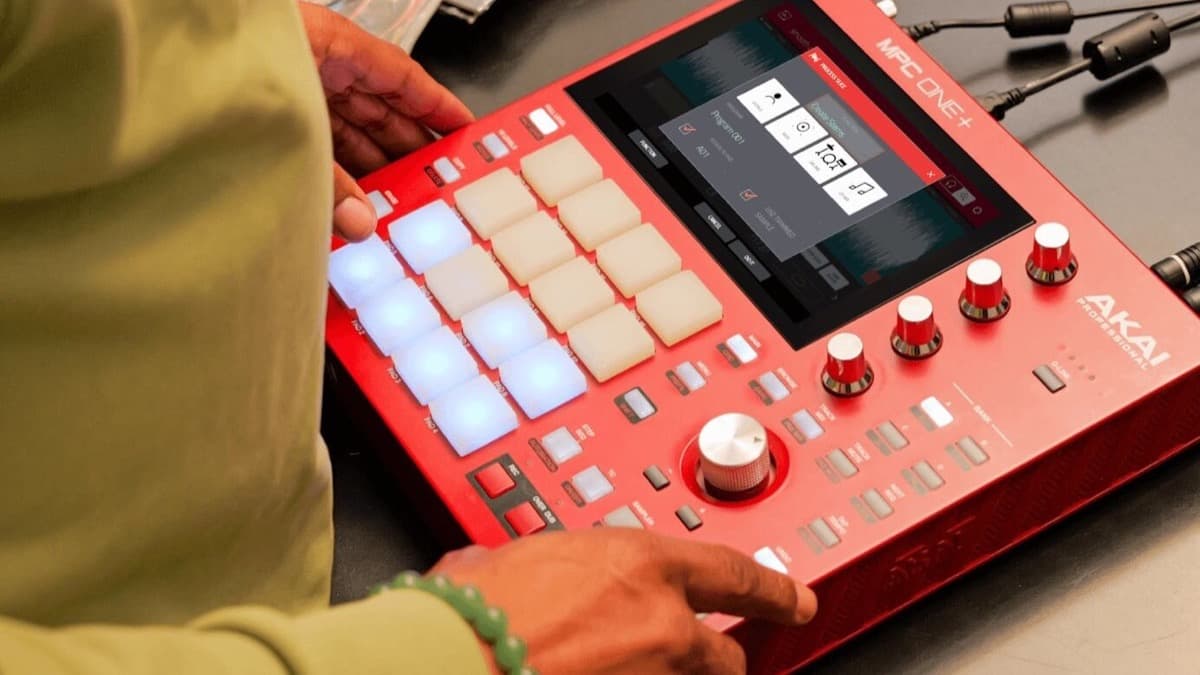
| MPC One G2 | €819 | 16 RGB, poly aftertouch | 7" multi-touch | The default standalone pick |
| MPC Key 37 G2 | €969 | 16 poly aftertouch + 37 keys | 7" multi-touch | Melodic, synth-forward producers |
| MPC Live III | €1,555 | 16 with 3D sensing | 7" multi-touch | Live performance, mobile production |
| MPC Live III Retro | €1,555 | 16 with 3D sensing | 7" multi-touch | Same as above, ships much sooner |
| MPC XL | €2,444 | 16 with 3D sensing | 10.1" multi-touch | Studio flagship, hybrid-rig hub |
One availability quirk is worth flagging up front. The standard black Live III shows an 11-to-14-week wait at Thomann as of July 2026. The identically specced Live III Retro ships in two to three weeks at the same price. If you want a Live III this summer, the Retro is the practical choice.
Why 2026 Is a Reset Year for the MPC
The old lineup is gone. Thomann no longer stocks the MPC X SE, the MPC Key 61, or the MPC One+, and the Live II has left its listings entirely. In their place sits a coherent seven-model range with clean price rungs roughly every €400.
Firmware parity is the other big shift. Akai's MPC 3.x updates are free across the standalone range, so older hardware keeps gaining the same features as new hardware. The MPC 3.8 update from April 2026 added five effects and lossless project exchange with the MPC Sample. The MPC 3.9 update from June added a full oscillator synthesis engine with wavetable, FM, and virtual analog modes, plus hybrid keygroups and a linear arranger.
This reframes the whole decision. Moving up the ladder no longer buys you features. It buys you headroom: CPU cores, RAM, plugin-instance counts, track counts, and pad technology. The one exception is the MPC Sample, which runs its own simplified OS instead of MPC3.
MPC One G2: The Default Pick (€819)
For most people asking which MPC to buy, the answer is the MPC One G2. It replaced the MPC One+ in June 2026 and closed most of the gap to the expensive models. You get the G2 8-core processor, 4GB of RAM, 64GB of internal storage, and 16 RGB pads with polyphonic aftertouch across eight banks.
The spec sheet reads like a shrunken flagship. It runs the same MPC3 OS and 3.9 synthesis engine as the XL, and it supports up to 32 plugin instances, 16 audio tracks, Stem Pro separation, and Super Timestretch. Connectivity covers 8 CV/Gate outputs on 3.5mm TRS jacks, 5-pin MIDI in and out, stereo line in and out, USB-A and USB-C 3.0, plus Wi-Fi and Bluetooth.
The cuts are deliberate. There is no battery, no speakers, and no built-in mic. This is a mains-powered desktop unit. The headphone output is 3.5mm rather than quarter-inch, and the pads use polyphonic aftertouch rather than the 3D sensing on the Live III and XL. None of that touches the core workflow, which is why the One G2 is the value center of the range. We covered the launch in our MPC One G2 and Key 37 G2 announcement coverage.
Check Akai MPC One G2 price at ThomannMPC Live III: For Performers and Mobile Producers (€1,555)
The MPC Live III is built to leave the studio. It packs a lithium-ion battery rated at up to five hours, built-in stereo monitor speakers, and a built-in studio microphone for field recording. You can sample a sound on the street, chop it on the train, and perform it at the venue without plugging in once.
The internals justify the jump. The 8-core processor is rated at four times the power of the Live II, backed by 8GB of RAM and 128GB of storage. The 16 pads use Akai's 3D sensor technology, which tracks finger movement after the initial hit for far more expressive aftertouch. Sixteen dedicated RGB performance buttons handle step sequencing, automation, and effects triggering. I/O runs deep too: two XLR/TRS combo inputs, 8 CV/Gate outputs, dual MIDI in and out, six analog outs, and USB-C carrying 24 audio channels to a DAW.
The honest question is whether you need any of it. If your MPC never leaves the desk, the One G2 does the same core job for €736 less. The battery, speakers, mic, and 3D pads only earn their cost if you work away from mains power or perform live. Watch the stock note here: the standard Live III sits on an 11-to-14-week backorder at Thomann, while the Live III Retro is identical inside and ships in two to three weeks.
Check Akai MPC Live III Retro price at ThomannMPC XL: The Studio Flagship (€2,444)
The MPC XL ended the MPC X era in January 2026, and it shipped almost exactly as our December leak coverage predicted: big screen, 3D pads, and CV/Gate all made production. It is the most powerful standalone MPC yet, with a second-generation 8-core CPU, 16GB of RAM, and 256GB of internal storage supporting up to 32 plugin instruments, 16 audio tracks, and 256 sampling voices.
The control surface is the real argument for it. A 10.1-inch multi-touch display sits on an adjustable viewing angle, flanked by 16 Q-Link encoders with individual OLED displays and an assignable touch strip. Each 3D-sensing pad splits into four quadrants for X/Y control. The I/O is the biggest in the lineup: phantom-powered XLR/TRS combo inputs, line inputs switchable to phono for direct turntable sampling, dual instrument inputs, eight line outs, two headphone outs, two MIDI ins and four MIDI outs, CV/Gate outputs on 3.5mm TRS jacks, three USB-A ports, USB-C with 24 audio channels to a DAW, and an SD slot.
The trade-offs are physical and financial. At 7.2 kg with no battery, it lives on a desk. At €2,444, it costs three MPC One G2s. Buy it if the MPC is the center of a hybrid studio, sampling vinyl through the phono inputs, sequencing a modular rig over CV/Gate, and running four chains of MIDI hardware. For that setup, nothing else in the range comes close.
Check Akai MPC XL price at ThomannMPC Key 37 G2 vs. MPC Key 37: For Keyboard Players
If you think in chords rather than chops, the Key models bolt a 37-note semi-weighted keybed with aftertouch onto the MPC workflow. There is one catch in 2026: no 61-key option. Thomann has discontinued the MPC Key 61, so 37 keys is what the standalone range offers.
The MPC Key 37 G2 (€969) is the current version, launched in June 2026 alongside the One G2. It shares the same G2 internals — 8-core processor, 4GB RAM, 64GB storage — and adds pitch and mod wheels, 16 pads with polyphonic aftertouch, three pedal inputs, and 8 CV/Gate outputs. It ships with more than 1,000 presets and eight plugin instruments. Paired with the MPC 3.9 oscillator engine, it works as a self-contained synth workstation.
The first-generation MPC Key 37 (€739) is still on sale, €230 cheaper. Same keybed, same 7-inch touchscreen, same pad layout. The difference is a quad-core processor with 2GB of RAM and 32GB of storage. Free MPC 3.x updates mean it still gets every new feature, including the 3.9 synth engine. So the €230 buys headroom, not features: how many plugin instances and tracks you can run before the older hardware taps out. Light arrangers can save the money. Heavy multi-plugin producers should take the G2.
MPC Sample: The Entry Point (€385)
The MPC Sample is the cheapest standalone MPC ever, and it currently tops Thomann's sampler sales ranking. For €385 you get 16 RGB pads, a battery, a built-in mic and speaker, 32-voice polyphony, over 100 factory kits, and four FX processors, all in a 900-gram box. We covered it in depth in our MPC Sample review.
Know what it is not. The 2.4-inch color display is not a touchscreen, and the unit runs its own stripped-down OS rather than full MPC3, so there are no plugin instruments and no audio tracks. Since firmware 3.8, though, its projects round-trip losslessly with every full-size MPC and the desktop software. That makes it a legitimate first rung: sketch on the Sample, upgrade later, keep your beats. Its pads-and-knobs simplicity is also the closest thing in the current range to the classic machines behind hip-hop's golden era, the same approach we used when recreating Eric B. & Rakim's "Eric B. Is President" on an MPC.
MPC Studio: The Cheapest Way In (€175)
One honest footnote to the ladder: the MPC Studio (€175) is not a standalone instrument. It is a USB bus-powered controller for the MPC desktop software, with 16 full-size velocity-sensitive pads, a touch strip, and a small LC display. It needs a computer, full stop. But if you already produce on a laptop and want the MPC pad workflow without groovebox money, it is the cheapest legitimate way into the ecosystem, software included.
So, Which MPC Should You Buy?
One pick covers most people: the MPC One G2. The rest of the range exists for specific needs, ordered here by budget.
- First hardware, tight budget: MPC Sample (€385) — standalone, portable, upgrade-proof projects.
- Laptop producer: MPC Studio (€175) — the MPC workflow without standalone hardware.
- Most people: MPC One G2 (€819) — flagship OS and synth engine at a sensible price.
- Keyboard player: MPC Key 37 G2 (€969), or the Key 37 (€739) if you arrange light.
- Performer or mobile producer: MPC Live III (€1,555) — buy the Retro edition for faster delivery.
- Studio centerpiece: MPC XL (€2,444) — phono sampling, CV/Gate, and the biggest I/O in the range.
FAQ
Which MPC is best for beginners?
The MPC Sample (€385) is the most affordable standalone starting point, with a battery, mic, and speaker built in. Its projects transfer losslessly to bigger MPCs if you upgrade. If your budget stretches to €819, the MPC One G2 is the better long-term buy because it runs the full MPC3 OS from day one.
Is the MPC One still worth it?
The original MPC One and One+ are discontinued at retail, replaced by the MPC One G2 in June 2026. The G2 is worth it: the same 8-core processor family as the flagship, polyphonic aftertouch pads, and the complete MPC 3.9 feature set for €819. If you own an older One, free MPC 3.x updates keep it gaining features too.
Do MPCs work without a computer?
Yes. Every current model except the MPC Studio is fully standalone. You can sample, sequence, mix, and export finished tracks with no computer involved. USB-C connection to a DAW is optional, and the full-size models stream up to 24 audio channels when you do connect. The MPC Studio is the exception: it is a controller that requires the MPC desktop software.
MPC vs. Maschine: which should I choose?
Maschine is built around its desktop software, and it is excellent if you live inside that ecosystem. The MPC range's 2026 advantage is standalone breadth: seven current models from €175 to €2,444, six of which run entirely without a computer, all on one actively developed OS with free feature updates. If working away from a laptop matters to you, the MPC lineup offers more options.