zplane TONIC 2: Reworked Key Detection, New Chord Tools
zplane TONIC 2 detects the key and scale of any audio or MIDI in real time, suggests chords you can drag into your DAW, and upgrades from TONIC 1 for 10 euros.
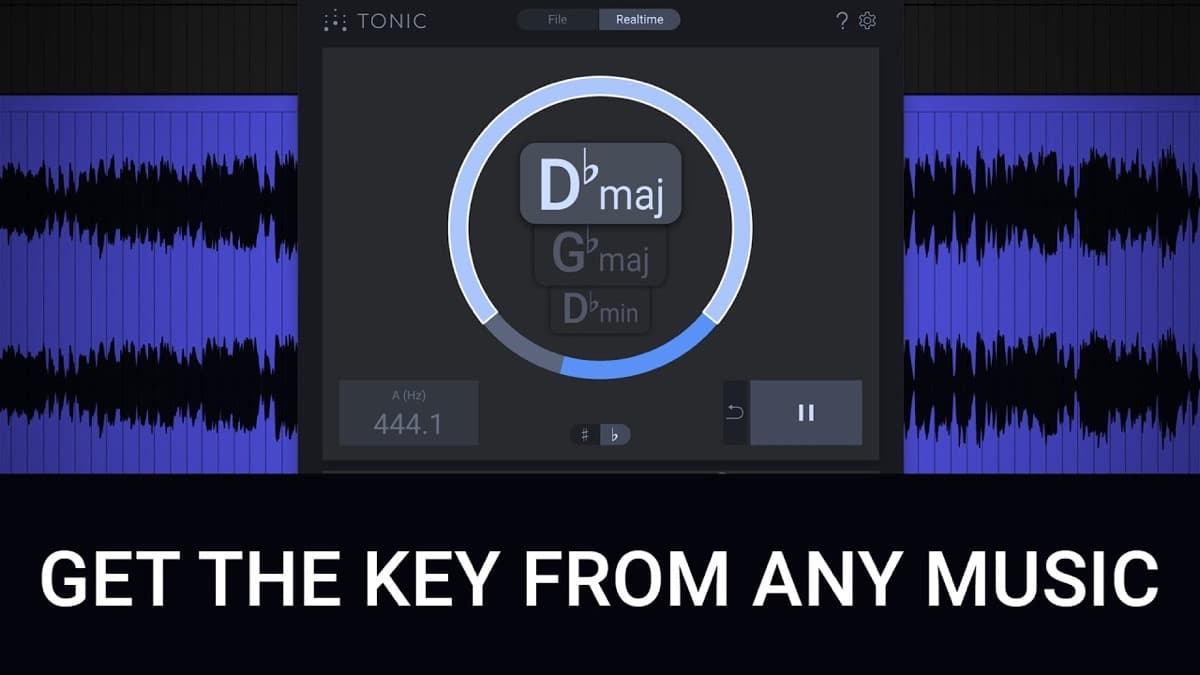
On October 21, 2026, zplane released TONIC 2, the second generation of its key and scale detection plugin. Drop it on any track and hit play. It reads the key of your audio or MIDI in real time, showing the three most likely matches with a confidence score for each. The update reworks the detection algorithm and adds chord drag-and-drop to your DAW. A new Fold Keys mode turns a MIDI keyboard into an in-scale instrument. Owners of TONIC 1 can upgrade for 10 euros.
At a glance: TONIC 2 lists at 39 euros, with a 33% launch discount at the official shop that brings it to around 26 euros at checkout. Owners of TONIC 1 upgrade for 10 euros. It detects key and scale from audio or MIDI, in real time or offline, and comes in AAX, AU and VST3 for Windows 10/11 and macOS 13 or later with no latency. This is a first look based on zplane's official product page and shop, not a hands-on test.
What is zplane TONIC 2?
zplane is the German developer behind the ÉLASTIQUE time-and-pitch engine that ships inside many DAWs, and behind analysis tools like TIMBRE and PEEL. TONIC sits in the music-theory corner of that catalog. Its job is to tell you what key and scale a piece of music is in, then help you write in that key.
You insert TONIC 2 on an audio or MIDI track and it analyzes the material as it plays. The interface shows up to three possible key and scale matches, each with a percentage probability. A clear tonal center reads as one dominant result, while an ambiguous passage shows its competing candidates. You can also drag an audio file straight onto the plugin for offline analysis, useful when you'd rather not run it in a track.
That matters for a few everyday jobs. Sampling producers can find the key of a loop before they pitch it. Remixers can confirm the key of an a cappella or stem. Anyone writing a part over an existing track can see which notes will fit before playing a single one. zplane's own documentation describes TONIC as a key-detection tool at heart, matching against the 24 major and minor keys, with scale information layered on top.
What's new in TONIC 2
Version 2 is a full rebuild rather than a cosmetic refresh. It targets the two core uses: trusting the reading, and turning it into music.
A reworked detection engine
The headline change is an updated real-time key-detection algorithm that zplane says improves both performance and reliability. In practice, the live reading settles faster and holds steadier on difficult material. That's the whole point of a detector you keep open while you work. Detection runs in real time on a playing track, or offline on a dropped file.
Chord mode and drag-and-drop MIDI
The virtual keyboard now has a Chord mode. Once TONIC 2 locks onto a key and scale, it maps compatible chords across the keyboard. You can audition them against your track, then drag the ones you like into your DAW as MIDI clips. That closes the loop between analysis and writing. You go from "what key is this" to "here is a progression that fits" without leaving the plugin.
Fold Keys for in-scale playing
Fold Keys mode shows only the notes of the selected scale, remapping them onto the white keys of your MIDI keyboard. Every white key becomes an in-scale note. You can't play a wrong one. It's a fast way to improvise melodies or sketch ideas in an unfamiliar key, and it doubles as a teaching aid for producers still building their theory.
Expanded MIDI and a new interface
TONIC 2 widens its MIDI support in both directions. You can play scale notes and chords from a MIDI keyboard. You can also send MIDI out to external instruments, so the plugin drives a hardware or software synth while it enforces the scale. The keyboard and Fold Keys layout are new, and zplane has redrawn the full interface. A tuning display still shows how far the source sits from A = 440 Hz, in both cents and hertz, useful when a sample was recorded slightly sharp or flat.
TONIC 2 specifications
| Spec | TONIC 2 |
|---|---|
| Type | Key and scale detection plugin |
| Detection | Audio and MIDI, real time or offline |
| Results | Up to three key and scale matches, each with a probability |
| Writing tools | Chord mode with MIDI drag-and-drop, Fold Keys in-scale mapping |
| MIDI | MIDI in and out, chord drag-and-drop |
| Tuning display | Deviation from A = 440 Hz in cents and hertz |
| Audio format | Mono and stereo |
| Plugin formats | AAX, AU, VST3 |
| Operating systems | Windows 10 and 11 (64-bit); macOS 13 or later (Intel and Apple Silicon) |
| Latency | None |
| Price | 39 euros, with a 33% launch discount at the zplane shop |
| Upgrade | 10 euros for TONIC 1 full-license owners |
TONIC 2 vs Mixed In Key
The obvious comparison is Mixed In Key, the best-known name in key detection. They overlap on the core read, but they are built for different workflows.
| TONIC 2 | Mixed In Key | |
|---|---|---|
| Price | 39 euros (around 26 euros at launch) | About 58 US dollars |
| Core job | Key and scale detection plus writing tools | Key detection and harmonic mixing |
| Runs where | As a plugin inside your DAW | Standalone app plus plugin |
| Writing tools | Chord mode, MIDI drag-and-drop, Fold Keys | Chord and energy tools via the wider ecosystem |
| Built for | Producers writing in key | DJs preparing harmonically mixed sets |
| Formats | AAX, AU, VST3 | VST3, AU, AAX |
Mixed In Key is still the DJ's choice. It batch-analyzes a whole library, tags tracks with Camelot keys and energy levels, and feeds a harmonic mixing workflow that DJ software understands. If your question is "which tracks mix together," that is the tool, and our lab report on its accuracy goes deep on how well it reads.
TONIC 2 is the producer's choice. It lives in the DAW, reads one track at a time in context, and turns the result into playable chords and scales you can drag into a project. It's also cheaper, especially at the launch price. If you want chord generation and progression building above pure detection, Scaler 2 and its successor Scaler 3 go further in that direction, at a higher price and with a steeper learning curve.
Who TONIC 2 is for
TONIC 2 suits sampling producers, remixers and songwriters who want a fast, reliable read of key and scale without leaving the DAW. It pays off most for those who will use the chord and Fold Keys tools to write. It's also a strong pick for producers still learning theory, since it shows the right notes and lets you play only those. At the launch price it's close to an impulse buy. The 10-euro upgrade makes it a simple call for existing TONIC 1 owners.
Skip it if you are a DJ whose main need is library-wide key tagging and harmonic mixing, where Mixed In Key fits better. Skip it too if you already own a deep chord tool like Scaler and only ever needed detection, since the overlap may not justify a second purchase.
How much does TONIC 2 cost?
TONIC 2 lists at 39 euros. At launch, the official zplane shop is running a 33% discount, which brings the price to roughly 26 euros including tax at checkout, depending on your region. Owners of a full TONIC 1 license can upgrade for 10 euros through the zplane User Area. zplane says TONIC 1 will continue to receive maintenance and support until the end of December 2027, so there is no rush to migrate existing projects. TONIC 2 is also sold through major retailers such as Plugin Boutique, Thomann and Best Service.
FAQ
Is TONIC 2 worth upgrading from TONIC 1?
For 10 euros, most TONIC 1 owners will find it worth the move. The reworked detection algorithm, chord drag-and-drop, Fold Keys mode and expanded MIDI are real additions, not a reskin. Because TONIC 1 is supported until the end of 2027, you can upgrade when it suits your workflow rather than immediately.
TONIC 2 vs Mixed In Key, which should I buy?
Buy TONIC 2 if you produce and want key, scale and chords inside your DAW. Buy Mixed In Key if you DJ and need to analyze and tag an entire library for harmonic mixing. They solve related problems for different users.
Does TONIC 2 analyze audio or only MIDI?
Both. You can insert it on an audio or MIDI track for real-time detection, or drag an audio file onto the plugin for offline analysis.
What are TONIC 2's system requirements?
TONIC 2 runs on Windows 10 and 11 (64-bit) and macOS 13 or later on both Intel and Apple Silicon Macs. It comes in AAX, AU and VST3 and adds no latency.
Verdict
TONIC 2 takes a tool that already did one thing well, reading the key of your music, and turns it into something closer to a writing partner. The reworked engine addresses what matters most in a detector: trust in the reading. Chord mode and Fold Keys give you a reason to keep it open once the analysis is done. The price seals it. At 39 euros, less at launch, with a 10-euro upgrade for existing owners, it's set up to be an easy yes. This is a first look based on zplane's official materials, not a hands-on review.