Ableton Extensions SDK: What It Is and Why It Matters
Ableton's new Extensions SDK lets anyone build custom tools inside Live 12 Suite with JavaScript. Here's what it does, what you need, and why it's a big deal.
Black Friday 2026Ableton Black Friday 2026: dates and deals →
Ableton just opened up Live in a new way. The Extensions SDK is a free public beta that lets anyone build custom tools that run inside Live 12 Suite. It is, in effect, an experimental playground bolted to the side of the DAW.
This is a quieter announcement than a flagship version bump, but it could matter more over time. Here is what it does and why producers should care. For the latest core update, see our Live 12.4 breakdown.
What is the Extensions SDK?
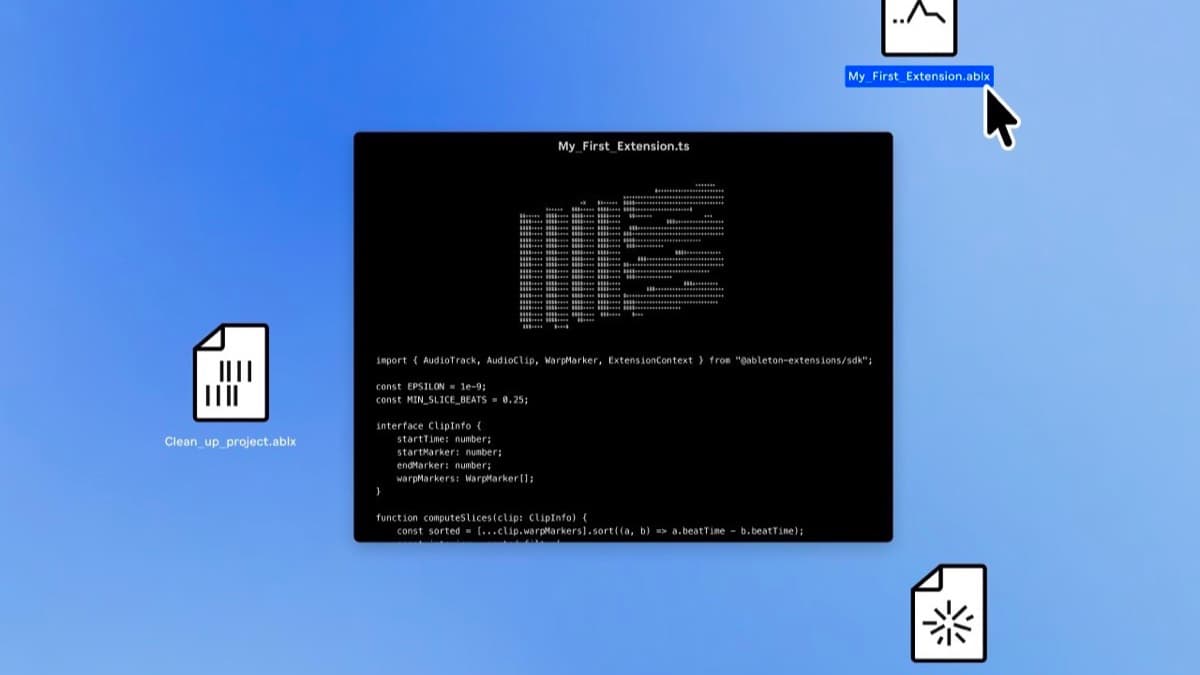
The Extensions SDK is an open JavaScript toolkit for building add-on tools that live inside Live. Ableton describes Extensions as optional tools that run alongside your Set and can read and edit its structure, including tracks, clips, parameters, and automation.
You reach them with a right-click. Inside a Set, compatible Extensions appear in the context menu on clips, tracks, and other elements, so they sit exactly where you are already working.
The scope is wide. Extensions can transform MIDI, analyze song structure, automate repetitive tasks, generate patterns, and connect Live to outside services and systems.
Why does this matter?
For years, deep custom tooling in Live meant Max for Live. The Extensions SDK takes a different route. It is built on standard web technologies, which lowers the barrier for a much larger pool of developers.
There is a notable angle here. Ableton points out that because the SDK uses standard web tech, AI coding assistants handle it well. If you can clearly describe the tool you want, you may be able to build a working Extension with AI help, even without coding experience.
That reframes who can extend a DAW. The line between "user" and "developer" gets blurrier, which fits where music software is heading in 2026. For more on that shift, see our best AI music generators guide. Hardware makers are meeting the unsanctioned version of the same demand, which we cover in the custom firmware boom.
What do you need to use it?
The requirements are specific, because this is a beta. Extensions run only in Live 12 Suite, not in Standard, Intro, or Lite editions.
To test them, you need to join Ableton's beta program and run Live version 12.4.5 or later. If you want to build your own Extensions, Ableton lists Node.js as a prerequisite for the development setup.
In short, this is aimed at Suite owners willing to run a beta build for now. A wider rollout is the natural next step once it leaves beta.
Is the Extensions SDK worth trying?
If you run Live 12 Suite and you are comfortable on a beta build, it is worth a look. Even without writing code yourself, you can already try Extensions that other people build and share.
If you are on Standard, Intro, or Lite, this one is not for you yet. It is also not a reason on its own to upgrade to Suite, unless custom tooling is something you actively want.
The bigger story is direction. Ableton is betting that an open, AI-friendly extension layer will produce tools the company would never build itself. That is a smart bet, and it is worth watching. If you are still choosing a DAW, our best DAWs for beginners guide can help you decide where to start.
Check price on Best ServiceFrequently Asked Questions
What is the Ableton Extensions SDK?
It is a free, open JavaScript toolkit that lets anyone build custom add-on tools that run inside Live 12 Suite, accessible via right-click in a Set.
Which version of Live do I need?
Extensions require Live 12 Suite. To test them during the beta, you need to join Ableton's beta program and run version 12.4.5 or later.
Can I build an Extension without coding?
Possibly. Ableton notes the SDK uses standard web technologies that AI coding assistants handle well, so a clear description of your idea may be enough to build a basic Extension with AI help.
Does it replace Max for Live?
No. It is a separate, web-technology-based way to extend Live and sits alongside Max for Live rather than replacing it.