Opening DJ Tips: How to Set Up the Headliner (and Build a Career)
What working pros teach about opening DJ sets — energy management, restraint, BPM ranges, the warm-up arc, and how doing this well leads to repeat bookings and bigger slots.
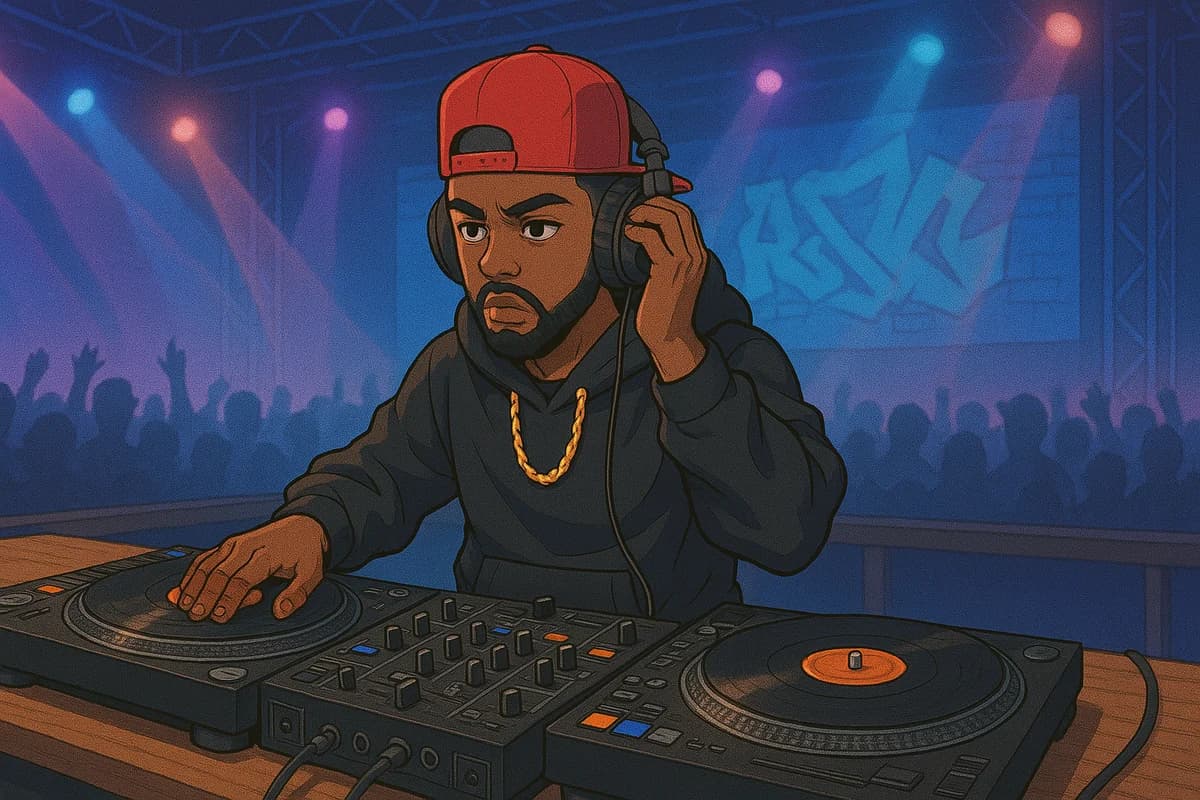
Most working DJs spent their first five years opening for someone else. The opening slot is where you learn what it actually feels like to play to a room that hasn't decided to dance yet, where you discover whether you have the discipline to not play your favorite track in the first hour, and where promoters watch to see if they want to book you again.
Done well, opening is a craft. Done poorly, it's where careers stall. The DJs who go from local-bookings to regional-tours to international-circuits almost universally have their opening-set fundamentals dialed.
This is what working pros teach about that craft.
The warm-up arc, from 30,000 feet
A 90-minute opening set is not "the first 90 minutes of a normal set." It has its own shape.
A good warm-up arc looks like this:
- Opening 30 minutes: the room is still filling up. People are at the bar, talking, deciding whether to come in. Your job is to set tone, not energy. Tempo is steady, dynamics are gentle, the floor builds slowly.
- Middle 30 minutes: the room is more full. People are starting to gather near the speakers. You're nudging energy upward in small steps — slightly heavier kicks, slightly more rhythm in the percussion, slightly more recognisable melodic content.
- Final 30 minutes: the headliner is about to take over. The room is full or close to it. Your set should land at an energy level just below where the headliner will pick it up. Not at peak; not flat. A warm room, primed for the next move.
The classic mistake is warming up the room too much. The opener who plays peak-time tracks in the last 20 minutes of their slot is making it impossible for the headliner to do their job — they have nowhere to go. Most veterans will tell you they've watched a headliner's first 30 minutes feel underwhelming because the opener already burned the climax.
BPM range, dynamics, and tempo curves
A solid opening set sits within a narrow BPM range, usually 4–8 BPM total span. A house warm-up might run 118–124 BPM; a techno warm-up 124–128; a deep dance warm-up at 117–121.
Inside that range, your tempo curve is gentle. You don't have to climb monotonically — small dips and rises feel more natural than a robotically increasing line — but the overall trend is upward.
Dynamics also climb. Early tracks have more space, more silence, more breathing room. Later tracks fill out the frequency spectrum more, hit harder on the kick, sit louder in the master. By the end of your slot, the music has more energy density than it did at the start.
A specific technique that works: track the average kick volume in your set. Early tracks: kick at -10 dB. Mid-set: -7 dB. Final stretch: -5 dB. Without changing the master fader, the perceived loudness has climbed because the recordings themselves are denser.
The track you don't play
Every opening set has an obvious peak-time track that you're tempted to drop. Don't.
Save your favorite peak-time track for the closing slot, not the opening one. If you play it during your warm-up, you've taken the move out of your hands forever — you'll never get to play it in the slot where it matters.
The opening DJ's discipline is to leave money on the table. A track you'd drop at minute 75 of your own headlining set should be off-limits during a warm-up. If you find yourself reaching for it, that's a sign you're trying to play your headlining set into someone else's room.
Read the headliner
Before the gig, listen to the headliner's recent recorded sets — RA Live Stream, Mixmag, their own Soundcloud uploads. Note:
- What BPM do they typically open with? Stop your set just below that.
- What sub-genre / sound palette do they play? Don't burn out the same palette before they walk in.
- What's their typical opener? Don't accidentally play their first track.
If you can't find recordings, ask the booker or the headliner directly. Most pros respect a warm-up DJ who asks "what BPM do you typically open at?" before the gig. It signals professionalism and prevents the awkward moment when they take over and have to crash-shift the energy.
If the headliner is on after you, your last track should be a clean handoff — same BPM range, complementary sub-genre, ideally a track that gives them an obvious next move. Don't end with a peak — end with a setup.
Track selection: known but not obvious
Opening sets are not the place for unreleased dubs and obscure white-labels. Save those for headlining slots where the audience is invested.
For a warm-up, the right tracks have one or both of these qualities:
- Familiar enough to feel inviting. Not the latest top-10 chart hit, but a known cult classic, a respected reissue, or a track from a respected catalogue label that engaged dancers will recognize. People relax when they hear something that signals "this DJ has taste."
- Texturally interesting without being demanding. Atmospheric layers, complex percussion, vocal samples that catch the ear without dominating. Tracks that reward listening but don't require it.
A useful test: would this track work in someone else's living room as background music and in a club at midnight? Tracks that pass both tests tend to work in opening sets.
EQ and structural choices
A few mechanical points that working pros emphasize for warm-up sets:
- Roll off the bass in the early tracks. Less low-end, more mid-range presence. The room hasn't filled yet; sub-bass with no dancers feels loud and unfocused. As the room fills, bring the bass up.
- Longer transitions, fewer cuts. Cuts feel intentional and energetic; long fades feel like the music breathes. Warm-ups want to breathe.
- Restrain effects. The build-ups and FX flares that work in peak-time look try-hard in a warm-up. Use them sparingly.
- Leave space. Quiet sections, breakdowns, atmospheric passages — these give dancers and non-dancers permission to be in the room without committing yet.
The interpersonal side
The opening DJ has a relationship with the headliner that isn't really about the music itself. It's about respect, professionalism, and showing the booker that you're someone they want around.
What working veterans repeatedly tell new DJs:
- Show up early. Arrive at least 30 minutes before your slot starts. Help set up, ask the booth tech where things are, meet the booker. The DJs who show up 10 minutes before doors are the ones who don't get rebooked.
- End on time. When your slot ends, end. Don't push another track because you're feeling it. Headliners notice. Bookers notice.
- Don't drink the headliner's rider. Self-explanatory. The hospitality is theirs.
- Stay until the end. If you're booked as the opener, don't pack up and leave when the headliner takes over. Watch them. Learn. Be visible. Half the bookings come from people who saw you stay.
- Send a thank-you message the next day. "Thanks for the slot, great set, would love to come back." Brief, professional, no asking for the next gig. Bookers and headliners receive these from very few openers, and the few who do them are the ones who get rebooked.
Career math
A DJ who consistently nails opening slots will get rebooked. A DJ who gets rebooked enough times in the same scene will eventually be offered the headlining slot at a smaller venue. From there it's a slow climb — but each step is real.
The DJs who skip the opening-set craft and try to play headlining sets in opening slots tend not to get rebooked. The local scene quickly notices who can warm up a room and who can only play one mode. Bookers pass that information around.
The opening slot looks like a step on the way to bigger things. It also is the bigger thing for the entire warm-up community of DJs who specialize in it. There's no shame in being an excellent warm-up DJ. Some of the most respected names in dance music — across techno, house, and broken-beat — built their reputations specifically on warm-up craft.
A short reading list
A few specific resources that working veterans recommend for new openers:
- Listen to opening sets by respected warm-up DJs more than peak-time sets. Bill Patrick, Jane Fitz, Optimo, Cosmin TRG, Levon Vincent at festivals — their warm-up work shows the craft.
- RA Live Stream archive — early sets at 6-hour-night events.
- Boiler Room early slots — the warm-up DJs at the major Boiler Room events tend to be remarkable; rarely the headliners.
Watch how they don't peak. Watch how they leave room. Watch how they end exactly where the headliner picks up. That's the craft.
The DJ careers that last are usually the ones built on this. Not on the chart-topping anthem you produce, not on the festival main-stage moment. On a thousand quiet 90-minute warm-up sets, each one ending exactly where it should, every time.