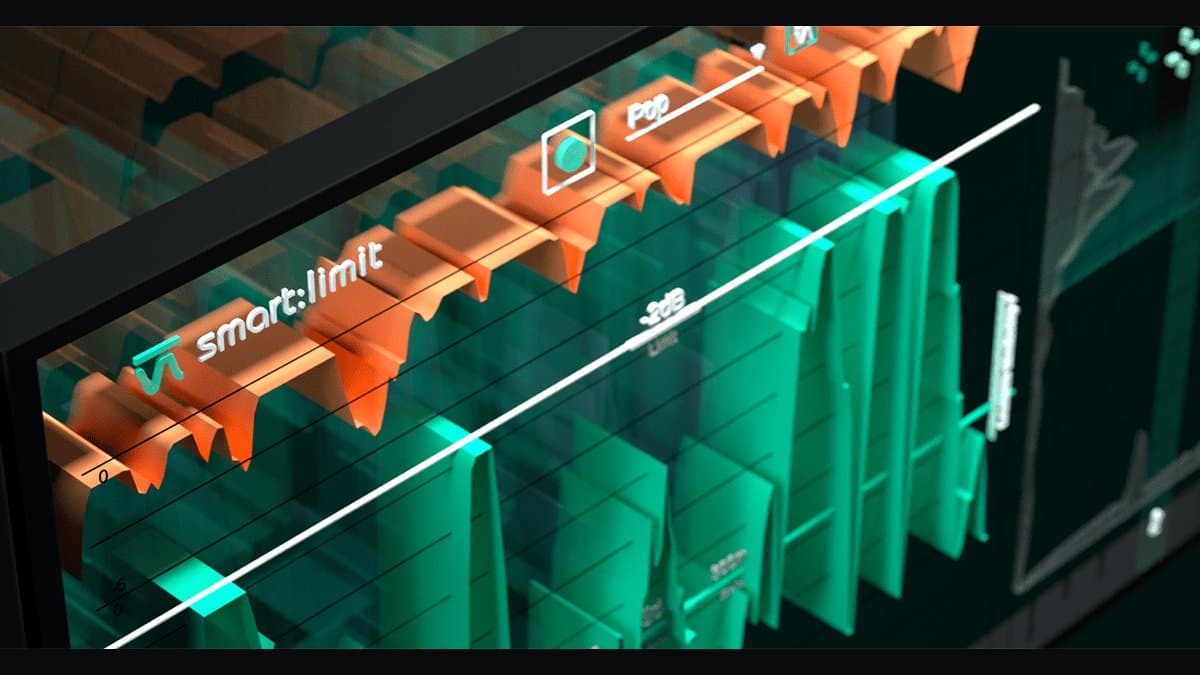
sonible smart:limit is an intelligent true-peak limiter built for the modern “set → check → publish” workflow. It analyzes your program material, can auto-configure limiting parameters with genre-aware profiles, and keeps loudness, dynamics, and true-peak safety visible while you work—so you are not stacking a limiter plus three meter plugins just to ship a master.
If Weiss MM-1 is “maximizer with style DNA,” and Pro-L 2 is “manual true-peak craftsmanship,” smart:limit is “content-aware limiting with publishing guidance.” Different philosophy, same end of the chain.
What problems it solves
Mastering limiters fail in predictable ways:
- You hit a ceiling but integrated loudness still misses the platform target
- You chase LUFS and accidentally kill dynamics
- You change input gain and have to re-run a whole loudness measurement
- True-peak overs appear after encode even when sample peaks looked fine
- Distortion creeps in and you only hear it on earbuds later
smart:limit’s feature set is aimed at those failure modes: automatic parametrization, Instant Impact Prediction, publishing targets, Quality Check, true-peak oversampling, and a sound-shaping panel that can add density without only slamming threshold.
Core features (what to learn first)
Content-aware automatic parametrization
Hit learn/analyze (workflow name depends on UI version), let smart:limit profile the signal, and accept a starting configuration. Genre-based profiles bias the processor toward settings that keep detail and “breathing room” rather than flat radio smash. Treat auto results as a strong first draft, not a final master.
Instant Impact Prediction
This is the workflow killer feature for many users. Change gain, style, or related parameters and loudness-related readouts update to reflect the impact without restarting integrated measurement from scratch every time. Faster A/B thinking, fewer “wait for the whole song to integrate” loops.
Publishing targets + Quality Check
Pick a delivery context (streaming / broadcast style targets—use the on-screen target set that matches your release path). Quality Check flags whether you are inside safe zones for loudness and dynamics relative to that target. It does not replace your ears, but it catches “accidentally -8 LUFS on a quiet folk record” mistakes before clients do.
True-peak limiting and meters
True Peak is measured with high-resolution oversampling so inter-sample peaks are less likely to surprise you after lossy encode. Readouts include:
- LUFS integrated / short-term / momentary
- Loudness Range
- Dynamics (peak-to-loudness oriented)
- True Peak (dBTP)
- Gain reduction
- Distortion monitoring (where limiting stress shows up spectrally)
Sound-shaping panel
When transparent limiting is not enough:
| Control | What it does | Use when |
|---|---|---|
| Style | Soft ↔ hard limiting character | Soft for open masters; harder for dense competitive material |
| Saturation | Perceived loudness/warmth without simple peak raise | Master feels quiet but peaks are already tall |
| Balance | Spectral polish toward genre/target balance | Pre-publish tone tidy-up (subtle) |
| Bass Control | Compact, richer low end | Weak sub/low foundation before limiting |
These tools can improve or ruin a master. If Balance or Saturation is doing heavy lifting, check whether the mix needed EQ/compression earlier.
How to use smart:limit (practical workflows)
Streaming master, guided path
- Finish mix balance and any broad dynamics first.
- Insert smart:limit last (or last before a dither/utility stage if you use one).
- Set the limit line (true-peak ceiling). sonible suggests leaving headroom for codecs—at least about −1 dBTP is a common streaming-safe starting point when bouncing for platforms.
- Select the publishing target closest to your platform path.
- Run content-aware learning with a genre profile (or load a reference track in the learning section when comparing loudness intent).
- Raise the gain line until peaks meet the limit with controlled GR—not constant smash.
- Enable Constant Gain when A/Bing so louder does not automatically win.
- Watch the loudness & dynamics grid plus Quality Check; use Instant Impact Prediction while fine-tuning Style and Saturation.
- Store alternate States (up to 8) for client versions (cleaner vs louder).
- Export and spot-check the encode on phone speakers.
Manual craft path (no autopilot)
- Disable reliance on auto if you prefer full control.
- Set true-peak ceiling for delivery safety (many engineers leave a small TP margin for lossy codecs—match your distributor’s rules).
- Raise input or lower threshold until GR appears only on real peaks.
- Shape attack/release so drums don’t smear.
- Use Style soft first; harden only if needed.
- Compare with a trusted reference at matched loudness.
Fixing “loud but lifeless”
- Lower overall limiting depth.
- Try softer Style.
- Add a touch of Saturation for perceived level instead of more GR.
- Confirm Loudness Range / dynamics readouts didn’t collapse.
- If still dead, the problem is usually earlier compression—not the limiter.
Surround / 5.1 note
sonible lists Dolby Surround 5.1 support. If you deliver multichannel, confirm your DAW routing and channel order against sonible’s current docs before relying on it for a client stem.
Settings starting points
| Goal | Approach | Notes |
|---|---|---|
| Open dynamic master | Soft Style, low GR, Transparent-ish shaping | Let Integrated LUFS sit where the music wants |
| Competitive streaming | Auto profile + moderate GR + Instant Impact tweaks | Don’t ignore dynamics grid warnings |
| Bass-heavy electronic | Bass Control light, watch TP on 808s | Mono-check low end |
| Harsh bright master | Less hard Style; careful Balance | Prefer mix fixes for cymbals/vocals |
| Reference matching | Match Integrated LUFS of reference, then compare tone | Loudness-first comparisons lie |
smart:limit vs alternatives
FabFilter Pro-L 2 — Manual precision king. Prefer Pro-L when you want algorithm flavors and forensic metering without AI guidance. Prefer smart:limit when publishing targets and Instant Impact Prediction speed your day.
Weiss MM-1 — Style maximizer from DS1 DNA. MM-1 is musical maximizer character; smart:limit is compliance + content-aware limiting. Different ears, sometimes both in a chain (careful).
iZotope Ozone Maximizer — Part of a full suite with Assistants. Ozone wins if you live in Ozone. smart:limit wins as a focused limiter/metering hybrid.
Weiss DS1-MK3 — Broader dynamics instrument (compress/limit/de-ess). Not a 1:1 competitor; DS1 can feed a later maximizer stage.
Who should buy it
Buy smart:limit if you self-master often, deliver to streaming platforms weekly, want fewer separate meter plugins, or like sonible’s smart:EQ / smart:comp workflow. It is especially good for producers who understand loudness targets but do not want to babysit three analyzers.
Skip if you already have a limiter + metering stack you trust and never miss delivery specs, or if you only need mix-bus glue color (wrong tool class).
Honest limitations
AI will not invent headroom that is not in the mix. Genre profiles can bias toward “modern competitive” when a song wants quiet. Sound-shaping can become a makeup department for mix problems. And Quality Check green lights do not guarantee artistic quality—only technical target alignment.
Verdict
sonible smart:limit is a modern publishing limiter: true-peak safety, content-aware setup, Instant Impact Prediction, and loudness/dynamics guidance in one place. Score 8.7—excellent when your job is shipping clean, target-aware masters without a rack of meters.
Confirm price, trial length, and current OS support on the official sonible smart:limit page. Use the trial on a song you already released—if it improves translation without flattening the chorus, it earns a permanent slot.