Plugin Boutique sells the current version, LX480 Dual Engine Reverb V4. The Plugin Boutique button on this page opens that edition.
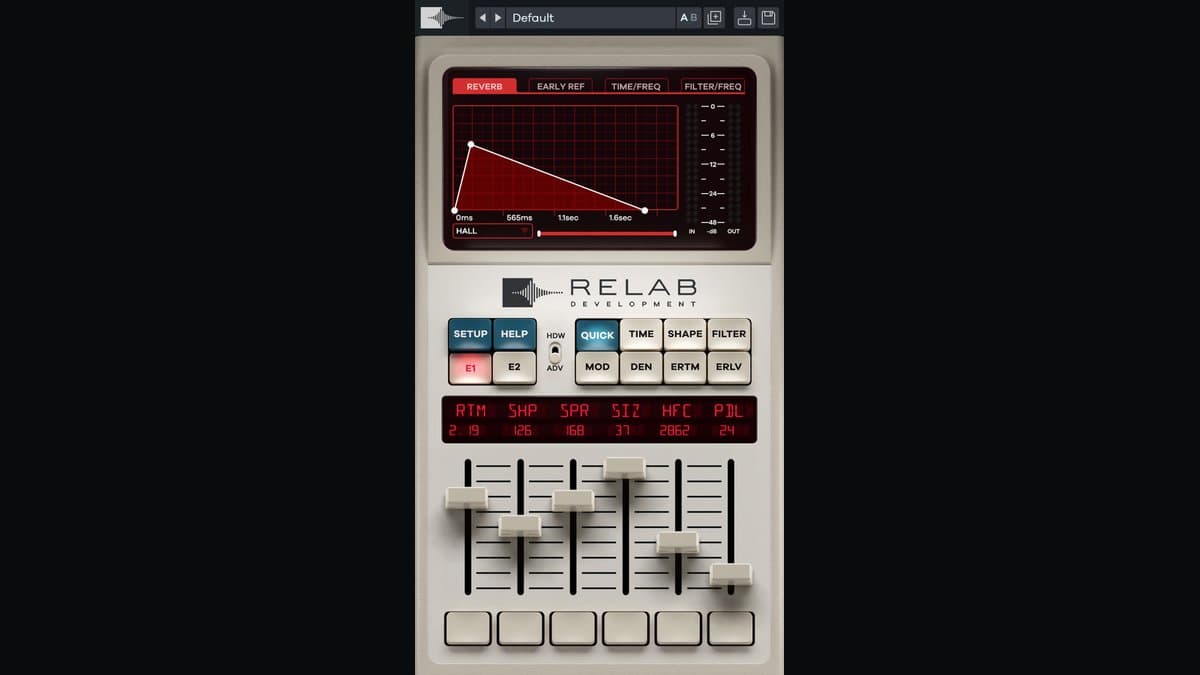
Relab Development’s LX480 Dual-Engine Reverb is a software recreation of the Lexicon 480L—the algorithmic reverb that defined a generation of records and film scores. The original hardware was an expensive studio mainframe with a LARC remote; the plugin’s pitch is sample-faithful algorithms plus two engines and modern routing the hardware workflow never made easy in a DAW.
If Seventh Heaven is the Bricasti M7 conversation, LX480 is the Lexicon 480L conversation. Different classics, overlapping “expensive space” jobs.
Dual engines (why it is not just another hall plugin)
The LX480 can run two independent algorithmic engines in multiple routing configurations. Practical creative patterns:
- Short early/plate engine into longer hall engine
- Parallel dual halls for width without a single huge tail
- Different algorithms on dual paths for hybrid spaces
That dual-engine design is the product’s modern superpower on top of classic 480L tone.
Hardware mode vs Advanced mode
| Mode | Intent |
|---|---|
| Hardware (HDW) | Closer to classic 480L behavior and expectations |
| Advanced (ADV) | Extra modern control and sculpting beyond hardware surface limits |
New users: start HDW with famous hall/plate presets, then open ADV when you need more filter/reflection detail.
Early reflections that feel alive
Relab highlights an advanced early-reflection engine that randomizes reflection clusters rather than freezing a sterile pattern. That liveliness is part of why algorithmic Lexicon-style verbs still beat lazy static IRs for many music mixes.
Complete / Dual-Engine vs Essentials
| Essentials | Dual-Engine / Complete | |
|---|---|---|
| Price class | Budget / frequent deep sales | Premium (~$349 list class) |
| Engines | Limited | Full dual-engine |
| Control depth | Streamlined | Full feature set |
| Who it is for | “I want Lexicon halls cheap” | “I want the real dual-engine tool” |
Do not buy Essentials expecting full Dual-Engine routing. Read the current edition matrix before checkout.
How to use LX480
Vocal plate / hall
- Send (not insert) to LX480.
- Pick a classic plate or medium hall.
- Predelay for intelligibility.
- HPF the return hard enough to keep mud out.
- Optional dual-engine: short reflective engine + longer lush engine at low wet.
Drums
Short rooms and plates for snare; avoid long halls unless the genre wants wash. Dual engines can put a short room on one path and a gated-style second engine carefully.
Mix depth without washing
Use predelay and early reflection emphasis so the dry mix stays forward. Long tails belong on sparse arrangements or cinematic cues.
Dual-engine layering recipe
- Engine A: short, bright, early-forward.
- Engine B: longer, darker, lower level.
- Route per dual-engine config (series vs parallel styles).
- EQ the sum return as one instrument.
LX480 vs Seventh Heaven Professional
| LX480 | Seventh Heaven Pro | |
|---|---|---|
| Classic | Lexicon 480L | Bricasti M7 |
| Tech story | Dual algorithmic engines | Fusion-IR M7 capture |
| Feel | Classic Lexicon algorithmic | M7 halls/plates realism |
| Buy when | You want that Lexicon record sound | You want that M7 preset world |
Many engineers own both. If you can only own one flagship verb, pick by the records you reference most.
Who should buy it
Buy Dual-Engine if Lexicon halls/plates are core to your sound and you will use dual routing. Consider Essentials if budget is tight and you mainly need single-engine Lexicon character. Skip if you already live happily in Valhalla + stock verbs and never miss 480L.
Honest limitations
Premium price. Dual engines can become a time sink. It is not a granular/shimmer design toy. And no reverb fixes a mix that needs arrangement space.
Verdict
Relab LX480 Dual-Engine remains a flagship Lexicon 480L software instrument: dual engines, hardware/advanced modes, and the classic hall/plate vocabulary that still defines “expensive reverb” for many mixers. Score 9.0.
Confirm edition, price, and guarantee on the official Relab page. Demo on vocals and a full mix bus send—the tail quality is the purchase decision.