Make Noise Plexiphon: A Modeless Stereo Space Effect From Tom Erbe
Make Noise and Tom Erbe's Plexiphon is a 16HP Eurorack module that morphs continuously between reverb and multi-tap echo, with no mode switch in sight.
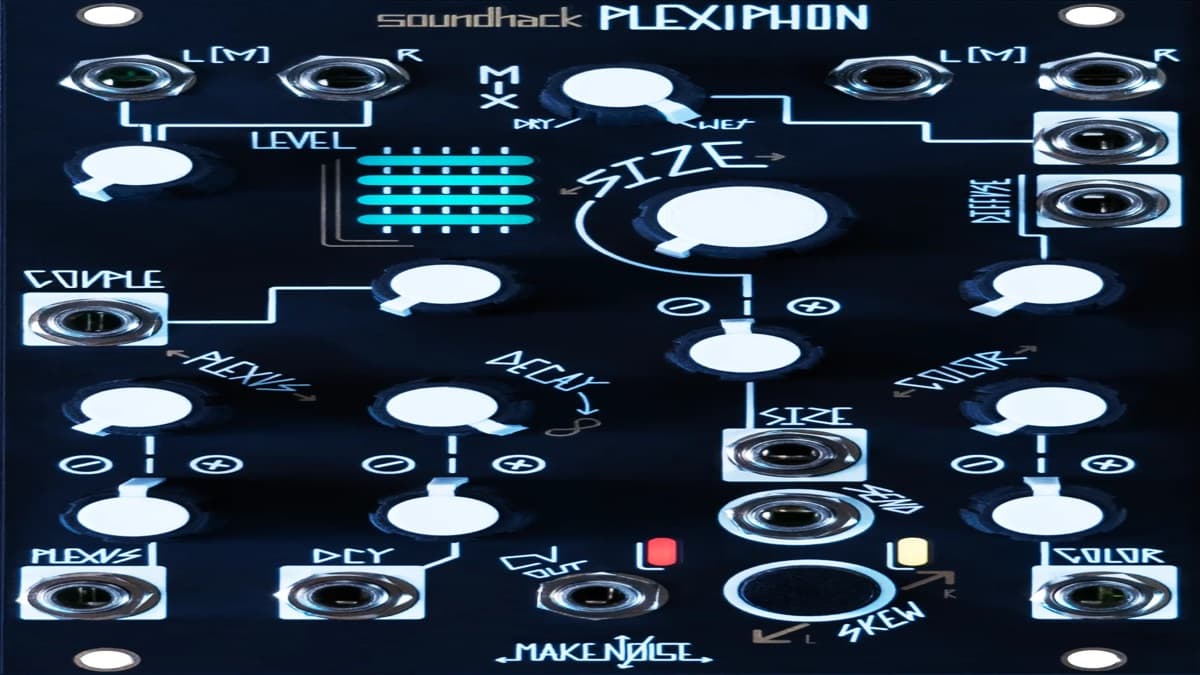
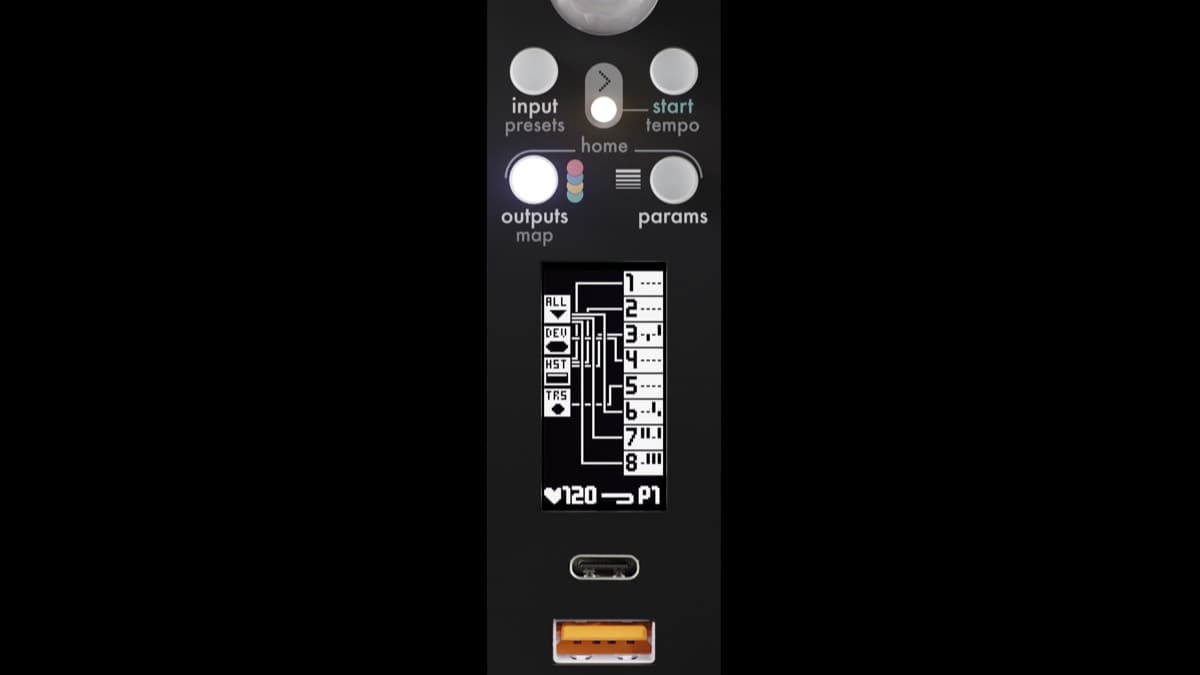
The first thing you notice about the Make Noise Plexiphon is what is missing from its front panel. There is no mode switch. There is no echo or reverb selector. There is no preset wheel. The Plexiphon is a 16 HP Eurorack stereo space effect that treats the entire territory between a multi-tap delay and a long, blurred reverberation as one continuous, voltage-controllable space, and it asks you to live somewhere inside it.
A new collaboration on new hardware
Plexiphon is the latest meeting between Make Noise and Tom Erbe of soundhack, the same partnership that produced the Erbe-Verb. This is not the Erbe-Verb in stereo, and it is not a port. The Plexiphon runs entirely new code, written from scratch by Erbe for what Make Noise is calling its newest digital hardware platform. It debuted at Superbooth 2026 in Berlin and ships in June 2026 at $469 in the US and €479 in Europe.
The headline effect is what Make Noise calls a "modeless" spatial texturizer. It morphs continuously between reverberation and multi-tap echo, with the most interesting territory sitting somewhere between the two.
Plexus and Size
Two main controls shape most of the action. Plexus adjusts the number of feedback paths inside the algorithm and how tangled those paths are with each other. Low settings deliver a handful of clearly articulated taps. Higher values multiply and weave those taps into a dense, continuous wash.
Size sets the temporal relationship between the paths. With Plexus low, Size functions like classic delay time. With Plexus high, the same control acts more like room dimension. Sweeping the two together moves you through territory that does not exist on a typical reverb or delay because there is no underlying mode that swaps when you cross some invisible threshold.
A slow CV signal on these knobs produces filter-like movement. An LFO on Plexus does not crossfade between two algorithms; it reshapes one.
Diffuse, Color, and the stereo controls
Diffuse softens or sharpens transients in the texture over time. Color tilts the overall tone darker or brighter. They are simple on paper, and they matter more than you would expect once Plexus and Size start moving, because they are what keep a long, dense Plexiphon tail from sounding like every other long, dense reverb tail.
Couple and Skew bring the module closer to an instrument than a static processor. Couple sweeps from "dual mono", two independent processors running in parallel, into fully interlaced stereo where the channels share feedback. Skew applies opposite or linked changes to Plexus, Size, and Color across the two sides, so a single CV input can pull the right channel toward longer, brighter reverberation while the left tightens or darkens.
Performance routing, not set-and-forget
Two unusual additions on the front panel quietly explain Make Noise's design philosophy. The integrated Send gate input lets you CV-trigger when the input signal is fed into the effect, rather than running the wet path constantly. That is the difference between a permanent reverb and a dub-style throw, gated bursts, momentary delays, percussive reverberations that arrive and disappear on a clock or a button press.
The CV output carries an envelope follower derived from the input signal. You can patch it back into the Plexiphon to sidechain Diffuse to a kick drum, or send it out to drive a filter, an LFO rate, or anything else in the rack. It is a small thing on a spec sheet and a large thing in a patch.
Where it fits in a Make Noise system
For an existing Make Noise user, the Plexiphon is a natural sibling to the Erbe-Verb rather than a replacement. The Erbe-Verb's strength is its tunable, slow-evolving reverb with deep modulation hooks. The Plexiphon's strength is the morph between echo and reverb, the stereo image controls, and the gate-driven performance workflow. They do different jobs in different places in a patch, and a system with both would not feel redundant.
For a producer thinking about adding a single high-quality stereo space module to a hybrid setup, the Plexiphon's combination of voltage control, stereo Skew, and the Send gate makes it more of a performance instrument than a studio reverb. The module handles static, beautifully tuned space well. Its design just argues that you should be playing it instead of dialing it in once and walking away.
Pricing and availability
Plexiphon is 16 HP wide, 34 mm deep including the power cable, and draws 240 mA at +12V and 5 mA at -12V. It is available for pre-order now at $469 in the US and €479 in Europe from Make Noise and authorized dealers, with shipping scheduled for June 2026.
If the Erbe-Verb made the case that DSP-heavy effects belonged in Eurorack, the Plexiphon makes the case that the next generation of those effects belong on a fader, a gate, and an envelope follower. Worth the wait until June.