Hip-Hop Culture: A Producer's View of the Four Pillars and the Music That Came With Them
A producer's overview of hip-hop's four pillars (DJing, MCing, breakdancing, graffiti) — how each shaped the music, the equipment, and the production techniques that followed.
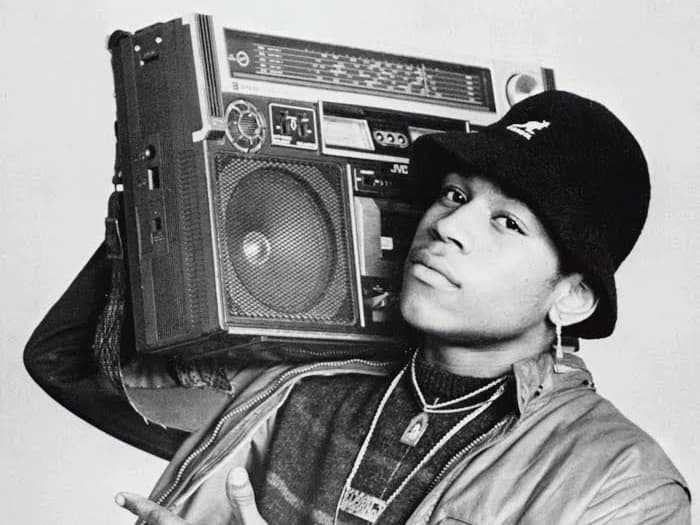
When DJ Kool Herc threw the back-to-school party in the rec room of 1520 Sedgwick Avenue, the Bronx, on August 11, 1973, he didn't know he was inventing a culture. He was throwing a party. What happened over the next decade in the South Bronx — the new dance moves, the new way of speaking over records, the new way of turning two copies of the same record into a continuous instrumental, the visual language being painted on subway cars — coalesced into something with its own internal logic.
Hip-hop has four traditional pillars: DJing, MCing, breakdancing, and graffiti. A fifth — knowledge — gets added in some accounts (Afrika Bambaataa's framing). For producers, the four pillars are useful not just as cultural history but as a guide to the techniques that emerged from each.
This is a producer's tour of hip-hop culture, focused on how the four pillars shaped the music and the equipment that defined it.
DJing: the breakbeat as the foundation
DJ Kool Herc's innovation in 1973 wasn't picking specific records to play — it was the breakbeat technique: cutting between two copies of the same funk or soul record to extend the drum break (the "break" — the section where the drums play alone, usually 2-4 bars before the vocals come back).
Before Herc, a DJ played records start to finish. After Herc, DJs extracted the most danceable section of a record and looped it indefinitely. Two copies of the Incredible Bongo Band's "Apache" — cut between them, alternating the same break for 10 minutes, and you've created a stretched-out percussive backdrop that didn't exist on either original record.
That technique — extending the break — created the space that all subsequent hip-hop music fills. MCs needed instrumental space to rap over. Dancers (b-boys / b-girls) needed instrumental space to break. Beatmakers needed something to put their voice on top of. The breakbeat is the substrate for everything else.
For producers, the consequence is direct: the entire concept of a hip-hop instrumental — a looping drum-and-bass foundation that supports vocals — comes from the DJing tradition. The 4-bar loop, the prominence of drums and bass, the relative thinness of harmonic content — these are all DJ-derived structural choices.
The follow-on innovation was scratching. Grand Wizard Theodore is credited with discovering it accidentally as a teenager — he was holding a record in place with his finger when his mother told him to turn the music down, and the sound the moving needle made on the held record became a new technique. Scratching turned the turntable from a playback device into a percussion instrument.
MCing: the rapper as the lead vocalist
The original role of the MC at a hip-hop party was practical: keep the crowd engaged while the DJ was working. "Keep partying! Hands in the air!" — call-and-response with the crowd. By 1979 it had evolved into actual rhymed verses, with the Sugarhill Gang's "Rapper's Delight" becoming the first commercial hip-hop record to chart.
The MC's craft over the next 50 years went through dramatic stylistic shifts:
- The party MC era (1973–1979) — Cowboy, Melle Mel, Grandmaster Caz. Crowd-control verses, simple rhymes, often improvised.
- The narrative era (1979–1985) — Sugarhill Gang, Run DMC, LL Cool J. Verses tell stories or boast in extended structures.
- Conscious rap (1986–1993) — KRS-One, Public Enemy, Rakim. Political content, complex internal rhymes, Rakim revolutionizing flow with his off-beat phrasing.
- Gangsta rap (1988–1996) — N.W.A, Tupac, Biggie. The West Coast and East Coast scenes diverge stylistically.
- Mid-period golden age (1990s) — Wu-Tang Clan, Nas, Mos Def. Internal rhymes get denser; sample-driven production peaks.
- Crunk / dirty south (2000s) — Outkast, Lil Jon, T.I. Southern flow patterns become dominant.
- Trap era (2010s) — Future, Migos, Travis Scott. Triplet flows, melodic vocals, vocal effects (Auto-Tune as instrument) become standard.
- Modern era (2020s) — Drake, Kendrick Lamar, J. Cole, then a generation underneath. Stylistic plurality; flow patterns from every era coexist.
For producers, the implication is that "rap vocals" aren't one thing — they're a moving target whose conventions changed every 5–7 years. A producer working with a vocalist needs to understand which era's flow conventions the vocalist is drawing on, because that determines the kick / snare placement, the beat per minute range, and the harmonic content the vocal will sit comfortably over.
Breakdancing: the body in the break
B-boying / b-girling — what the mainstream eventually called "breakdancing" — emerged at the same time as the breakbeat, partly because dancers needed something to do during DJ Kool Herc's extended drum breaks. The dance and the music co-evolved.
The connection to production: breakdance moves work to specific tempos and specific beat patterns. The classic b-boy tempo range is 90–115 BPM — slow enough that the moves can be executed with control, fast enough to feel propulsive. The classic b-boy beat structure emphasizes the 1 and the 3 with drums (downbeats), with the 2 and 4 carrying the snare or clap (the backbeats), and complex syncopated hi-hat work on the upbeats.
Modern hip-hop and trap have largely moved away from the b-boy tempo range. A 70 BPM trap track or a 140 BPM Atlanta-trap track isn't designed for breakdancers. The b-boy connection persists in conscious-rap and boom-bap revivalist production, where the 90–100 BPM range is preserved for cultural reasons.
Graffiti: the visual language
Graffiti is the pillar most disconnected from the music itself, but for producers it matters because hip-hop's visual identity — album covers, music video aesthetics, cultural branding — descends from the graffiti tradition. The lettering on a hip-hop record sleeve, the bombing-style spray-paint typography, the photographic conventions of urban portraiture — all are graffiti-influenced.
For producers, this is most relevant in release artwork and visual branding. Hip-hop releases aren't typically marketed with corporate-clean design; they lean on the graffiti tradition's visual codes (custom typography, urban photography, layered visual elements). Working with a designer who understands the tradition is a meaningful upgrade over generic stock-image album covers.
Sampling as the production technique
The four pillars are about culture; sampling is the production technique that ties them together.
Hip-hop production from the late 1980s onward was built on sampling — taking pieces of existing records and recombining them into new compositions. The MPC60 (1988) gave producers a standardized tool for chopping and resequencing samples. By the early 1990s, sample-based production had become the dominant production style for hip-hop, used by Pete Rock, J Dilla, DJ Premier, Pharrell, Kanye, and dozens of others.
Sampling is a direct extension of DJ Kool Herc's breakbeat technique. The DJ extends the break by cutting between two records; the producer extends the break by sampling the drums and looping them on a sequencer. The same impulse — find the most danceable / interesting moment of an existing record and isolate it — drives both.
Sampling's complications became the dominant legal story of the 1990s and 2000s. The 1991 Grand Upright v. Warner decision (Biz Markie's "Alone Again") established that uncleared samples were copyright infringement. The cost of sample clearance shifted production budgets dramatically. Some sub-genres (boom-bap) leaned into sampling and absorbed the costs; others (trap) pivoted toward original synthesis to avoid the issue entirely.
For modern producers, the practical reality of sampling in 2026:
- Cleared sample libraries (Splice, Loopmasters, Tracklib) provide royalty-free access to thousands of stems and samples. The library quality has gotten very good.
- AI-generated drums and stems have started appearing on sample platforms in 2025. Quality is mixed; ethical / copyright issues are unresolved.
- Original synthesis — using software synthesizers and modeled drum machines — is the dominant production method for current hip-hop / trap. Sampling persists for specific sub-genres (boom-bap, lo-fi, conscious rap) where the sample-based aesthetic is part of the genre identity.
The cultural arc, summarized
Hip-hop in 2026 is the dominant popular music of the world. The conversation about whether it's "really" the most influential genre of the past 50 years is over — it is. Every successful pop record bears its imprint somewhere: in the beat structure, the vocal phrasing, the harmonic vocabulary, the production aesthetic.
The four pillars persist but in transformed forms. DJing has split into the club DJ and the playlist curator. MCing has split into the verse-rapper, the melodic vocalist, and the producer-artist who sings their own hooks. Breakdancing has its own competitive circuits and was an Olympic medal sport at Paris 2024. Graffiti has become a billion-dollar art market.
The culture that started as a Bronx block-party tradition has become global popular music. The techniques that emerged from each pillar — the breakbeat, the verse, the dance, the visual language, the sample — remain the toolkit producers reach for.
For a producer working in any modern genre, understanding hip-hop's four pillars isn't just historical context. It's understanding where the foundational decisions of contemporary popular music came from. The foundation is still there, even when the surface looks different from one decade to the next.
A reading and listening list
If you want to go deeper:
- Jeff Chang, Can't Stop Won't Stop — the definitive cultural history of hip-hop's first 30 years.
- Tricia Rose, Black Noise — the academic-but-accessible early study of hip-hop's cultural and musical structures.
- Wax Poetics magazine — long-form journalism on producers, DJs, and crate-digging culture.
- The HBO documentary The Defiant Ones — focused on Dr. Dre and Jimmy Iovine but covers the broader West Coast / industry transition.
- Listening: the original DJ Kool Herc Sedgwick Avenue mixtapes (available in restored versions). The Sugarhill Gang's "Rapper's Delight." Public Enemy's It Takes a Nation. Wu-Tang's 36 Chambers. Outkast's Aquemini. Kanye's Late Registration. Kendrick's To Pimp a Butterfly.
Five decades of culture, in one tour. The pillars are still standing.