Synth

Korg multi/poly native

Korg · $199

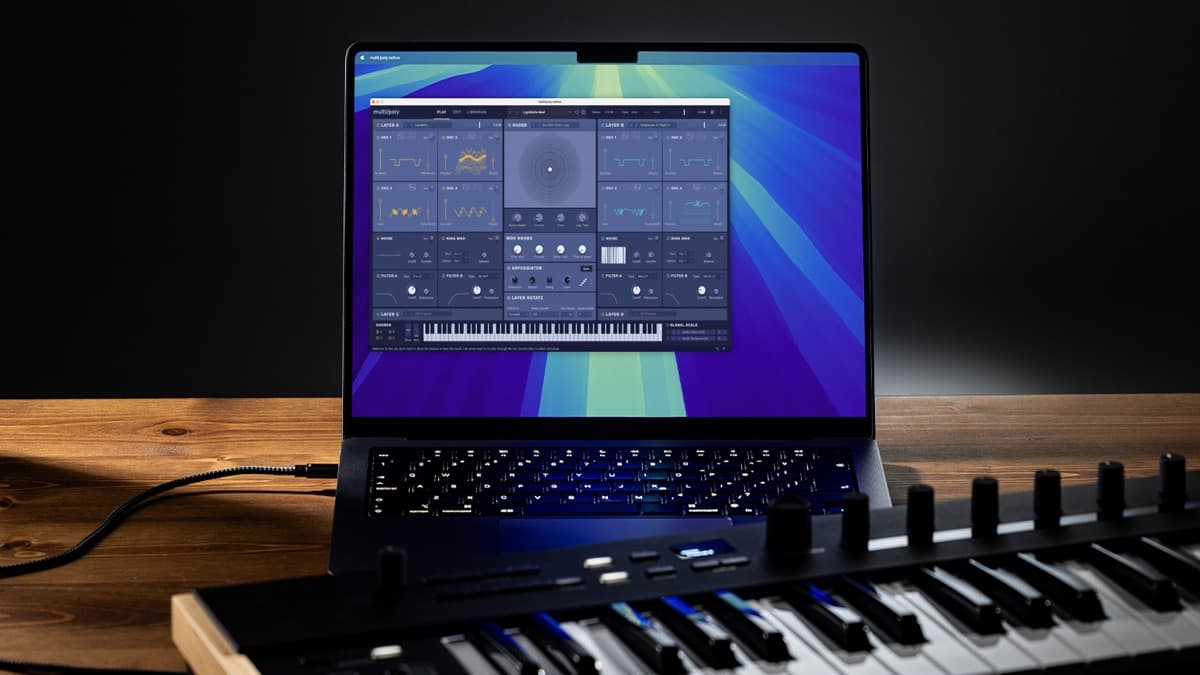
Korg multi/poly native is the DAW software counterpart to the multi/poly hardware, with four oscillators, dual modeled filters, Motion Sequencing 2.0, and Kaoss Physics.

8.6
Great

Some links in this article are affiliate links. If you buy through them, Dubspot may earn a commission at no extra cost to you. It never affects our scores or what we recommend — read our policy.

8.6
Great
Le verdict Dubspot

One of Korg's strongest modern softsynths: deep analog modeling with four oscillators, dual filters, Motion Sequencing, and hardware patch exchange.

Idéal pour: Sound designers and electronic producers who want Mono/Poly-inspired analog thickness with modern sequencing and modulation.

Pros

  • Next-gen Korg analog modeling with virtual voice cards and component variation
  • Four oscillators (Classic, Digital, Waveshaper) plus noise and ring mod
  • Dual modeled filters with vintage Mono/Poly, Mini, Pro, MS-20 options
  • Motion Sequencing 2.0, Kaoss Physics, and patch exchange with multi/poly hardware

Cons

  • Deep architecture is a learning investment
  • Full price competes with other flagship softsynths
  • Best value if you also own or plan multi/poly hardware (crossgrade path)

Aperçu

multi/poly native is Korg's fully compatible software version of the multi/poly hardware synthesizer. It is not a thin controller app: it is the instrument in VST3, AU, AAX, and standalone form, with the same modeling story—virtual voice cards, component variation, vintage envelope and VCA models, and dual filters that can run serial or parallel.

It excels as a modern analog-modeling playground. Four oscillators can be Classic, Digital wavetable, or West-Coast waveshaper types, with sync and x-mod paths that feel modular. Dual filters cover Mono/Poly, Mini ladder, Pro, MS-20, and more, with audio-rate modulation and drive. Motion Sequencing 2.0 and Kaoss Physics add motion that stock subtractive synths rarely match, and Layer Rotate cycles Programs for complex round-robin textures. Hardware owners can crossgrade cheaply and move patches between stage and DAW.

The trade-offs are depth and price. Pigments 6 and Phase Plant offer broader hybrid engines; Diva remains a benchmark for pure analog modeling focus. multi/poly native rewards time spent learning lanes, layers, and mod routings. At full price it should be demoed against those rivals.

Choose multi/poly native when you want Korg's current modeling stack and optional hardware parity. Choose Diva for pure analog voice focus, Pigments for hybrid breadth, or Hive for faster digital-analog hybrids. Official manuals and the Korg Shop demo path are the right next steps.

Spécifications

Type
Analog modeling synthesizer plugin
Oscillators
4 per Program (Classic / Digital / Waveshaper) + noise + ring mod
Filters
Dual slots; vintage and linear models including M/Poly, Mini, Pro, MS-20
Sequencing
Motion Sequencing 2.0; Layer Rotate; Kaoss Physics
Formats
VST3, AAX, standalone (macOS/Windows); AU on macOS
Hardware link
Patch exchange with multi/poly hardware; $49.99 crossgrade for owners

Dernière vérification 2026-07-16

FAQ

How much does multi/poly native cost?

Korg Shop and retailers commonly list multi/poly native around $199, with sales and a $49.99 crossgrade for multi/poly hardware owners. Confirm on the Korg Shop.

Can I share patches with the multi/poly hardware?

Yes. Sounds can be exchanged between multi/poly native and the hardware multi/poly using Korg's librarian tools.

What formats does multi/poly native support?

VST3, AAX, and standalone on macOS and Windows, plus AU on macOS.

Concurrents directs

Korg multi/poly native vs — head-to-head specs, price, and Dubspot Score.

Pigments 68.9
Korg multi/poly native vs Pigments 6
Comparer
u-he Diva9.1
Korg multi/poly native vs u-he Diva
Comparer
u-he Hive 28.7
Korg multi/poly native vs u-he Hive 2
Comparer
Phase Plant8.7
Korg multi/poly native vs Phase Plant
Comparer

Plugins associés

Voir aussi