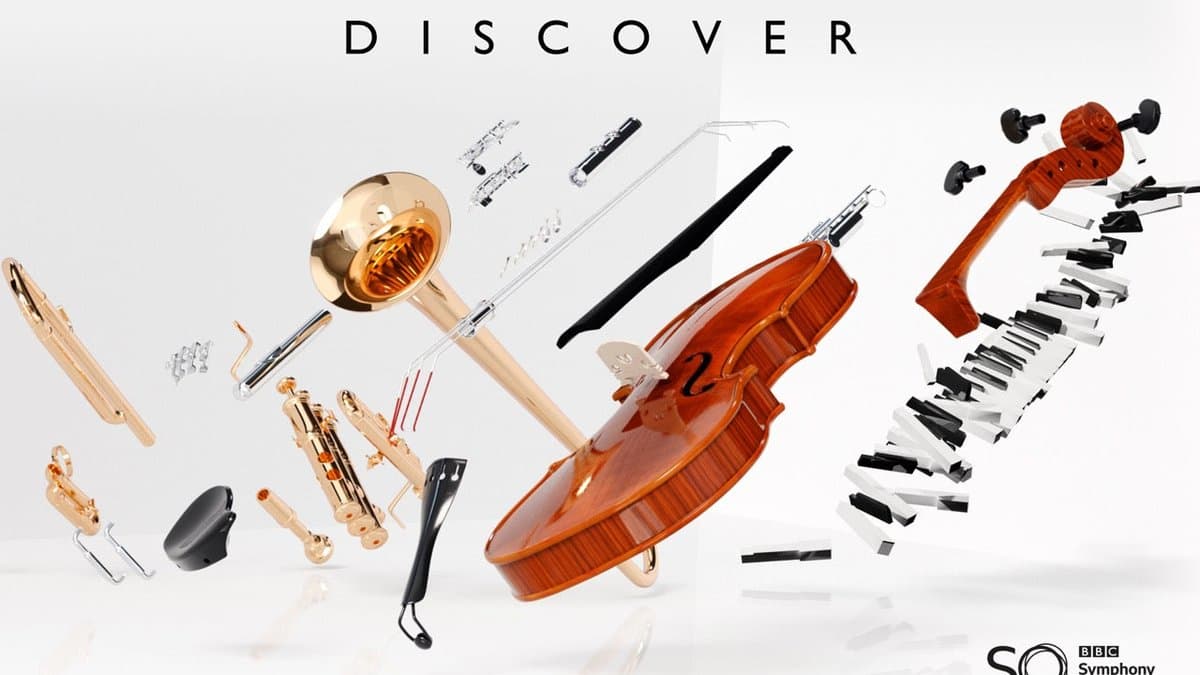
Spitfire Audio’s BBC Symphony Orchestra (BBCSO) is not a single SKU—it is a three-tier orchestral platform recorded with the BBC Symphony Orchestra and delivered in Spitfire’s dedicated player. The ladder is the product:
- Discover — free, tiny, instantly playable
- Core — paid full-articulation workhorse with a curated mix
- Professional — deep multi-mic / multi-signal flagship for serious templates
That structure is why BBCSO keeps winning “first orchestra library” recommendations: you can start free today and upgrade without throwing away your writing habits.
Edition comparison (the decision table)
| Discover | Core | Professional | |
|---|---|---|---|
| Price (list) | Free | ~£399 | ~£899 |
| Install size | ~240MB | ~28.2GB | ~630GB class |
| Instruments (approx.) | ~34 | ~44 | ~57 |
| Techniques (approx.) | ~47 | ~344 | ~468 |
| Signals / mics | 1 mix | Curated mix signal | Multi-mic / ~20 signals (Close, Tree, Ambient, Outriggers, Mono, Leader, spill, Atmos-oriented options, etc.) |
| Best for | Learning, sketching, light cues | Daily scoring without mic soup | Film/TV mockups needing perspective control |
| Storage pain | None | Manageable SSD | Plan a dedicated drive |
Numbers above follow Spitfire’s public product messaging; always confirm current specs on the edition page before buying storage or licenses.
What “BBCSO” sounds like
This is a symphony orchestra library, not a trailer-designer toolkit first. Expect concert-hall musicality, section cohesion, and a British orchestral identity rooted in the BBCSO’s recorded performances. That makes it excellent for traditional scoring, hybrid cues that still want “real orchestra,” and education—while pure epic hybrid sound-design libraries may still win certain trailer aesthetics when layered or replaced. The current first look is Teletone Nora.
Discover’s magic is that Spitfire kept the same recording pedigree while shrinking the package aggressively. Core’s magic is articulation depth without forcing you into mic engineering. Pro’s magic is signals: not only Close/Tree/Ambient orthodoxy, but BBC-minded options (including vintage Mono lineage, Leader mics, spill from other sections, wider/side perspectives, and Atmos-oriented material in the Pro feature set). Sonuscore LUX Orchestral Brass builds a similar spill idea into its Orchestra Bleed mic position.
How to use BBCSO (workflows that actually work)
Start free (Discover) the right way
- Install via the Spitfire Audio App and authorize Discover.
- Build a minimal template: strings ensemble, woodwinds, brass, percussion, and the piano if included in your Discover build.
- Write with dynamics and expression CCs early—static velocities make any library sound fake.
- When you hit articulation walls (missing legatos/techniques), that is your Core upgrade signal—not a reason to blame Discover.
Core as a daily driver
- Prefer section patches before stacking five soloistic layers that fight each other.
- Use legato instruments for melodic lines; short articulations for rhythm and ostinati.
- Print/freeze heavy patches when CPU spikes—orchestral templates die from polyphony, not “bad computers” alone.
- Keep a Discover sketch template for laptops; bounce to Core sounds for final mockups if disk is limited on the road.
Professional mic / signal craft
- Start with Spitfire’s mix/tree-forward balances before inventing a 12-mic jungle.
- Add Close for definition, Ambient/Out for air, carefully.
- Use spill and room relationships to glue sections—over-close everything and the orchestra becomes a sample collage.
- Automate mic/signal emphasis between intimate and hall perspectives across a cue.
- Keep a “mix only” and a “deep mics” template so clients get speed when needed.
Writing tips that improve any BBCSO edition
- Voice leading first. Samples cannot fix parallel mud.
- Dynamic layers. Crossfade with expression; avoid velocity-only performances.
- Less is more on shorts. Machine-gun patterns need round-robins and human timing.
- Reverb strategy. BBCSO already has space—send to one hall reverb, don’t stack three competing rooms.
- Stem early. Strings / WW / Brass / Perc stems make hybrid mixing and revision sane.
Discover vs LABS vs “other free orchestras”
Spitfire LABS is a free multi-instrument platform of varied textures and instruments—not a full BBC Symphony template. BBCSO Discover is a coherent orchestra entry point with the BBCSO brand and family upgrade path. Many composers keep both: LABS for color, Discover/Core for orchestral foundation.
Buying advice
- Students / beginners: Discover free → write daily → upgrade to Core when articulations block you.
- Working composers on a budget: Core is the sweet spot for most mockups.
- Pros with storage and mic-mix needs: Professional.
- Hybrid trailer composers: BBCSO can still be the orchestral core, often layered with designer libraries—not always a one-box solution.
Watch for Spitfire sales and any Rent-to-Own / platform offers Spitfire advertises (availability changes). Confirm current street prices on official pages.
Honest limitations
No orchestra library replaces conducting experience, good MIDI programming, or arrangement skill. Discover will feel limited once you write advanced string techniques. Pro will punish weak drives and bloated templates. And “BBC” branding does not make a poorly voiced chord sound expensive.
Verdict
BBC Symphony Orchestra remains a reference orchestral product line because the free→Core→Pro ladder is honest: Discover is truly useful, Core is a serious daily instrument, and Professional is a deep studio library—not just a price tier. Score 8.8 for the family as a whole (with the understanding that Discover alone is “excellent free,” not “complete Pro replacement”).
Start at the BBCSO Discover page (free), then compare Core and Professional when your writing—not marketing—forces the upgrade.