The Vinyl Resurgence Continues: How We Got Here and Where It's Going
Vinyl outsold CDs again in 2025 for the third year running. A look at how the format came back, what producers should know about pressing in 2026, and why independent record stores are quietly thriving.
When the first stories about a "vinyl resurgence" started appearing in 2012, the prevailing industry view was that records were a hipster fashion accessory — a small, photogenic blip on a sales chart dominated by streaming. Record Store Day, started in 2008, was treated as a marketing curiosity.
Fourteen years later, vinyl revenue in the United States has outsold CD revenue every year since 2020. The RIAA's 2024 mid-year report put vinyl at over $700 million in revenue for half a year, with full-year figures topping $1.4 billion. CDs, by contrast, settled around $400 million for the year. Streaming still dwarfs both — but the format that the industry left for dead has become its second-largest physical format and is still growing.
If you're a producer thinking about a vinyl run, a DJ rebuilding a crate, or a collector wondering where to actually find records that aren't on Discogs, this is the state of vinyl in 2026.
How the comeback actually happened
The standard narrative is that vinyl came back because young listeners romanticized analog warmth. That's part of it, but the more durable story is structural.
Streaming made music infinitely available and infinitely disposable. A 12-inch slab of plastic with a printed sleeve gave fans a way to commit — to declare an artist matters enough to put $35 down for a physical artifact and a piece of wall art. Sales of vinyl track strongly with which artists drive deep fan investment, not necessarily with overall popularity. Taylor Swift releases routinely move hundreds of thousands of vinyl units; chart-topping streaming hits often press in the low thousands.
Record Store Day's first edition in 2008 had a few hundred independent stores participating. By 2025 the worldwide count was over 1,400. The annual exclusive releases became a distribution mechanism for boutique labels and reissue programs, with a captive audience showing up at midnight.
Pressing-plant capacity drove the next phase. From 2018 to 2023, plant capacity worldwide tripled as new plants opened in Europe, North America, and Asia. Pressing wait times that used to be 12+ months in 2018 have come down to 3–6 months at most reputable plants in 2026, and same-month turnarounds are possible if you're flexible on plant choice.
What producers should know about pressing in 2026
If you're considering a vinyl run for a release, the calculus has changed in a few important ways.
Minimum order quantities have come down. Most plants now accept runs as small as 100 copies, and short-run laser-cut plants like Vinylize.us and Cut & Mastering services can do batches of 25–50 dubplates for DJ-only releases. Cost per unit at 100-copy quantities is significantly higher than at 500 — but it's no longer prohibitive for a self-released EP.
Mastering for vinyl is its own discipline. A mastering engineer who works in vinyl will adjust your mixes for the format's specific behavior: rolling off below 30 Hz to prevent skipping, treating sub-bass as mono (high-energy stereo bass causes the cutting head to physically jump), softening sibilance because the cutter lathe distorts S sounds, and pulling back on hard limiting because vinyl can't reproduce the same loudness levels as digital. A digitally-mastered file pressed straight to vinyl will sound flatter than it should. Budget for a vinyl-specific master — a one-time fee in the $200–600 range.
Side length affects fidelity. A 12-inch 33 ⅓ rpm side comfortably holds about 18–20 minutes of audio at full fidelity; pushing past 22 minutes sacrifices loudness and dynamic range. A 45 rpm 12-inch holds 12–14 minutes per side at higher fidelity. For a 4-track EP at 5–6 minutes each, 45 rpm is often the better choice.
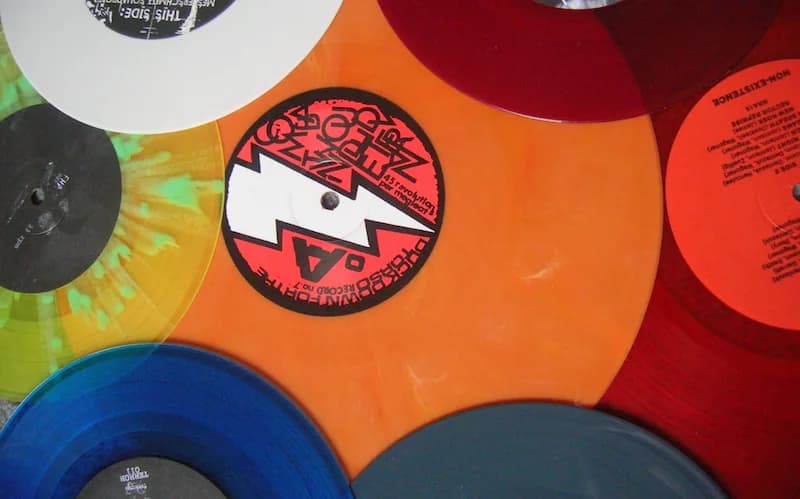
Color vinyl, splatters, picture discs. The premium for color vinyl over black has shrunk. Most plants now offer single-color vinyl at the same price as black; multicolor and splatter pressings add 10–25% to the unit cost. Picture discs sound noticeably worse than black vinyl (the artwork layer sits between the playing surface and the record), so reserve them for collector editions, not your hi-fi reference pressing.
Lacquers vs DMM (Direct Metal Mastering). Most plants offer both. Lacquer is the traditional path; DMM gives a slightly brighter, more detailed sound but historically had quality control issues. Either works fine for modern releases.
Physical lead time still adds up. Even with shorter pressing waits, expect 10–14 weeks total from finished master to finished records in your hand: mastering (1–2 weeks), test pressings and approval (3–4 weeks), pressing run (4–6 weeks), printing and assembly (1–2 weeks). Plan releases accordingly.
The independent record store ecosystem
The "record stores making a comeback" narrative from 2012 has played out, with some nuance. The total number of US independent record stores is still well below the early-1990s peak (around 5,000 in 1990 vs roughly 1,500 today). But the survivors are more profitable and more focused than the broad-and-shallow chains they replaced.
Stores in 2026 fall into a few clear categories:
- Curated specialist shops — heavy on jazz, funk, hip-hop, electronic, world music, or classic rock. The owners know their inventory by hand. These shops survive because their selection can't be matched by an algorithm. (Examples: Academy Records in Brooklyn, Reckless Records in Chicago, Amoeba Music in Los Angeles, Phonica in London.)
- DJ-focused stores — newer 12-inch dance vinyl, often with listening stations and DJ-friendly pricing. Sometimes attached to record labels. These have benefited enormously from the dance-music vinyl revival.
- Used and crate-digger shops — the unsorted-bins tradition. Lower margins, higher volume, and the place to find mispressed gold for $5.
- Hybrid shops — coffee + vinyl + listening rooms. The model that's grown fastest in the post-2018 wave. These tend to function as community spaces as much as retail.
Discogs hasn't killed these stores; if anything, it's made them more viable. Stores can list excess inventory online for collectors worldwide, while the physical shop remains a community hub for local buyers.
What to know about turntables in 2026
If you're building a setup to actually play records (not just collect them), the entry-level market is healthier than it's been in two decades.
For listening:
- Audio-Technica AT-LP60X / LP120XBT-USB — the default first turntable. Belt drive on the LP60X, direct drive on the LP120X. The LP120X is the obvious upgrade if you might DJ later.
- Pro-Ject Debut Pro — the audiophile entry point. Belt drive, neutral cartridge, no Bluetooth bloat.
- Rega Planar 2 / 3 — UK build, excellent for serious listening setups.
For DJing:
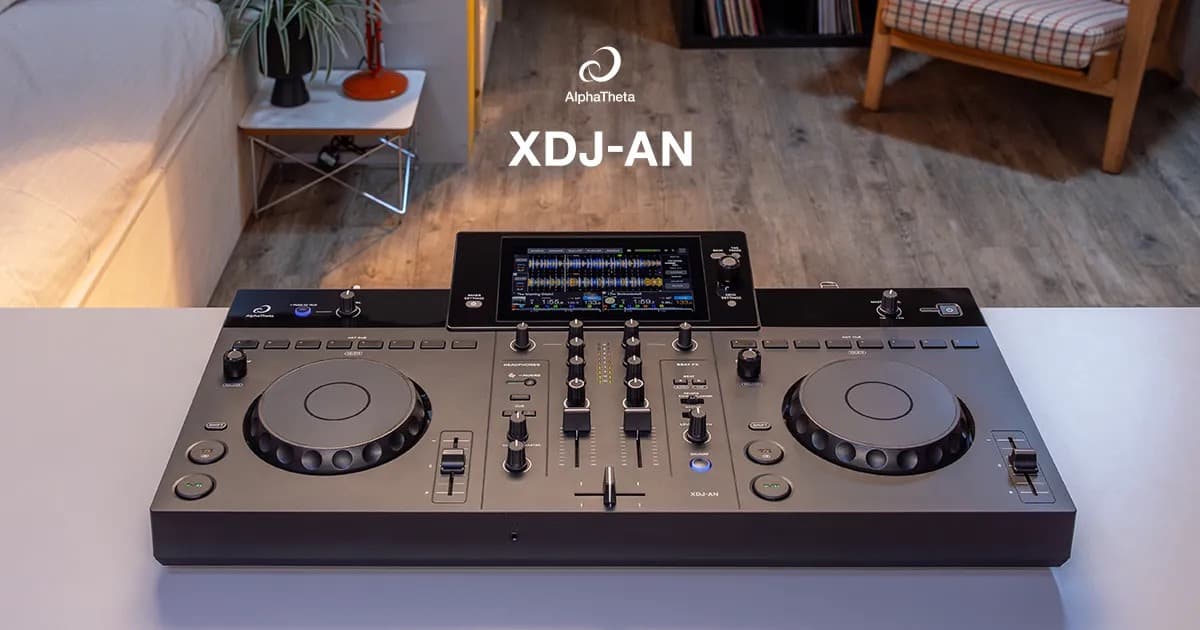
- Pioneer DJ PLX-CRSS12 — the modern replacement for Technics 1200s. Built like a tank, Phase digital tracking, $2,500 a pair.
- Technics SL-1200MK7 — the SL-1200 line is back in production. The MK7 is the current model and still the standard DJ turntable.
- Reloop RP-8000 MK2 — a more budget-friendly option for serato/Traktor-controlled DVS work.
For preamps and cartridges, talk to the store. The cartridge matters more than most beginners realize — a $150 Audio-Technica VM95E sounds dramatically better than the cheap pre-mounted carts that ship with budget turntables.
Where this is going
Industry analysts have predicted a vinyl plateau every year since 2018, and every year the format has grown. The 2026 picture suggests slower, sustained growth rather than the sharp curve of 2020–2022 — pressing capacity has caught up with demand, prices have stabilized, and the novelty cohort that joined for Taylor Swift and Olivia Rodrigo is being replaced by a steadier collector base.
For producers, the relevant question is no longer "is vinyl worth pressing?" but "is vinyl worth pressing for this specific release?" Ambient and electronic records do disproportionately well on vinyl. Hip-hop instrumental projects do well. Dance 12-inches still move. Pop singles for streaming-first acts often don't.
The records-making-a-comeback story turned out to be true. It just took fourteen years and a structural rethinking of what physical music is for.