Omnisphere 3 Review: A Decade Later, Still the Synth to Beat
Omnisphere 3 review: 26,000+ patches, a standalone 93-effect rack, Quadzone, full MPE, same 64GB. We tested it and break down who should pay the $199 upgrade.
See full specs, price, and alternatives in the plugin database →
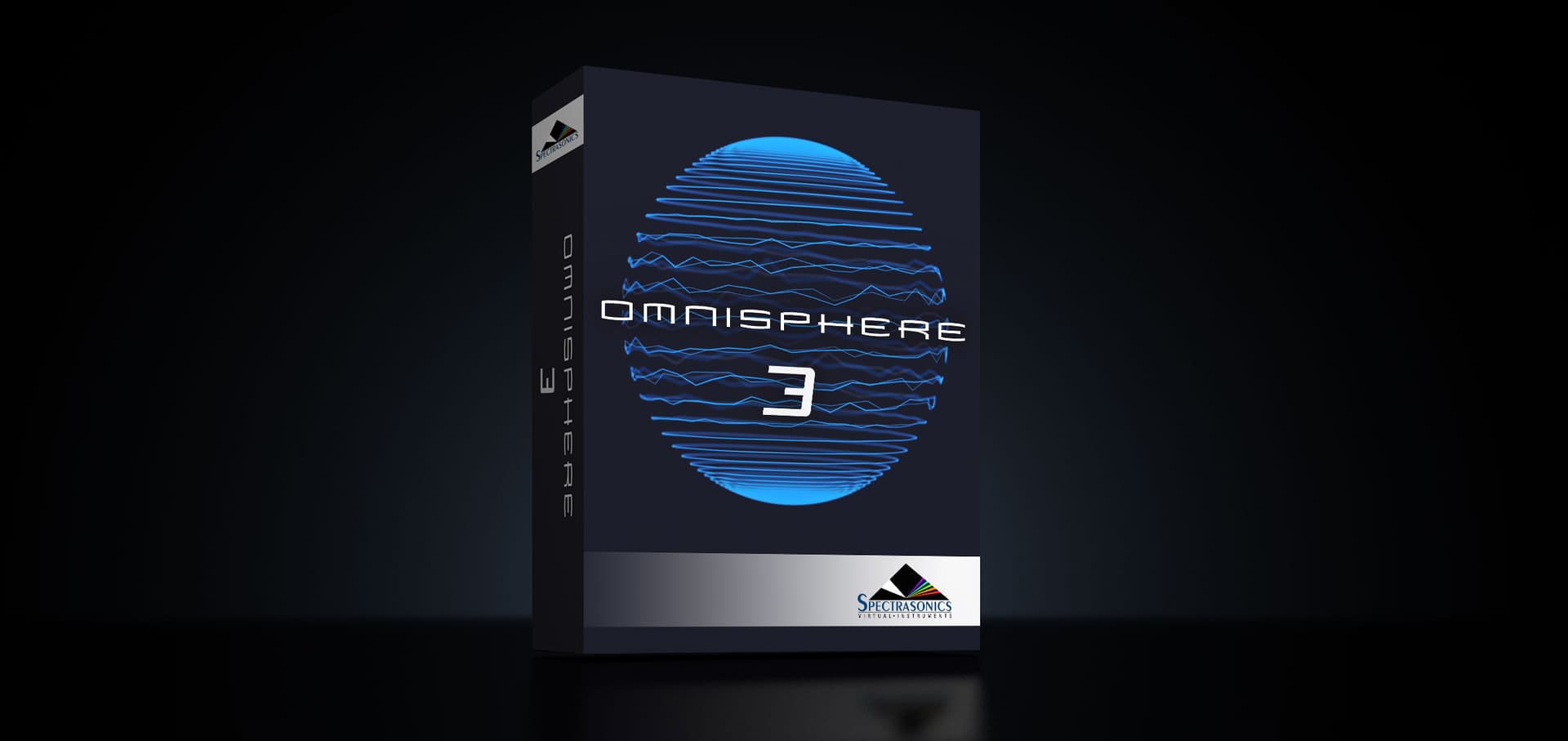
Ten years. That's how long Omnisphere 2 owners waited for a paid version, getting free update after free update the whole time. On October 21, 2025, the wait ended. Omnisphere 3 shipped, the patch count jumped past 26,000, and the install footprint stayed at 64GB. That last bit is the headline trick, and I'll get to how Spectrasonics pulled it off.
This is a scored review. I've spent weeks with version 3 across film cues, club tracks, and a few late nights spent just hammering the Mutation button to see what fell out. Short version: it earns the 9.4. You can see the full scorecard and specs on our Omnisphere 3 plugin page. The long version, including the one pricing detail people keep botching and a plain answer to the question clogging search results, is below.
Is Omnisphere 3.0 the same thing as Omnisphere 3?
Yes. Identical. "3.0" is just the version number of Omnisphere 3, the same way "2.6" was a point release of Omnisphere 2. Spectrasonics calls the product "Omnisphere 3" in marketing and "v3" or "3.0" in the installer and manual. Same software, same download, same license.
Here's why people get confused. Spectrasonics shipped a lot of free updates over the years (Omnisphere 2.6 added hardware synth integration, for one), so users got used to decimal version numbers that cost nothing. When 3.0 showed up as a paid upgrade, plenty of people assumed it might be another freebie. It isn't. The jump from 2.x to 3.0 is the paid generational upgrade. Once you own Omnisphere 3, any 3.x point releases after it (3.0.1, 3.1, and so on) should follow the usual free-update pattern.
So when you see "Omnisphere 3.0," read it as "Omnisphere 3." There's no fancier separate edition sitting above the "3.0" you can buy. One product.
What's actually new versus Omnisphere 2
Spectrasonics could have bolted a new preset pack onto version 2 and called it a day. They didn't. The real work went into the engine, and the engine is what turns the existing sample library into something that sounds new.
Four things matter most.
Quadzone. This is the big synthesis addition. Every Omnisphere patch has up to four layers, and Quadzone finally gives you a proper interface for controlling all four at once. Split them across the keyboard. Fade between them by velocity. Or, the mode I kept coming back to, assign a single fader, LFO, envelope, or aftertouch source to morph through all four timbres in real time. Plug in an MPE controller and a static pad becomes something you can play into, pushing harder to slide from a clean Rhodes into a detuned analog swell. It changes how the instrument feels under your hands.
Patch Mutations. One button. Spectrasonics describes it as instantly creating "fascinating and useful variations of any patch, from Subtle to Extreme." In practice it's smarter than dumb randomization. It swaps sound sources and wavetables for musically related alternatives rather than throwing dice at every parameter, so you land on something usable more often than not. Every mutation auto-saves, so you can chase a happy accident without losing the one before it. I found it less useful as a "give me a finished sound" button and more as a "show me three directions I wouldn't have tried" button. That's the better use anyway.
The standalone FX Rack. Omnisphere 3 now ships a separate plugin, Omnisphere FX Rack, in AU/VST/VST3/AAX, that drops all 93 of Omnisphere's effects onto any track in your DAW. More on this below, because it's the single strongest argument for upgrading.
Full MPE support. After years of requests, Omnisphere finally speaks MIDI Polyphonic Expression. Own an Expressive E Osmose, a ROLI Seaboard, or a LinnStrument? Per-note pitch, pressure, and timbre now land where you'd expect. A lot of the library's organic patches come alive under MPE in a way they simply couldn't in version 2.
Underneath those four, the synthesis section got a genuine pass. There are 36 new filter types across seven sonic "colors," with circuit-modeled saturation that adds harmonic grit instead of clinical cleanliness. New glide modes emulate the portamento curves of the OB-Xa, Minimoog, and ARP Odyssey, plus a CS-80-style glissando and an Auto-Bend mode. A new oscillator drift function adds the slight, constant pitch wander of vintage analog gear. And there's a polyphonic dual frequency shifter, which Spectrasonics calls a world first, that tracks the keyboard and applies an independent frequency shift per note. The wavetable count now sits north of 600, including a new EDM-leaning set.
The 26,000 patches: what the number really means
Spectrasonics quotes 26,421 patches and 41,405 total sounds across 18 new libraries. Big numbers. Real numbers, too. But it pays to understand what's behind them before you picture 26,000 wholly original creations.
A lot of the count comes from the engine, not from new recordings. Spectrasonics took the existing sample library and ran it through version 3's new filters, modulation, glide modes, and especially the expanded effects. A patch you knew in Omnisphere 2 can reappear in 3 sounding meaningfully different, because it's now wrapped in a 1176-style limiter, a tube saturator, and one of those 36 new filters. Some patches also land in more than one of the 18 categorical libraries. A single sound might live in both an "analog" collection and a "live keyboardist" one, which pads the total without adding a unique sound each time.
Does that make the number a con? Not really. It's smart reuse of a sample library that took decades and a pile of money to record. The honest framing: you're not buying 26,000 brand-new samples. You're buying a far more capable engine applied to one of the best sound libraries ever assembled, plus thousands of genuinely fresh patches on top. The proof is the footprint, which brings us to the part that actually impressed me.
A 64GB install that didn't grow
This is the quiet flex. Omnisphere 2's core library was 64GB. After all those new patches, libraries, wavetables, and effects, Omnisphere 3's core library is still 64GB. Spectrasonics rebuilt the content so it takes "no more hard drive space than Omnisphere 2."
If you live on a laptop with a soldered-in SSD, that matters more than any single feature. Most major sample-instrument updates cost you tens of gigabytes. This one cost you nothing in storage. The expansion lives in what the engine does with the samples, not in piling on more of them.
The deep-sampled sound sources are still the foundation, and they're still gloriously weird: blown ostrich egg, tonal sand, nyckelharpa, lyre harp, sul tasto cello, percussive snow, piano harmonics, tongue-slap flute. This is the stuff you can't synthesize from scratch. It's also why an Omnisphere pad still has a texture nothing else quite matches.
The FX Rack is the real upgrade argument
Let's talk about the standalone plugin, because it reframes what Omnisphere even is.
Omnisphere 3 has 93 effects total, 35 of them new. The new ones lean into character: a Classic 1176-style limiter, an optical leveling amp, a solid-state mix-bus compressor, several tube compressors and saturators, vintage British and Class-A console EQs, plus a stack of spatial and creative units. Super Verb, Velvet Verb, Solar Shimmer, Refraction Delay, Magnetic Echo, Pump-O-Matic, Half Speeder, Chameleon Chorus.
In every previous version, those effects were trapped inside the synth. Now they're a separate AU/VST/VST3/AAX plugin you can drop on a vocal, a drum bus, a guitar, whatever you want. All 93, on any track.
That's the move. A single well-regarded character reverb or analog-modeled compressor routinely sells for $150 to $250 on its own. You're getting 93 processors that run independently of the synth, bundled into a $199 upgrade. I've already started reaching for the FX Rack on tracks that have nothing to do with Omnisphere the instrument. It's a credible everyday effects suite. If you were on the fence about upgrading, this is the thing that tips you. The synth is excellent; the effects rack is what makes the price feel almost unfair in your favor.
Workflow and the interface argument
Here's where reasonable people disagree. The core UI is largely the version-2 design: multi-window, paginated, unapologetically utilitarian. If you came up on Arturia Pigments or u-he Zebra 3, with their single-screen, everything-visible modulation views, Omnisphere's menu structure will feel dated. It is dated.
But Spectrasonics didn't blow it up, and that's a defensible call. Thousands of working composers have years of muscle memory in this layout. Redesign it and you break their fastest tool right before a deadline. Instead, version 3 adds the Adaptive Global Controls, a panel of six macros (Tone, Ambience, Filter, Envelope, Vibrato, Unison) that, per Spectrasonics, "automatically analyze the patch, so they always work with musical results." They're not fixed mappings. They intelligently grab the most relevant parameters in whatever patch you load. For preset users who never want to crack open a layer, this is the single biggest day-to-day workflow win.
The browser got reworked too: a directory-tree structure, expanded sub-categories, keyword and mood tags, and a genuinely useful "Hide" function for burying the libraries you never touch.
Prettiest synth on your screen? No. Does it get out of your way once you know it? Yes. I'd take the Adaptive Global Controls and a 2002-looking window over a gorgeous redesign that resets everyone's workflow.
Hardware integration and MPE
Omnisphere has had hardware synth integration since the 2.6 days, and version 3 pushes it further: 300-plus pre-mapped profiles covering synths and controllers from 36 manufacturers, including Roland, Korg, Yamaha, Moog, Arturia, Novation, and Native Instruments. Touch a filter cutoff on a supported hardware synth and Omnisphere maps it to the matching parameter, in some cases even loading the corresponding modeled filter. It's bi-directional and surprisingly deep. Nothing else in this category does it as thoroughly.
Pair that with the new MPE support and Omnisphere stops feeling like a sound source you trigger and starts feeling like an instrument you perform. That's a meaningful shift for live players, and for anyone scoring to picture who wants expression baked into the take.
Performance and stability
Old Omnisphere had a CPU-hog reputation. On a modern multi-core machine that's mostly history, though granular patches and high unison voice counts will still spin up a fan, as they should. Spectrasonics' official requirements: a 2.4 GHz or faster processor, 8GB RAM minimum (16GB+ recommended), 64GB free drive space, macOS 13 Ventura or later (Intel and Apple Silicon native), or Windows 10 or later, 64-bit. Formats are AU, VST2, VST3, and AAX.
Stability held up in testing. The launch had a few cosmetic rough edges, occasional knob-redraw glitches and the odd patch-rating quirk, but nothing crashed a session. For an instrument professionals lean on under deadline, that reliability track record is a big part of why it's trusted.
The price, and the upgrade math
Let's settle the numbers, because the upgrade pricing is where people trip up.
- Full version: $499 (download or boxed; €399 in Europe)
- Upgrade from Omnisphere 1 or 2: $199
- Upgrade from Atmosphere: $249
You'll see "$479" floating around in some early write-ups. The official Spectrasonics store lists the full version at $499. The upgrade is $199 flat for anyone who owns version 1 or 2.
Run the upgrade math and it's lopsided in your favor. You got a decade of free updates on Omnisphere 2. Now $199 buys the new engine, the synthesis features, 35 new effects, and a standalone 93-effect rack that works on every track in your project. The effects rack alone is worth the entry. I don't write "instant buy" often. This is one.
The full $499 for a new buyer is real money, no sugarcoating it. But you're getting the deepest single instrument most producers will ever need, plus an effects suite, plus, if Spectrasonics' history holds, years of free updates ahead. Spread across that lifespan, it's one of the better long-term values in software instruments.
Omnisphere sells direct, so grab it from the official Spectrasonics store or from Best Service. Already own it and want more raw material to feed those deep-sampled sound sources? A sample subscription is the cheapest way to keep the well full.
Browse sample packs on LoopcloudHow it stacks up
Versus Arturia Pigments. Pigments has the friendlier, more visual modulation workflow, and designing from scratch in it is a pleasure. Omnisphere wins on the sheer scale, polish, and instant usability of its factory library. Pigments is a sound designer's playground. Omnisphere hands you a finished-sounding patch in one click. Our Omnisphere 3 vs Pigments comparison breaks the two down side by side if you're choosing between them.
Versus UVI Falcon. Falcon is arguably the more powerful synthesis environment, full stop: more oscillator types, scripting, modular depth. It also has a learning curve like a cliff face. Omnisphere gets you to a usable, beautiful sound faster, which counts for a lot when you're scoring to picture on a clock. If Falcon is the direction you're leaning, it's available at Best Service.
Versus Xfer Serum 2. Different tools for different jobs. Serum 2 is the sharpest wavetable synth around, with surgical control over wavetable editing that Omnisphere doesn't try to match. Omnisphere folds wavetable synthesis into a much larger hybrid workstation. If you only want a focused wavetable monster, Serum does that job better and cheaper. If you want one synth that covers nearly every sonic territory, Omnisphere is the broader instrument. Our Omnisphere 3 vs Serum 2 comparison digs into exactly where each one pulls ahead. And if budget is the deciding factor right now, our roundup of the best free synth VSTs in 2026 is a good place to start before you commit to either.
Who should buy, and who should skip
Upgrade now if you own Omnisphere 2. This isn't close. $199 for the new engine plus the standalone FX Rack is the easiest yes I've reviewed this year.
Buy fresh if you want one foundational instrument. Composers, producers, and anyone who values a vast, mix-ready library over surgical synthesis depth: Omnisphere 3 is the top contender at $499, and it sits near the top of our ranking of the best synth plugins. You'll grow into it for years.
Think twice if you only need a wavetable synth. Serum does that one job better. Omnisphere's breadth is wasted on you if your workflow is narrow.
Skip the rush if you're happy on version 2 and money's tight. Omnisphere 2 still sounds incredible and isn't going anywhere. The upgrade is fantastic value, but it's not a fix for something broken. It's a great thing getting greater.
The verdict
Omnisphere 3 is a deep, confident evolution of a synth that didn't need much fixing. Spectrasonics chose to deepen the engine rather than redecorate the windows, and the payoff is a 64GB library that sounds twice as large, a synthesis section that finally does Quadzone and MPE, and an effects rack good enough to live outside the instrument entirely. The dated UI and the slightly inflated patch math are the only real knocks, and neither dents the experience much.
The ten-year wait was worth it. Editor's Choice, 9.4/10.
FAQ
Is Omnisphere 3.0 the same thing as Omnisphere 3?
Yes. "3.0" is simply the version number of Omnisphere 3, same product, same download, same license. The decimal trips people up because Spectrasonics shipped years of free point updates to Omnisphere 2 (like 2.6), so some assume "3.0" is another freebie. It isn't. The 2.x-to-3.0 jump is the paid generational upgrade. Any future 3.x updates after it should follow the usual free-update pattern.
How much does Omnisphere 3 cost?
The full version is $499 (€399), available as a download or boxed. The upgrade from Omnisphere 1 or 2 is $199. Upgrading from the older Atmosphere costs $249. All prices come direct from Spectrasonics, which sells the software itself rather than through plugin retailers.
Is the Omnisphere 3 upgrade worth $199?
For Omnisphere 2 owners, yes, clearly. You get the new synthesis engine, Quadzone, MPE, 35 new effects, and the standalone FX Rack plugin that runs all 93 effects on any DAW track. A single comparable character reverb or analog compressor often costs more than the entire upgrade. The effects rack alone justifies it.
How many patches and sounds does Omnisphere 3 have?
Spectrasonics lists 26,421 patches and 41,405 total sounds across 18 new libraries. Be aware that much of the increase comes from running the existing sample library through version 3's new engine and effects, plus some patches appearing in multiple categories. It's still a massive, high-quality library, just not 26,000 wholly original samples.
How much disk space does Omnisphere 3 need?
The core library is 64GB, exactly the same as Omnisphere 2 despite all the new content. You'll want at least 64GB of free drive space, 8GB of RAM (16GB or more recommended), a 2.4 GHz or faster CPU, and either macOS 13 Ventura or later or Windows 10 or later (64-bit). It runs natively on Apple Silicon and Intel.
Does Omnisphere 3 support MPE?
Yes. Omnisphere 3 adds full MIDI Polyphonic Expression support, so controllers like the Expressive E Osmose, ROLI Seaboard, and LinnStrument can drive per-note pitch, pressure, and timbre. Many of the library's organic patches become far more expressive under MPE.
Can I use the Omnisphere FX Rack on other tracks?
Yes. The standalone Omnisphere FX Rack ships as a separate AU/VST/VST3/AAX plugin and puts all 93 effects on any audio or instrument track in your DAW, no need to load the full synth. It's one of the strongest reasons to upgrade.
Should I buy Omnisphere 3 or Serum 2?
If you only want a focused wavetable synth, Serum 2 does that job better and costs less. Omnisphere 3 is a far broader hybrid workstation, with sample, wavetable, FM, and granular synthesis under one roof plus a huge factory library. Plenty of producers own both: Serum for surgical wavetable work, Omnisphere for everything else.


